Why Golf Bags Fail.
Your golf bag is going to break.
It usually starts small. A zipper that catches on the third pull instead of the first. A pocket that stops sealing fully in cold weather. A pull tab that starts spinning freely without engaging the track underneath.
Then it gets worse. The zipper fails mid-round. The pocket gapes open. You're hand-carrying a rangefinder because there's nowhere reliable to store it. You've owned this bag for two years. You spent $300 on it.
This is not bad luck. This is the golf bag industry's oldest and most accepted design failure - and it happens across every brand, at every price point, on every type of bag ever made with a conventional zipper system.

The Zipper Is the Problem. It Has Always Been the Problem.
A golf bag zipper is a precision mechanical system - dozens of interlocking teeth, a slider mechanism, a pull tab attached by a small metal or fabric loop - operating under conditions that mechanical systems hate:
Repeated stress cycles. A golfer who plays twice a week opens and closes their ball pocket, glove pocket, and accessory pockets an average of 60–80 times per round. Over a single season, that's thousands of open-close cycles per pocket.
Moisture and debris ingress. Grass, sand, dirt, and moisture don't just sit on the outside of a zipper - they work into the teeth and the slider mechanism. Every bit of contamination increases friction, increases wear, and accelerates the failure timeline.
UV degradation. Zipper tapes - the fabric strips that anchor the teeth - are exposed to direct sunlight throughout every round. UV exposure weakens the tape structure and causes the teeth anchoring to loosen over time.
Temperature cycling. Bags go from cool car trunks to hot summer sun to wet fall mornings. Materials expand and contract. Slider tolerances tighten and loosen. Metal fatigue accumulates.
Physical impact. Every time a bag is set down, loaded into a car trunk, passed through airport security, or stored in a bag room, the zipper elements absorb impact. The pull tab loop is a particular failure point - it's the component under stress every single time the pocket is opened.
None of this is unusual use. This is ordinary golf. And zipper systems, regardless of how well they're made, are not designed to last indefinitely under these conditions. They are a consumable component in a product most golfers expect to keep for a decade.
Why the Industry Accepted This.
If zipper failure is this predictable, why has no major golf bag brand solved it?
The honest answer is a combination of manufacturing inertia, margin management, and replacement cycle economics.
Manufacturing inertia: Golf bags have been made with zippers for decades. The tooling exists. The supply chains exist. The manufacturing processes are established. Changing the pocket closure system requires redesigning tooling, retraining production, qualifying new components, and absorbing the cost of that transition - with no guarantee that consumers will pay a premium for the result.
Margin management: Premium zipper systems exist. High-end YKK zippers used on quality outdoor gear are significantly more durable than the closures found on most golf bags. But they're also significantly more expensive at scale. Using them would either reduce margin or require price increases that brands worry will affect conversion.
Replacement cycle economics: A golf bag that fails in three years is a customer who buys another bag in three years. This is not a conspiracy - but it's also not an accident that the durability ceiling on golf bag pocket systems has never been systematically pushed.
The result is an industry where premium bags fail for the same reason as budget bags, just slightly more slowly.

MNML GOLF's Solution: Remove the Failure Point Entirely
MNML GOLF approached the zipper problem the way an engineer approaches any chronic mechanical failure: not by improving the failing component, but by eliminating the need for it.
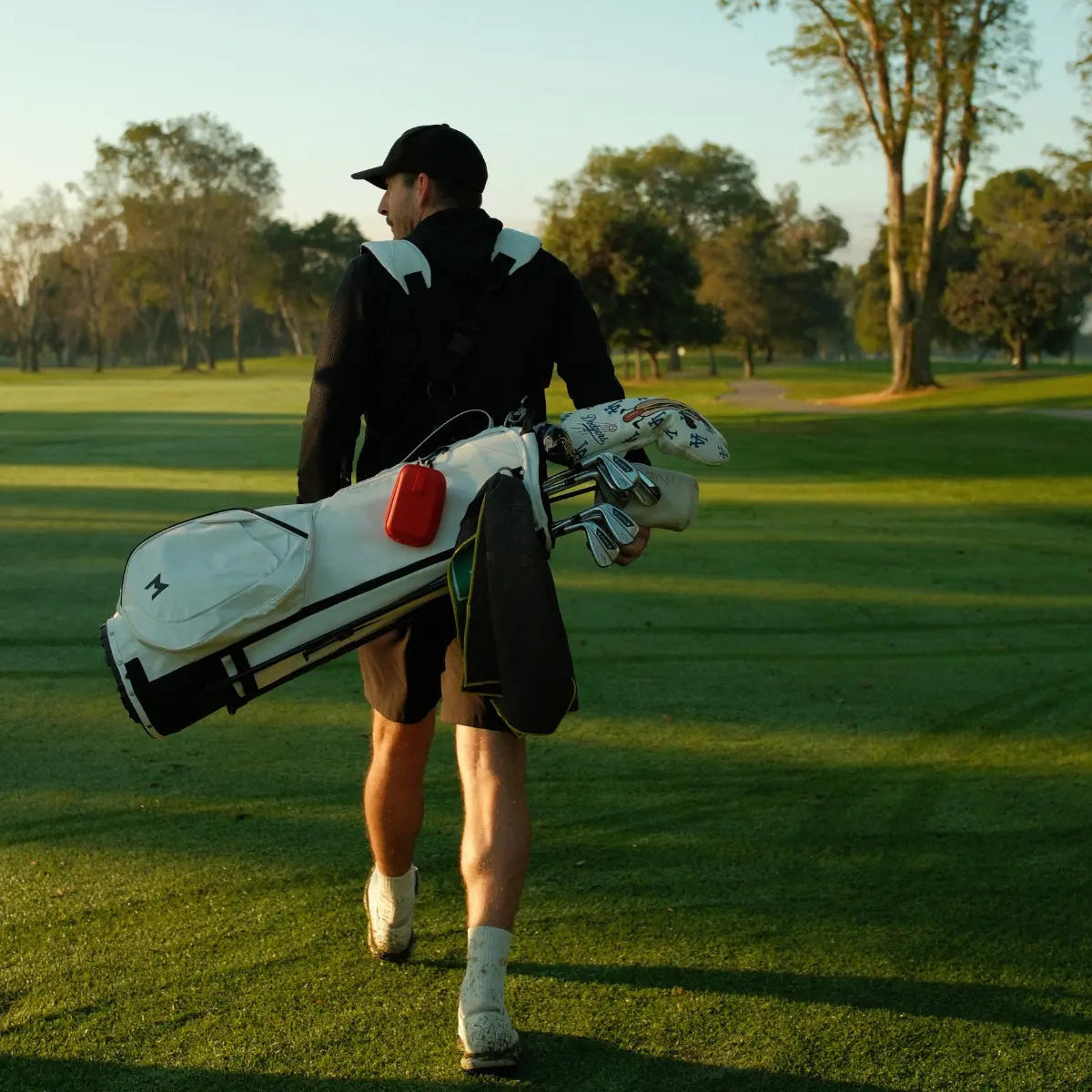
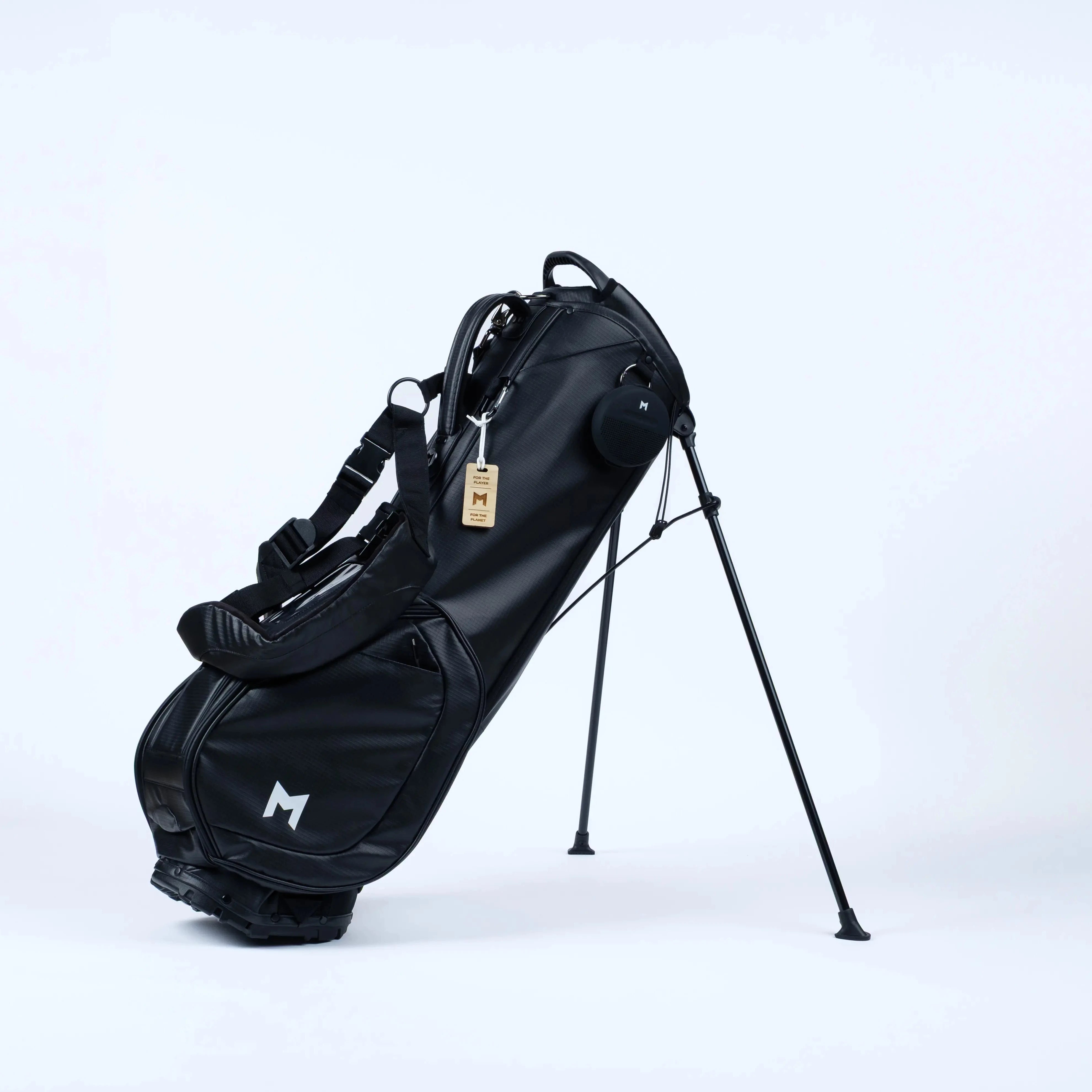
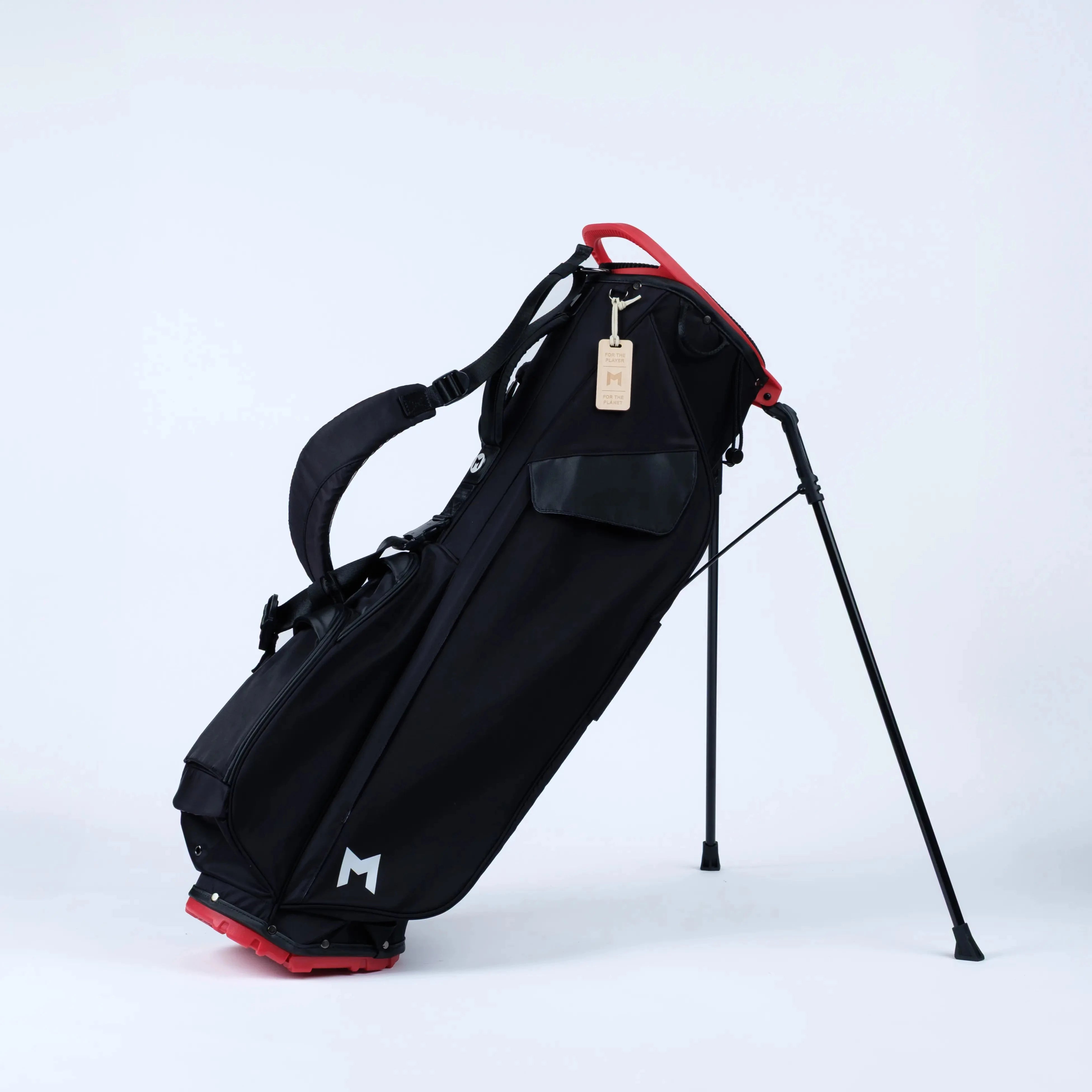
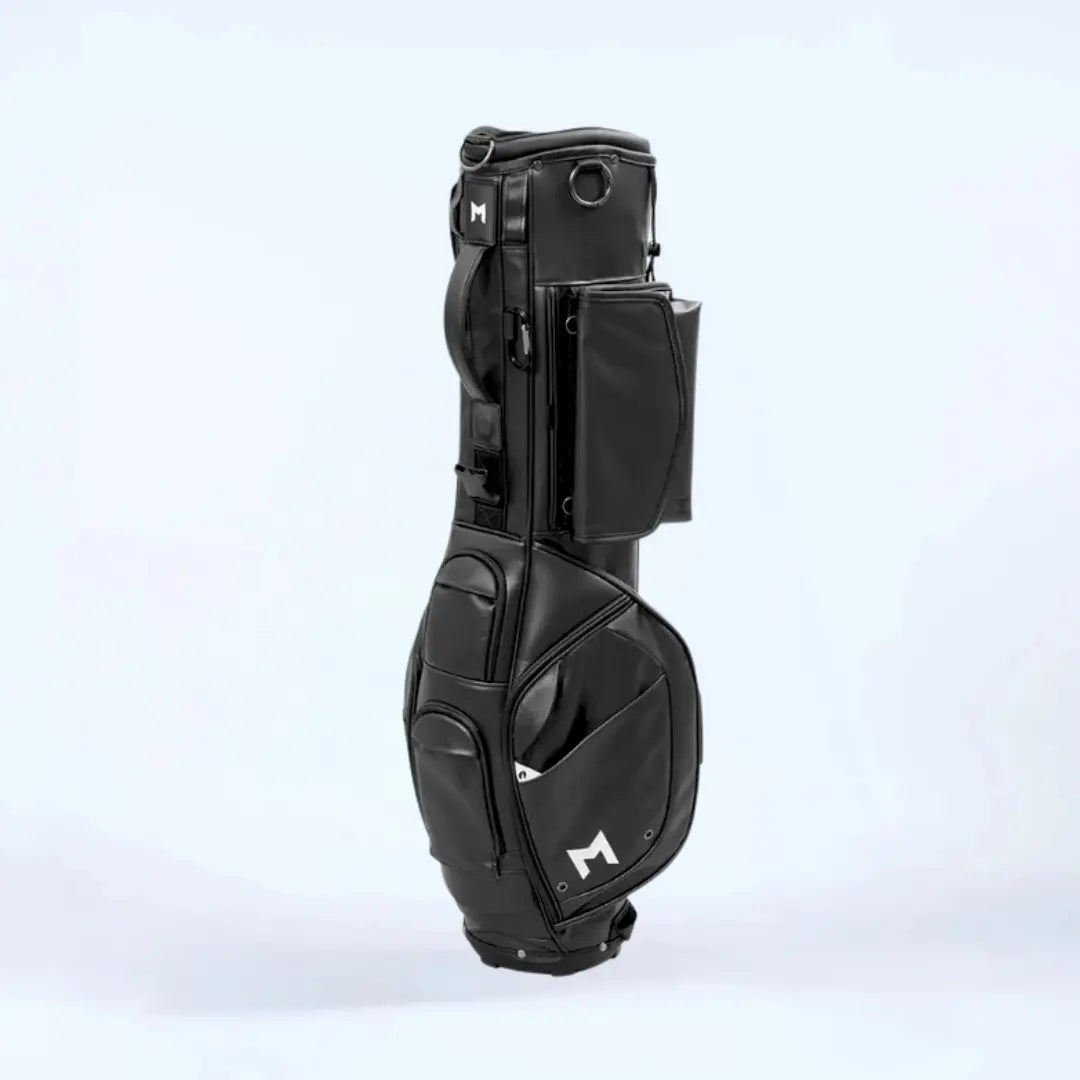
Every pocket on every MNML Golf bag uses a 100% magnetic closure system. There are no zippers, no teeth, no sliders, no pull tabs, no tracks to contaminate, and no mechanical components to wear out.
The magnetic system works through the physics of attraction - the pocket closes when the opposing magnetic elements come together, and opens with a single motion in either direction. It works with one hand, behind your back, in the rain, in the cold, with gloves on.
Here's what that means in practice:
No mechanical failure mode. The components that cause zipper failure - the slider mechanism, the interlocking teeth, the pull tab attachment - do not exist in the magnetic system. The magnets either attract or they don't, and they will continue attracting for the functional lifetime of the bag.
One-handed operation. Zipper pockets require two-hand engagement: one to hold the bag or pocket edge, one to operate the slider. Magnetic pockets open with a single motion. For a walking golfer accessing pockets dozens of times per round, this is a material improvement in usability.
No performance degradation over time. Zipper systems that are smooth on day one are noticeably stiffer by month eighteen. Magnetic closures perform identically in year five as they did in year one.
Weather performance. Magnetic closures seal completely and don't jam in cold weather, stick in heat, or corrode from moisture exposure the way metal zipper components can.

The Other Ways Golf Bags Fail...
Zipper failure is the most common — but it's not the only way a golf bag breaks down over time.
Base Panel Degradation
The bottom of a golf bag takes constant abuse: contact with every surface the bag is set on, moisture wicking from wet grass, impact from the bag being set down forcefully. Most golf bag bases thin out and compress over time, eventually affecting the structural integrity of the stand and the bag's ability to sit level.
MNML bags use performance-grade recycled materials throughout, including reinforced base construction designed to maintain structural integrity through years of high-frequency use.
Strap System Failure
The strap-to-bag attachment points on stand bags are under significant load every time the bag is worn. Stitching that wasn't designed for walking frequency fails. D-ring connectors loosen. Padding compresses and stops doing its job.
MNML's strap system is engineered for walking golfers — the attachment points, padding construction, and load distribution system are built to the standard of outdoor performance gear rather than conventional golf bag manufacturing.
Stand Leg Mechanism Wear
The leg hinge mechanism on a stand bag is another high-cycle failure point. Golfers who walk deploy and retract the stand hundreds of times per season. Hinge pins loosen, spring tension decreases, and legs that stood perfectly in year one begin to deploy unevenly or fail to lock properly by year three.
MNML's leg mechanism engineering addresses this through reinforced hinge attachment and spring systems designed for durability at high deployment cycles.
Divider Integrity
Club dividers that are thin or poorly attached to the bag's internal structure can shift, compress, or detach over time. This affects club organization and can allow shaft-to-shaft contact that scratches finishes and accelerates grip wear.
MNML's divider system uses reinforced internal attachments built to maintain position through the physical dynamics of a walking round.
Why This Matters Beyond the Bag
There's an environmental dimension to the golf bag failure problem that rarely gets discussed.
When a $300 golf bag fails after three years, not because it was abused, but because its pocket system gave out, that bag goes to a landfill. The golfer buys another bag. The cycle repeats.
Golf bags are not small products. They're made from substantial quantities of materials - synthetic fabrics, metal components, foam padding, rubber and plastic fittings. Every replacement cycle is an environmental event, not just a consumer inconvenience.
MNML GOLF's approach to this is built into the product philosophy: build something durable enough that it never needs to be replaced. The 100% recycled materials address the sourcing problem. The magnetic pocket system and reinforced construction address the failure problem. The goal is a bag you own for the rest of your golfing life - not one you replace every few years because the industry has decided that's acceptable.
Real sustainability isn't a material swap. It's building something that doesn't need to be replaced.
What This Means for You as a Buyer
If you're currently in the market for a golf bag, here's the framework MNML's approach suggests you use:
Ask about the pocket system. If the bag uses zippers, ask yourself how many cycles you'll put on those zippers over your ownership period - and whether the manufacturer has shared any durability data. If they haven't, the answer is implicit.
Ask about the materials. "Premium" is not a material specification. Ask what the primary fabric is, what the base panel is made from, and whether there's any structural testing data behind the durability claims.
Calculate total cost of ownership. A $400 bag that lasts ten years is a better financial decision than a $250 bag that lasts three. Most golfers don't make this calculation explicitly, which is why the industry doesn't feel pressure to solve the durability problem.
Ask what happens when it fails. Does the brand offer repair? Do they stand behind the product? Is there a warranty that covers mechanical failure of the closure system?
MNML GOLF was built on the conviction that golfers who ask these questions will choose a better product - and that building a better product is the only sustainable way to build a brand.

Frequently Asked Questions
How long do the magnets on MNML bags actually last?
Permanent magnets of the type used in MNML's closure system do not meaningfully degrade under normal use conditions. They won't "wear out" the way mechanical systems do. The magnetic closure system is designed to outlast every other component on the bag.
Are there any situations where magnetic closures don't perform as well as zippers?
Magnetic closures don't "lock" the way a zipper can - they hold through attraction force rather than mechanical interlock. For most golf applications, this is superior. If you were carrying a bag in extreme inversion (the bag fully upside down for an extended period), a zipper's mechanical interlock would hold better. In the actual conditions of golf - including travel - magnetic closures perform better.
Do magnets affect the electronics or cards in my bag?
MNML's magnetic system is calibrated for safe use around standard electronics. Your phone, GPS device, and credit cards are not affected by the closure magnets. If you have specific concerns about medical devices or highly sensitive equipment, consult the product specifications.
I've had bags with "magnetic" features before that didn't work well. Is this different?
Yes. Many bags use small accent magnets as secondary features - closures that assist a zipper or small snap closures on accessory pockets. MNML's system is a full replacement for the zipper - the primary pocket closure system across the entire bag. The magnet strength, geometry, and pocket design are engineered specifically for this application, not retrofitted.
What's the warranty on an MNML Golf bag?
[Insert current MNML warranty details here.] The design goal is a bag that outlasts any warranty period - but current warranty terms are detailed on the product page.
If the industry knows zippers fail, why don't other premium brands use magnetics too?
Manufacturing tooling, supply chain investment, and the cost of redesigning existing products are the primary barriers. Premium brands also benefit from the replacement cycle - a bag that fails is a customer who needs another bag. MNML was built without those legacy constraints and with a mission to build something better, which made the decision to eliminate zippers straightforward.
The Standard Has Changed.
Golf bags have been failing the same way, for the same reason, for decades. The industry has treated that failure as inevitable - a feature of the product category rather than a problem to solve.
MNML GOLF solved it.
The magnetic pocket system isn't a feature addition to a conventional golf bag. It's a structural response to the most predictable failure mode in the category - paired with materials, construction, and engineering choices that address every other way golf bags have been letting golfers down.
The bag you carry is equipment. It should perform as reliably as every other piece of equipment in your bag.