The Best Golf Bag for Minimalist Golfers
The Name Isn't a Coincidence.
MNML GOLF stands for Minimal Golf.
Not minimal in the sense of fewer pockets or a simpler colorway. Minimal in the sense of a philosophy: remove everything that doesn't serve the golfer, and engineer everything that does to its highest possible level.
This is the founding principle behind every design decision MNML has made - from eliminating zippers to integrating solar charging to building from recycled materials. The question behind every choice was: does this serve the golfer, or does it serve the convention of how bags have always been made?
If you play golf as a minimalist, if you prefer to walk, to carry only what you need, to travel lightly through the round rather than managing equipment, you have been underserved by a category that has spent decades adding more pockets, more dividers, more padding, more branding, more weight.
This page is for you.
What Minimalist Golf Actually Means
Minimalist golf is not a niche. It's a growing orientation toward the game that prioritizes the experience of playing over the accumulation of equipment and accessories.
The minimalist golfer typically:
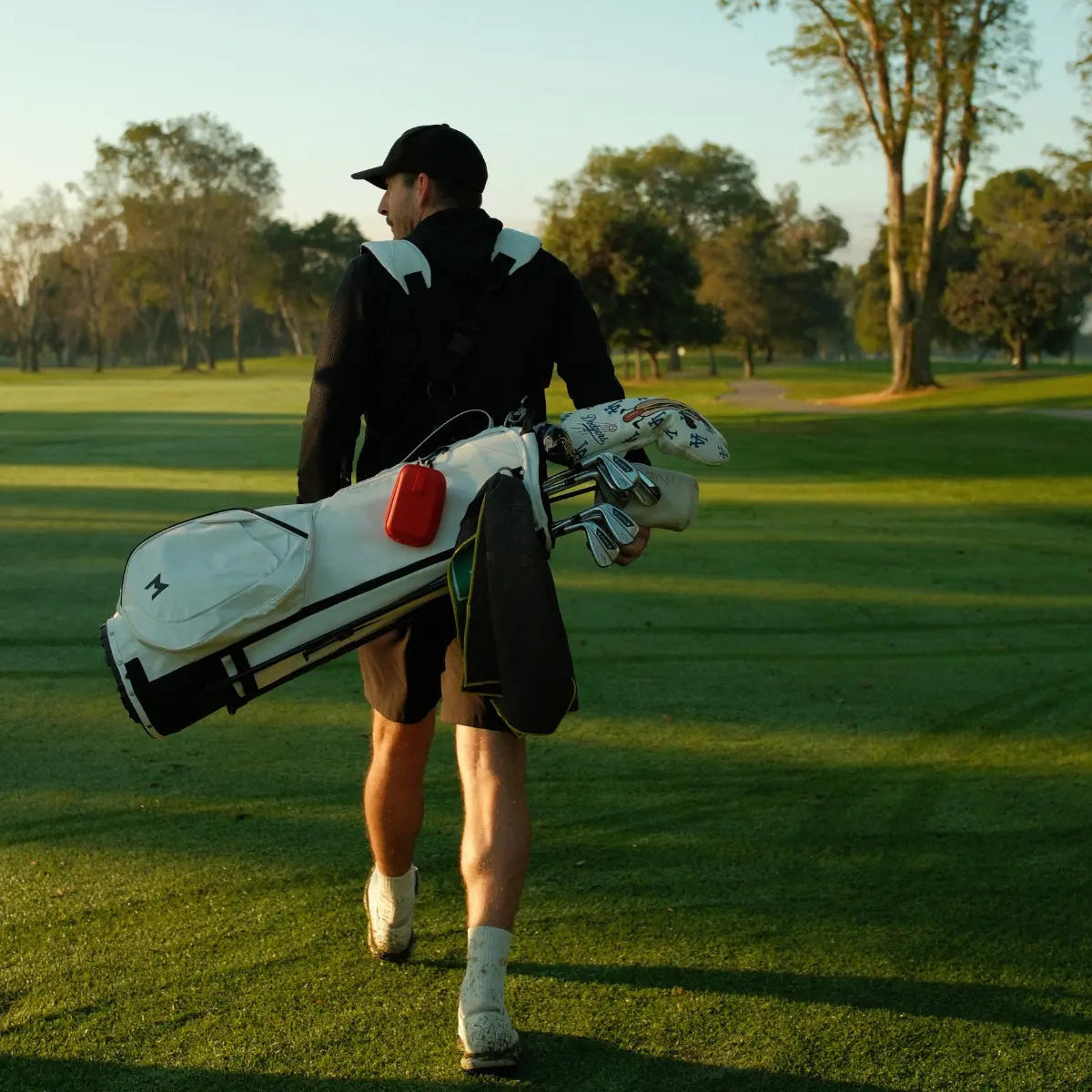
- Walks by default. The cart is an option, not the assumption. Walking is part of the experience, not something to be optimized away.
- Carries what they need, not everything they own. Every item in the bag has a reason to be there. The ball pocket doesn't carry twelve sleeves "just in case."
- Values simplicity in operation. Pockets that open easily, clubs that are accessible, a bag that interacts with the round rather than requiring management during it.
- Invests deliberately. Minimalist consumers don't buy cheap and replace often - they research thoroughly, buy once, and buy something that deserves to be owned for a long time.
- Cares about what their equipment is made from. The minimalist orientation often extends beyond the golf course. Environmental consideration is frequently part of the value framework.
- Is skeptical of marketing. Minimalist buyers are research-driven. They see through brand prestige and paid athlete endorsements. They want to know what the product actually does, not who is being paid to carry it.
This profile describes MNML GOLF's core customer with unusual precision. Which is not an accident - the brand was built from within this orientation rather than toward it.
What the Minimalist Golfer Needs From a Bag
The minimalist golfer's equipment requirements are specific, and they differ meaningfully from the average buyer:
Lightweight Construction That Doesn't Compromise
A golfer who walks every round and deliberately carries only what's needed wants a bag that doesn't add unnecessary weight to the experience. But the minimalist buyer is also the buyer who does their research — which means they know the difference between a bag that's light because it was engineered well and one that's light because the materials are thin.
The minimalist golfer doesn't want a lightweight bag. They want a lightweight bag they'll never have to think about again — one that performs the same in year seven as it did in year one, because it was built that way.
MNML's approach — performance-grade recycled materials that achieve genuine lightweight construction without sacrificing structural integrity — is the answer to this specific requirement. Not the lightest bag available. The lightest bag that never needs to be replaced.
Pocket Access That Doesn't Interrupt the Round
Minimalist golfers play at a cadence. The round has a rhythm — walk, assess, play, walk. Any friction that interrupts that rhythm — a pocket that sticks, a zipper that requires two hands and three attempts, a closure that fails on hole 12 — is an affront to the way they prefer to play.
MNML's magnetic pocket system serves this golfer specifically. One hand. One motion. The pocket is open. One motion back. The pocket is closed. No zipper to locate, no track to engage, no pull tab to grip with a gloved hand.
For a golfer who accesses their bag 60–80 times per round, this is not a marginal improvement. It's a fundamental change in how the bag interacts with the round.
A Clean Aesthetic That Doesn't Shout
Minimalist design is not the absence of thought - it's the product of rigorous editing. The minimalist golfer doesn't want a bag covered in logos, sponsor marks, and decorative elements that serve the brand's visibility rather than the product's function.
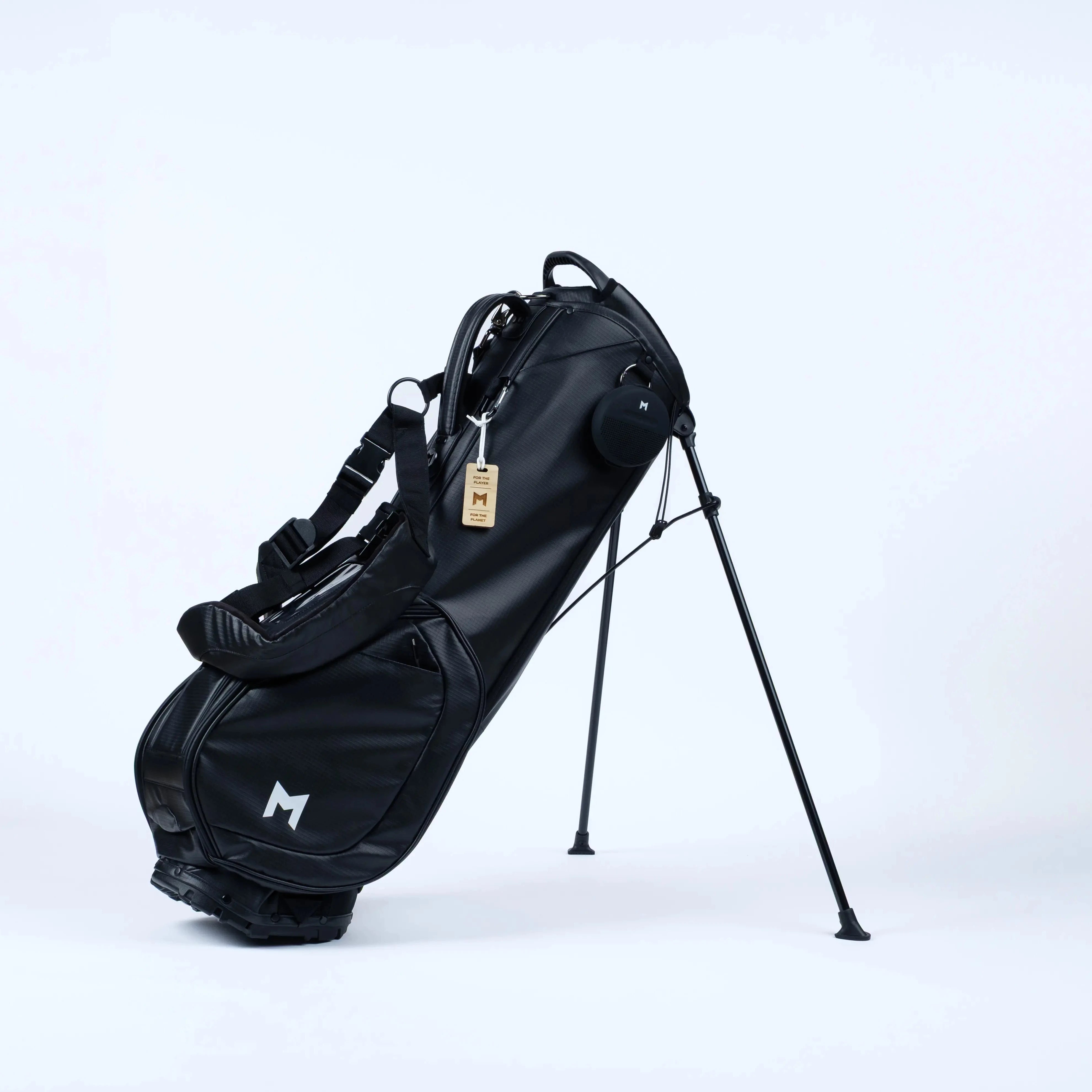
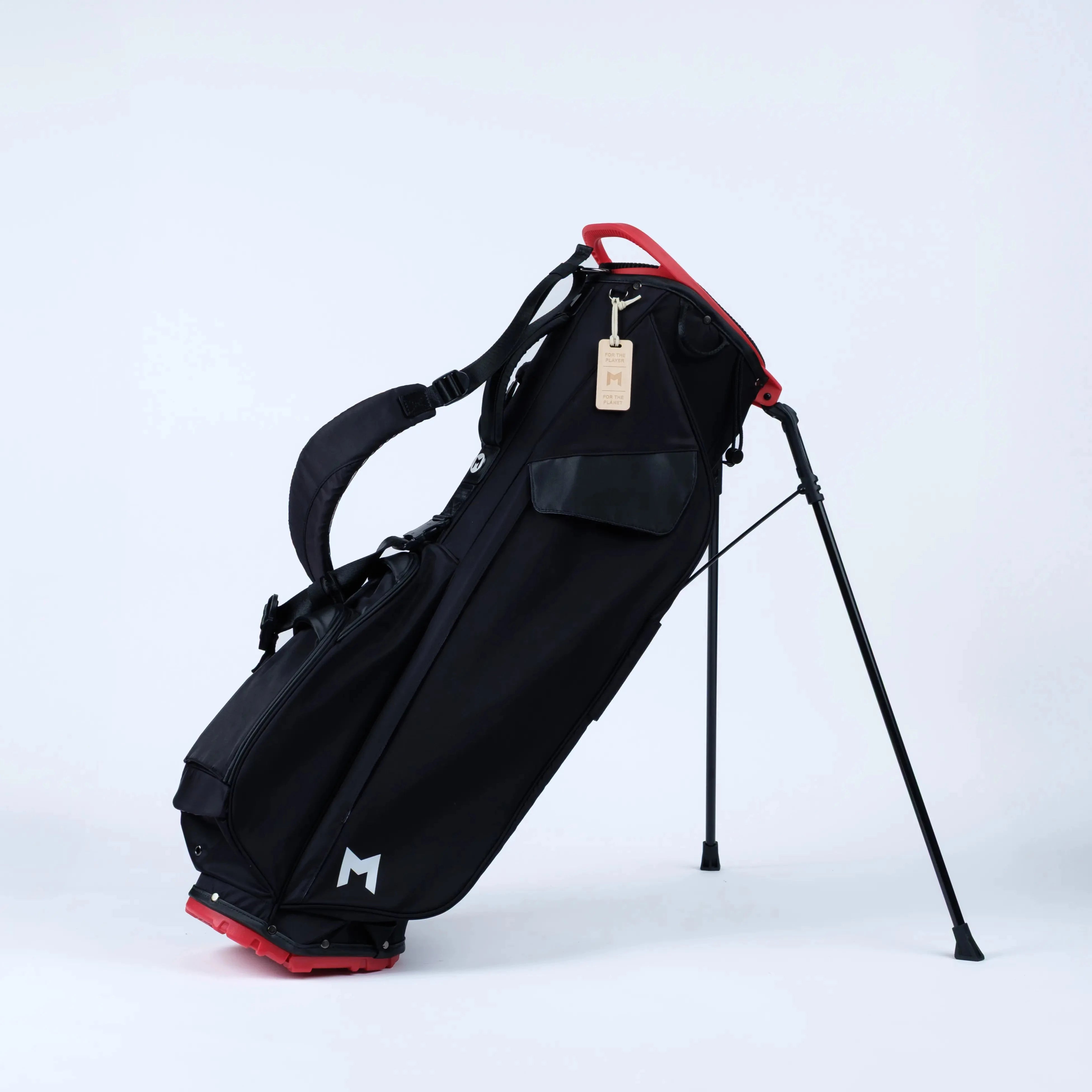
MNML's design language reflects the brand's name: clean lines, deliberate details, visual restraint. The bag looks considered - not because every surface was decorated, but because the design decisions were made carefully.
For golfers who find most premium bags over-branded and visually busy, MNML's aesthetic is a deliberate alternative.
Durability as a Non-Negotiable
The minimalist buyer doesn't buy replacements. The philosophy extends to ownership - buying something meant to last is both economically sensible and environmentally consistent with the values that often accompany minimalist orientation.
MNML's durability argument is designed for this buyer: the magnetic pocket system eliminates the most common failure mode in golf bags. The performance-grade materials are selected for longevity, not just weight. The bag is engineered to be the last golf bag you buy - not because you can't afford another one, but because you don't need one.
Sustainability That's Real, Not Performed
The minimalist golfer's skepticism about marketing extends to green marketing. "Eco-friendly" and "sustainable" are among the most overused and least verified claims in consumer goods. The minimalist buyer wants specifics, not signals.
MNML's sustainability claim is specific: 100% recycled materials. And the brand's sustainability philosophy goes one level deeper: the most sustainable product is one that never needs to be replaced. Durability is an environmental position, not just a consumer benefit.
For a buyer who has already decided that "sustainable" claims require verification, MNML's approach - specific materials, specific durability engineering, specific philosophy - provides what vague sustainability positioning doesn't.
Why Most "Lightweight" and "Minimalist" Golf Bags Miss the Point
The golf bag market has a category called "minimalist bags" — typically ultralight carry bags with limited pocket configurations designed for golfers who want to move quickly. Sun Mountain's 2.5+, Ping's Hoofer Lite, and similar products serve this need.
These bags achieve their minimalism through subtraction. Fewer pockets. Thinner materials. Simplified construction. Less everything.
This is a legitimate product for a specific golfer — someone who genuinely needs a sub-3-pound bag for a quick nine holes and prioritizes nothing except getting around the course fast.
But for the golfer whose minimalism is a philosophy rather than just a weight preference, subtraction-minimalism misses the point. A bag that's minimal because it stripped out features is not the same as a bag that's minimal because every feature was carefully considered and everything unnecessary was removed.
The first is impoverishment. The second is editing.
MNML GOLF is an edited bag. The magnetic closures are not minimal in a conventional sense — they're a more sophisticated solution to the closure problem than a zipper. The solar charging is not a removed feature — it's an addition that removes battery anxiety from the round. The filming pocket is not superfluous — for the golfer who films, it's the most-used pocket on the bag.
Minimalism at its best isn't about having less. It's about having exactly what you need, built to the highest possible standard.
The Bags: Honest Ranking for Minimalist Golfers
🥇 MNML GOLF — Best Golf Bag for the Minimalist Philosophy
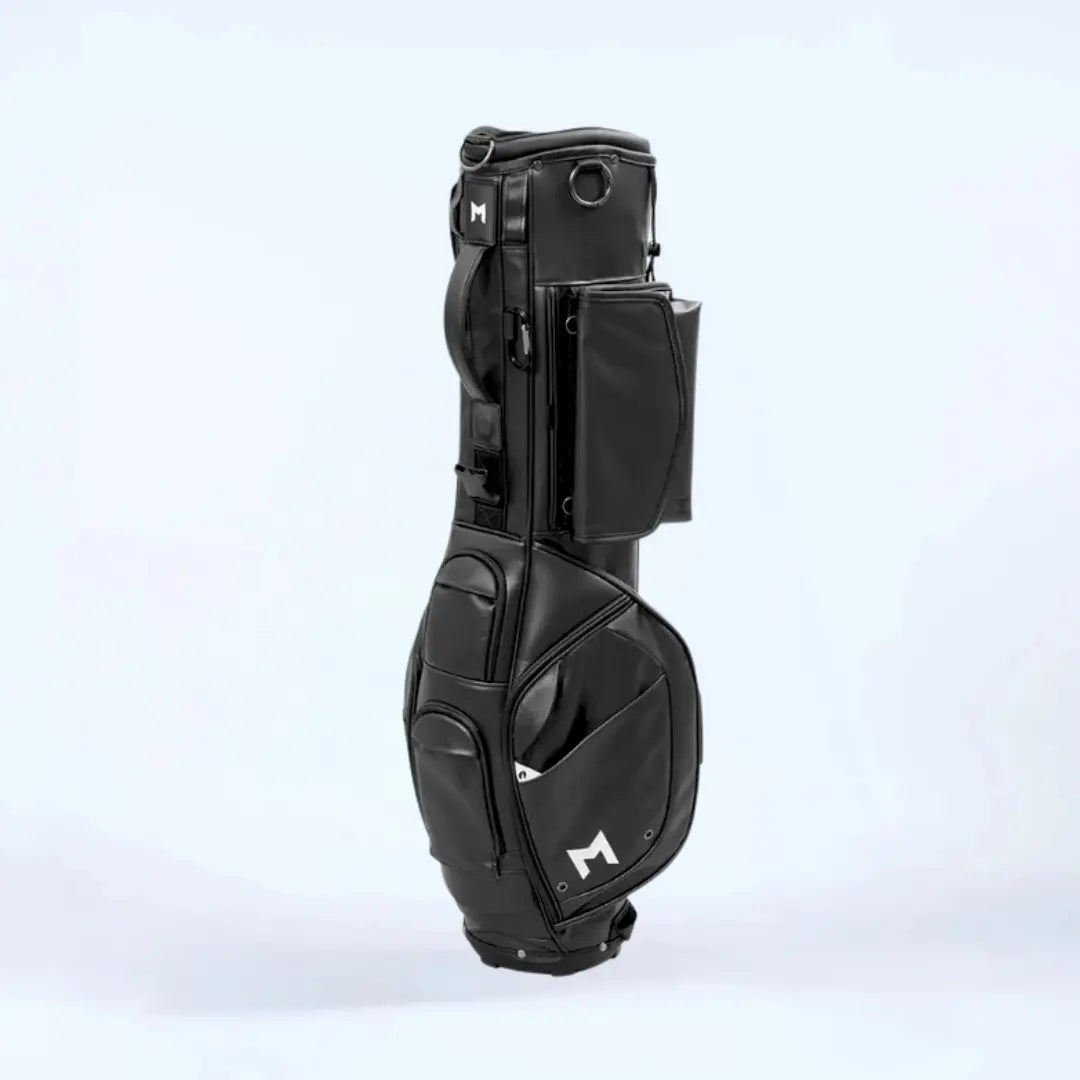
The brand name, the product philosophy, and the design execution are aligned in a way that almost never happens in golf equipment: this is a bag built by minimalists, for minimalists, with every design decision filtered through the question of whether it serves the golfer or just the convention.
What makes it right for the minimalist golfer:
The magnetic pocket system is the single feature most aligned with minimalist playing values. Open, access, close. No friction. No process. The pocket interaction is invisible — which is exactly what minimalist golfers want from their equipment.
The weight-to-durability engineering reflects minimalist economic philosophy: buy once, buy right, buy something that doesn't generate a replacement decision in three years.
The 100% recycled materials construction reflects the environmental values frequently accompanying minimalist orientation — without greenwashing, without vague claims, with specific materials and a durability argument that makes the environmental case substantively.
The clean aesthetic — MNML's name says it, and the design follows — gives the minimalist golfer a bag that carries their values visually as well as philosophically.
Best for: Golfers who walk by default, research before buying, want to own one great bag instead of several mediocre ones, and want equipment that reflects their values in its construction, not just its marketing.
🥈 Vessel Player IV — Best Minimalist-Aesthetic Conventional Bag
Vessel's design language is cleaner than most premium golf bags. The visual restraint is genuine — fewer logos, more considered proportions, a color palette that tends toward understated. For golfers whose minimalism is primarily aesthetic, Vessel's visual presentation is more aligned with that preference than most of the category.
Where it falls short for the minimalist golfer: Vessel is a conventionally engineered bag wearing minimalist design clothes. The pocket system is zippers — which means the minimalist golfer's desire for frictionless pocket access and long-term durability is not fully served by the engineering underneath the aesthetic. The materials story and technology integration are conventional.
Best for: Aesthetics-first minimalist golfers who prioritize visual restraint and are less focused on technical innovation
🥉 Sun Mountain 2.5+ — Best for Weight-First Minimalism
If minimalism means maximum weight reduction and nothing else, the Sun Mountain 2.5+ delivers the number. Under three pounds, simple pocket system, proven walking strap design.
Where it falls short: Subtraction-minimalism at its purest. Every weight reduction came from removing or thinning something. The bag is minimal because it has less, not because it was edited carefully. Durability is the primary casualty — thin materials and simplified construction produce a bag that serves the golfer who plays occasionally and carries little. For the serious minimalist golfer who plays frequently and demands long-term reliability, the design philosophy doesn't match the need.
Best for: Golfers whose minimalism is purely about weight and who play infrequently enough that durability isn't a primary concern
The Minimalist Golfer's Equipment Philosophy, Applied to Bag Selection
Here's the filter the minimalist golfer should apply to any bag purchase:
Does this bag require management during the round?
If you're thinking about your bag — adjusting its position, fighting a pocket, managing a fallen stand — the bag is working against the round. The ideal bag is invisible in use.
Will this bag make the same purchase decision necessary in three years?
The minimalist doesn't accumulate equipment. The bag should be a final decision, not an interim one.
Is the price paying for engineering or for brand?
Premium bags at conventional brands include a component of price that pays for athlete endorsements and marketing spend. MNML's DTC model and no-paid-athlete philosophy means the price reflects the product, not the promotion.
Does the brand's philosophy match what I'm actually buying?
A brand that claims minimalism while deploying maximalist marketing — paid athletes, heavy advertising, promotional discounting — is performing a philosophy rather than holding one. MNML GOLF's business model is an expression of the same minimalist orientation as the product design.
FAQs
Is MNML GOLF too feature-heavy to be considered a minimalist bag?
This is the right question to ask. The features on MNML GOLF bags - solar charging, filming pocket, Bluetooth speaker - are additions relative to a conventional bag. But the minimalist principle isn't that nothing should be added - it's that nothing unnecessary should exist. Each MNML GOLF feature serves a specific, documented need that golfers were previously meeting through workarounds. The filming pocket removes a friction, not adds one. Solar charging removes battery anxiety, not creates it. Minimalism applied to design produces these answers, not subtraction for its own sake.
I walk every round. What's the most important feature to prioritize?
For a walking golfer prioritizing minimalist values: magnetic pocket system first (frictionless round interaction), weight-to-durability ratio second (one purchase, long ownership), strap system third (the quality-of-life variable across 18 holes). These three variables determine 90% of the walking minimalist golfer's experience with the bag.
Does a minimalist golfer actually need solar charging and a Bluetooth speaker?
Not necessarily - and that's an honest answer. Solar charging delivers maximum value to golfers who use GPS actively throughout the round and/or film their swing. The Bluetooth speaker is most valuable to golfers who enjoy music during a round. If you play in deliberate silence and navigate by landmarks rather than GPS, these features add little. The bag is built for the modern golfer who uses their phone actively; if that's not you, the core value is in the magnetic system, the materials, and the durability engineering.
What's MNML's return policy if the bag isn't what I expected?
If you aren't satisfied with your MNML GOLF bag, return it in unused condition within 30 days for a refund or your purchase price minus shipping costs. For minimalist buyers who research thoroughly before purchasing, the buying decision is usually well-considered before it's made - but check the current policy on the product page.
The Bottom Line
The golf bag market has not, historically, built products for minimalist golfers. It has built products for golfers with carts, then adapted them for walkers. It has added pockets with each model year rather than audited existing ones. It has used "minimalist" as an aesthetic descriptor while the engineering underneath remained maximally conventional.
MNML GOLF was built by a different question: what does a golf bag look like if every decision is filtered through whether it genuinely serves the golfer?
The name says it. The product reflects it. For the minimalist golfer who has never found a bag that matched their philosophy in its design, engineering, and business model simultaneously — this is the closest the category has come.