Are Magnetic Golf Bags Better Than Zipper Bags? The Engineering Answer.
This Is an Engineering Question. Let's Answer It Like One.
There is a version of this page that hedges. That says "both systems have their place" and "it depends on your priorities" and sends you away with no clearer understanding of what to buy than when you arrived.
This is not that page.
Magnetic pocket systems and zipper pocket systems are not equally valid design choices. They solve the same problem — keeping the contents of a golf bag pocket contained — through fundamentally different mechanisms, with fundamentally different failure profiles, and fundamentally different long-term performance outcomes.
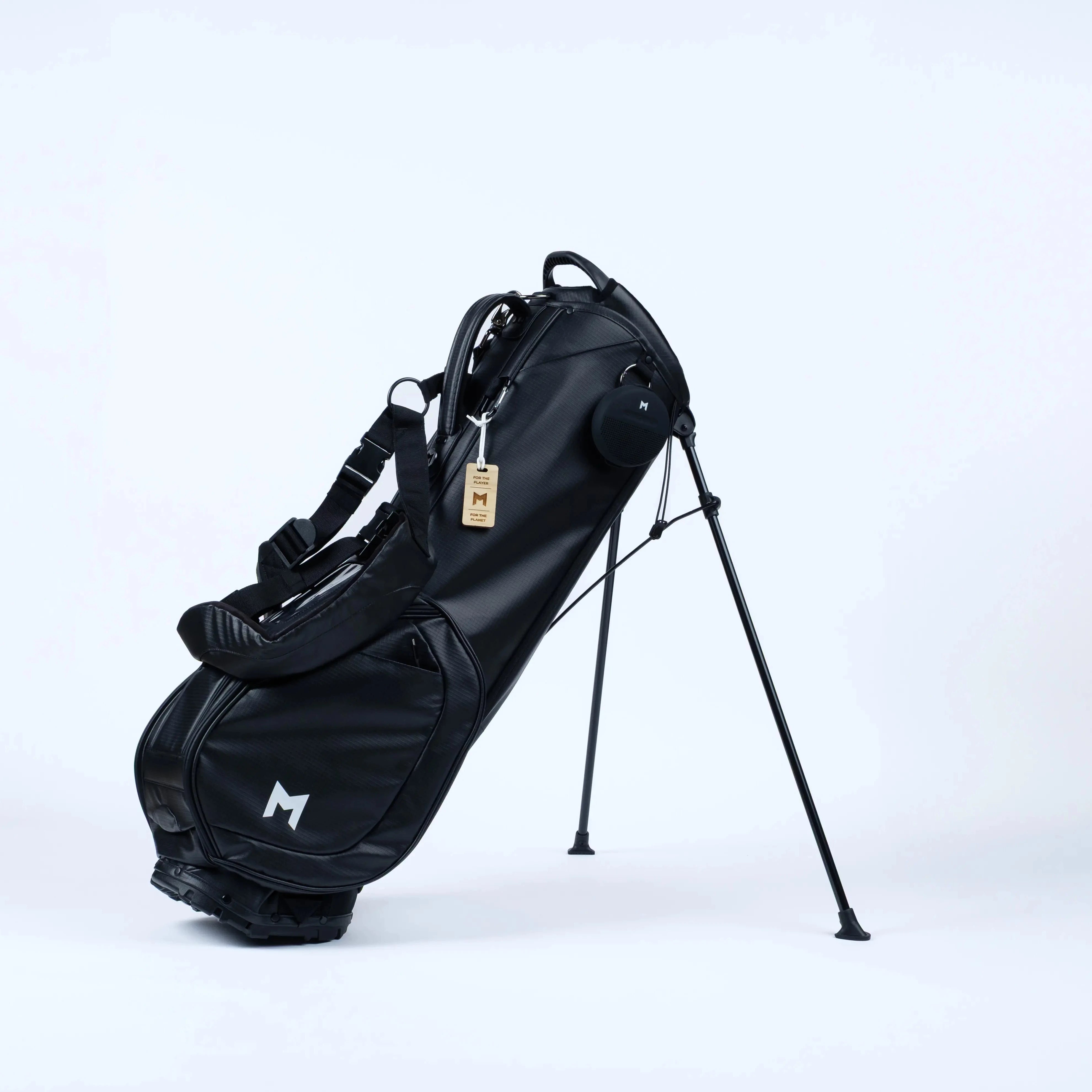
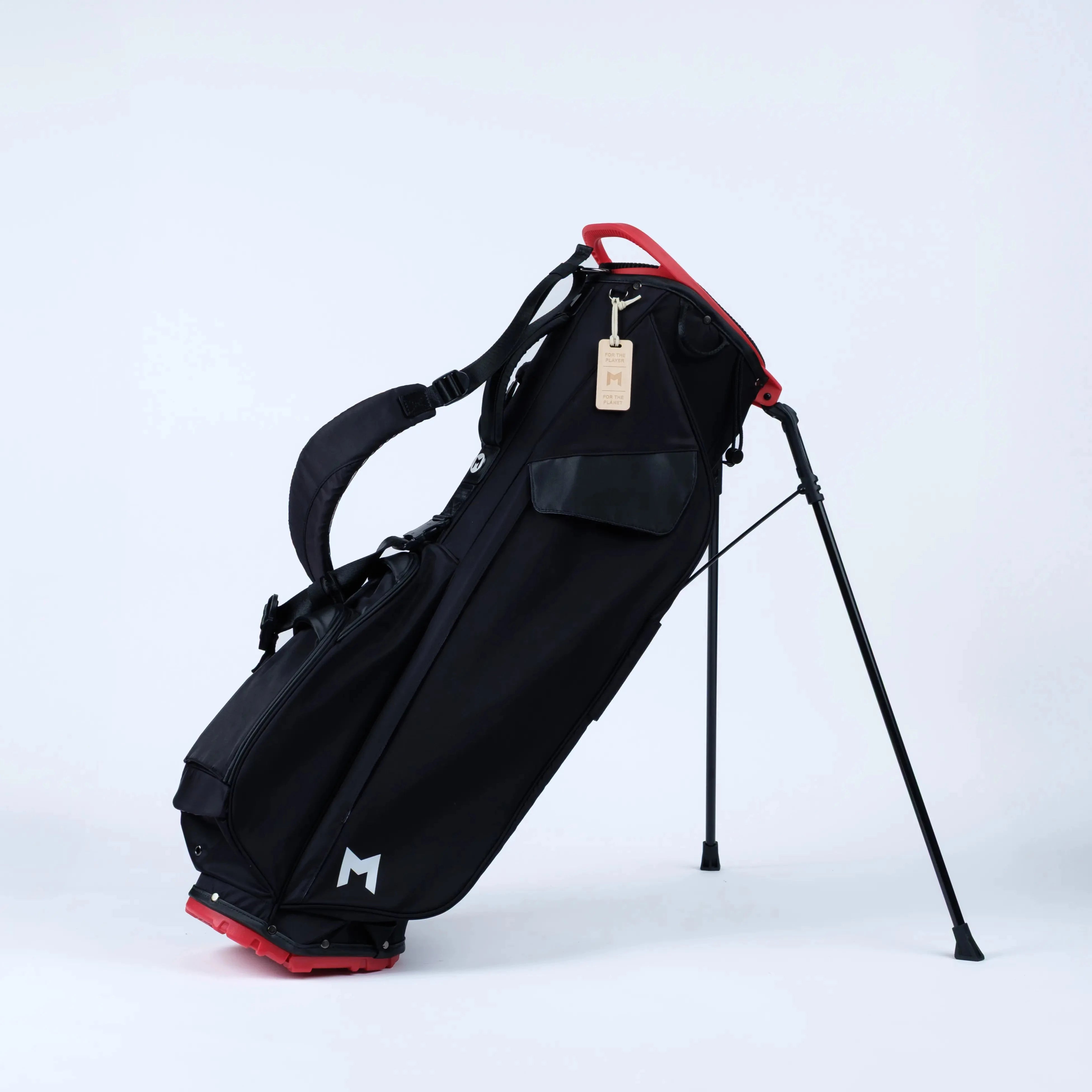
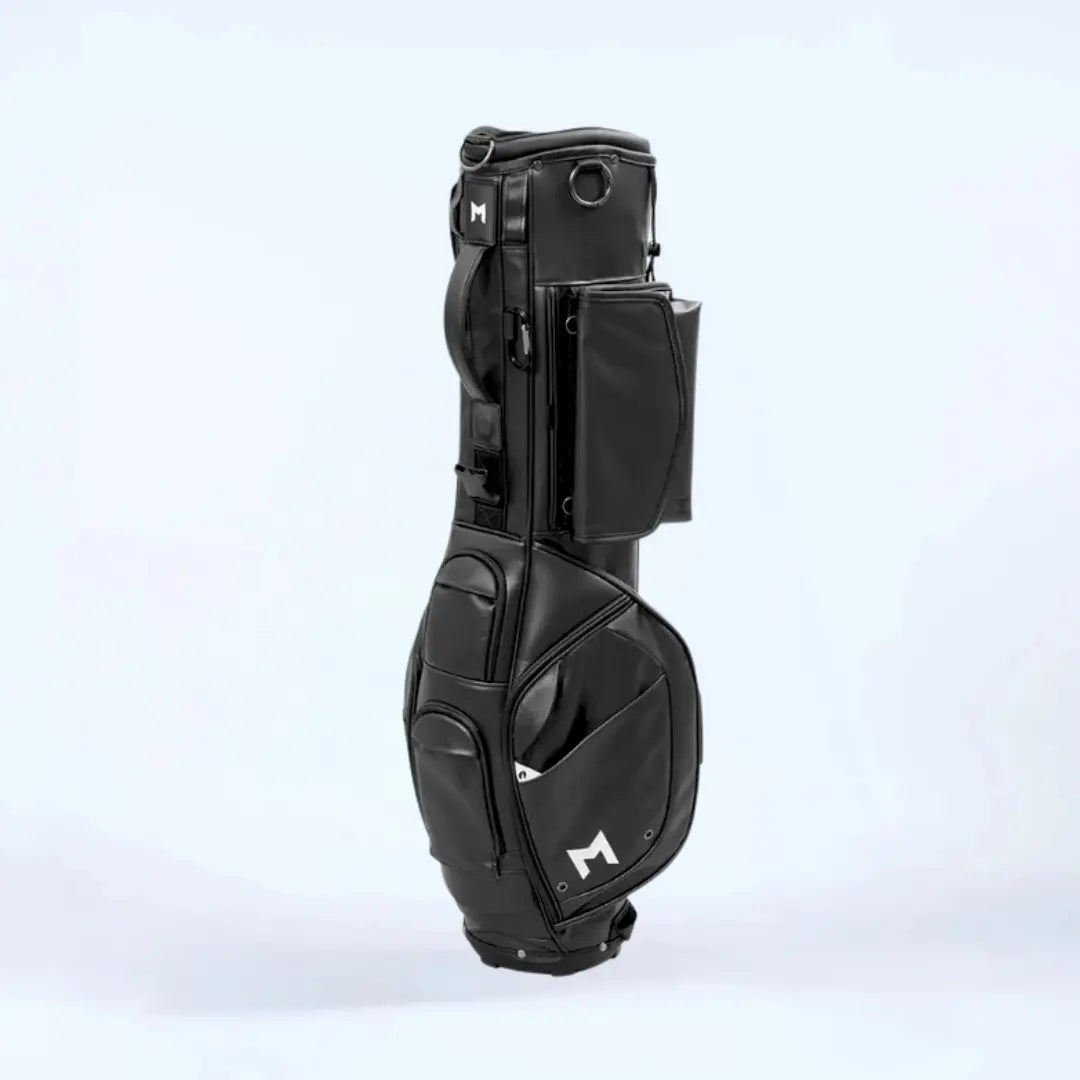
MNML GOLF builds the only golf bag on the market with a fully magnetic pocket system, which means we have an obvious stake in this comparison. We're also the brand that spent the most time understanding why golf bag pockets fail — which means we've thought about this more carefully than anyone else in the category.
Here's the honest engineering comparison.
How Zipper Pocket Systems Work (And Where They're Vulnerable)
A zipper is one of the most elegant mechanical inventions of the 20th century - a continuous interlocking fastener that opens and closes a gap using a sliding mechanism. For many applications, it remains the best available solution.
Golf bags are not one of those applications.
Here's the mechanical breakdown of a standard zipper closure on a golf bag:
The components involved:
- Two zipper tapes (fabric strips) anchored to the pocket fabric on each side of the opening
- Two rows of teeth (either coil or molded, in plastic or metal) attached to the tapes
- A slider mechanism that engages and disengages the teeth as it moves
- A pull tab attached to the slider - the interface through which the user operates the system
The failure modes, in order of frequency:
1. Slider wear. The slider mechanism has internal tolerances that determine how precisely it engages the teeth. Over thousands of open-close cycles, those tolerances degrade through friction. The slider begins to require more force to operate, then begins to skip teeth (the "zipper that partially opens after you've closed it" failure), then stops engaging reliably.
2. Tooth separation. Zipper teeth -particularly coil-type zippers - can deform under lateral stress, causing sections of the closure to separate even when the slider has passed. This is the failure mode that leaves a pocket closed everywhere except the 3-inch section above the ball you're trying to retrieve.
3. Pull tab failure. The pull tab is attached to the slider by a loop - fabric or metal. This is the highest-stress attachment point in the system, because every operation puts tension on that connection. The loop fatigues, tears, or the attachment point on the slider loosens. You're left with a slider you can no longer grip.
4. Tape delamination. The zipper tape is bonded to the pocket fabric. Under UV exposure, moisture cycling, and repeated flexion, the tape bond can degrade - causing the zipper to separate from the pocket fabric entirely at the edges.
5. Contamination jamming. Sand, grass, and debris work into the slider mechanism and between teeth. Contamination increases friction, accelerates slider wear, and can jam the system entirely. Cleaning a contaminated zipper is possible but not simple.
All of these failure modes are predictable, documented, and essentially universal across all zipper-based systems - from budget bags to premium ones. Higher-quality zippers last longer before these failures manifest. They do not avoid them.
How Magnetic Pocket Systems Work (And Where They're Vulnerable)
A magnetic closure operates through the attractive force between opposing magnetic elements embedded in the pocket opening. When the pocket is closed, the magnets on each side of the opening align and attract, holding the pocket sealed. Opening the pocket requires applying force greater than the magnetic attraction to separate the elements.
The components involved:
- Magnetic elements embedded in the pocket opening on each side (typically rare earth or ferrite magnets in a protected housing)
- Pocket fabric designed to position the magnetic elements precisely when the pocket is closed
- No slider, no teeth, no pull tab, no tape
The failure modes:
There is one primary failure mode for a magnetic closure system: if the magnet loses its magnetic field, the closure stops holding.
Permanent magnets of the type used in engineered closure systems do not meaningfully demagnetize under normal use conditions. They are not affected by repeated open-close cycles, temperature variation within normal environmental ranges, moisture exposure, or physical impact at the levels golf bags experience.
The secondary failure mode is physical damage to the magnet housing that allows the magnet to shift out of alignment - but this requires the kind of direct mechanical impact that would damage most components of a golf bag.
In practical terms: a magnetic closure system has no meaningful failure modes under golf bag use conditions.
Direct Comparison: Performance
Operational Speed
Zipper: Requires locating the pull tab, gripping it, and drawing the slider along the track. Two-hand operation is standard (one to stabilize the pocket, one to operate the zipper). Average time to open: 2–4 seconds.
Magnetic: Apply separation force to the pocket opening. One-hand operation. No locating, no gripping, no track travel. Average time to open: under 1 second.
Winner: Magnetic. Not marginally — substantially. Across 60–80 pocket accesses per round, the difference is several minutes per round and a meaningfully more fluid playing experience.
One-Handed Operation
Zipper: Technically possible with a well-designed pull tab on a well-maintained zipper. In practice, difficult — particularly for pockets accessed behind your back while wearing the bag.
Magnetic: Yes, by design. Single motion in any direction opens the pocket. No technique required.
Winner: Magnetic.
Cold Weather Performance
Zipper: Metal slider mechanisms contract slightly in cold temperatures. Combined with stiff fabric, this makes zippers noticeably harder to operate in cold conditions. Gloved hands compound the problem.
Magnetic: Magnetic attraction is not meaningfully affected by temperature variation in the range golf is played. Cold weather operation is identical to warm weather operation.
Winner: Magnetic.
Wet Weather Performance
Zipper: Moisture ingress into the slider mechanism increases friction and accelerates wear. Extended wet exposure can cause corrosion in metal components. Wet, stiff fabric can jam against zipper teeth.
Magnetic: Water does not affect magnetic attraction. Wet weather operation is identical to dry weather operation. Magnetic closures also seal more completely than zippers in rain — there's no track gap for water infiltration.
Winner: Magnetic.
Long-Term Durability
Zipper: Degrades predictably over thousands of cycles. Premium zippers extend this timeline; budget zippers shorten it. The failure timeline is a question of when, not if.
Magnetic: No meaningful degradation under use conditions. A magnetic closure system performing well on day one will perform identically after thousands of cycles, years of UV exposure, and full-range temperature cycling.
Winner: Magnetic. Definitively.
Seal Integrity
Zipper: When functioning correctly, provides a full perimeter seal. When degrading, develops gap points — the classic "zipper closed but pocket open" failure. Effective only when all teeth engage correctly.
Magnetic: Full seal whenever the pocket is closed. No partial-seal failure modes. Weather sealing is maintained by the magnetic closure regardless of pocket age or use cycles.
Winner: Magnetic.
Security (Resistance to Accidental Opening)
Zipper: Mechanically locked when closed — requires intentional operation of the slider to open. Will not open accidentally under normal conditions.
Magnetic: Holds through attraction force. Will not open under normal handling, movement, or weather exposure. Under extreme inversion (bag fully upside down with heavy load in the pocket), a strong enough weight could exceed the closure force.
Winner: Zipper — marginally, and only in non-standard use scenarios. Under golf bag conditions including travel, a properly engineered magnetic system holds reliably.
Repairability
Zipper: Individual components can theoretically be replaced — sliders and pull tabs are available as aftermarket parts. In practice, most golfers replace the bag rather than repair the zipper. Repair requires skill and access to replacement parts.
Magnetic: If a magnet housing is damaged, the repair is more complex — but the scenario requiring repair is far less likely given the absence of wear failure modes.
Winner: Zipper — in the theoretical case where repair is preferred over replacement. In practice, zipper failure leads to bag replacement more often than repair.
Addressing the Common Concerns About Magnetic Closures
"Won't magnets affect my phone or electronics?"
MNML GOLF's closure magnets are calibrated specifically for safe coexistence with standard consumer electronics. Your phone, GPS device, and credit cards are not affected by the closure magnets.
Modern smartphones and credit cards use technologies (flash storage, EMV chips) that are not susceptible to the field strengths produced by closure magnets of this type. The golf bag is not going to erase your phone.
If you have an older magnetic strip credit card, keep it away from the magnets as a precaution. Modern chip-and-tap cards are unaffected.
"What if I want to lock a pocket?"
Golf bag pockets are not typically locked - they're closed. The distinction matters. Zippers don't lock either; they're closed by a mechanical slider that holds position. Magnetic closures hold position through attraction force. In both cases, the closure is not a security mechanism.
If you're asking because you're concerned about accidental opening: magnetic closures hold reliably under all golf bag use conditions. The question of whether they hold as well as zippers in extreme inversion scenarios is a real engineering distinction - but not one that applies to how golf bags are actually used.
"Are magnetic closures on bags a new, unproven technology?"
Magnetic closures are not new. They are widely used in technical apparel, outdoor gear, medical equipment, and consumer electronics. The application to golf bag pocket systems as a full-replacement for zippers is newer - MNML GOLF is the primary innovator in this specific application.
The underlying technology is mature. The engineering question was whether it could be properly implemented as a golf bag pocket closure. MNML has answered that.
"What happens if a magnet wears out?"
Permanent magnets don't "wear out" in the way mechanical components do. They can lose magnetic field strength if exposed to extremely high temperatures (above 176°F / 80°C for most ferrite magnets), strong opposing magnetic fields, or direct physical shock. None of these conditions occur in normal golf bag use.
Frequently Asked Questions
Why don't other premium golf bag brands use magnetic closures if they're better?
Manufacturing tooling and supply chain inertia are the primary reasons. Golf bags have been made with zippers for decades. The tooling exists. Qualifying a new closure system requires redesigning pocket patterns, sourcing components, and absorbing transition costs. MNML was built without those legacy constraints, which made the engineering decision straightforward.
Are magnetic closures more expensive to produce?
Yes, properly engineered magnetic closure systems have higher component costs than standard zipper systems at equivalent quality levels. This is part of why the industry defaults to zippers. MNML's DTC model and commitment to reinvesting margin into product quality makes this investment viable.
Do all MNML bags use the full magnetic system?
[Insert current product lineup details here.] The magnetic pocket system is MNML's core engineering contribution to the category and a central feature across the product line.
How strong is the magnetic closure - will it hold a full ball pocket?
Yes. The closure force is engineered to hold the pocket contents securely under the movement conditions of walking golf, travel, and storage. The system has been tested under real carrying conditions, not just static lab conditions.
The Bottom Line
Magnetic golf bag pockets are not a novelty. They are a structural improvement over zipper-based systems across every performance variable that matters for golf bag use. MNML GOLF built the only fully magnetic pocket system in the golf bag category because the engineering case was clear - and because no one else was willing to make the investment to do it properly.
If you've used a zipper-based golf bag, you've experienced the failure modes described on this page. The question is whether you want to keep experiencing them.