How MNML Golf Is Built Differently: No Athletes, No Ads, No Compromises
Most Golf Brands Spend Their Money Telling You How Good Their Products Are. MNML Spends It Making Them That Way.
Before you buy from any brand, it's worth understanding how that brand operates. Not the mission statement on the about page - the actual structural decisions that determine what your money funds when you buy their product.
This is not a page about why MNML GOLF is great. It's a page about how MNML GOLF works - the operating decisions behind the brand that explain why the products exist the way they do, why the pricing is what it is, and why a golfer who has thought about this should care.
It's also a page that makes a straightforward case: the way a brand builds itself shows up in the product. And the way MNML has chosen to build is different enough that it deserves to be understood before the comparison is made.
The Standard Golf Brand Playbook
To understand what makes MNML GOLF different, it helps to understand what most premium golf brands do with their money.
The standard premium golf equipment playbook looks roughly like this:
Step 1 — Sign athletes. Tour players, social media golfers, and recognizable names carry the bag in exchange for significant fee arrangements. The bag's legitimacy is borrowed from the athlete's legitimacy. This is expensive — top-tier athlete partnerships in golf equipment represent significant six and seven-figure annual commitments.
Step 2 — Buy advertising. Paid placement in golf publications, digital ads, social media spend, sponsored content. The goal is visibility — making sure the brand appears wherever golfers are looking, whether or not the appearance was earned organically.
Step 3 — Build in promotional pricing cycles. Premium pricing at launch, followed by periodic discounting to generate volume — end-of-season sales, promotional codes, influencer discount partnerships. This trains the consumer to wait for discounts rather than buy at full price, which erodes brand value while maintaining short-term revenue targets.
Step 4 — Invest what's left in the product. After athlete fees, ad spend, retailer margins (often 40–50% of retail price for brands in traditional retail distribution), and promotional discounting, the actual budget available for product engineering, material quality, and design investment is a fraction of what a consumer paying full retail price might expect.
This is not a secret. It's the standard operating model for consumer goods brands in most categories — including premium golf equipment. And it produces functional products. It just doesn't produce the best possible product for the price.
What MNML GOLF Does Instead
MNML GOLF was built on explicit rejections of each element of that playbook.
No Paid Athletes
MNML GOLF does not have paid athlete partnerships. No tour professionals, no social media golfers on retainer, no ambassadors being compensated for carrying the bag.
This is a meaningful financial decision. The budget that a comparably-sized brand would allocate to athlete fees stays inside MNML's product development and operations.
It's also a philosophical decision. Athlete endorsement is a form of borrowed credibility — you're paying someone to attach their reputation to your product on the assumption that their audience will follow. MNML's position is that the product should earn its own reputation through genuine performance, and that golfers who research thoroughly will arrive at that reputation without being directed there by a sponsored post.
The brand isn't anti-athlete. It's anti-borrowing. If a golfer who carries MNML bags happens to play at a high level, that's because they chose the bag — not because they were paid to be seen with it.
No Paid Advertising Dependency
MNML GOLF does not treat paid advertising as a core growth engine. The brand does not run significant paid digital advertising campaigns, does not buy placement in golf publications, and does not use sponsored content as a primary channel for customer acquisition.
This is a difficult operational choice in the current digital environment, where paid advertising has become the default growth lever for DTC brands. It's also a choice that produces a fundamentally different brand relationship with its customers.
When a golfer finds MNML GOLF, they find it through genuine search — researching golf bags, reading honest comparisons, asking questions and discovering that the answers lead here. That golfer arrives with a different relationship to the brand than one who encountered it through a targeted ad. They've done work to find MNML. The brand hasn't intercepted them.
Organic discovery produces better customers — more informed, more committed, more likely to understand why the product is worth the price, more likely to tell other golfers about it. This is the growth model MNML is building: earned attention rather than purchased attention.
No Discounting
MNML GOLF does not discount its products. No promotional codes, no end-of-season sales, no influencer-partnership discount offers.
This is one of the most commercially uncomfortable positions a premium brand can take, because discounting is the easiest short-term volume lever available. It's also one of the most brand-destructive behaviors a premium brand can engage in.
When a brand discounts, it communicates something to its customers: the product is not actually worth the price we told you it was worth. Every golfer who bought at full price last month paid more than they needed to. The brand's pricing is negotiable — which means it's not actually premium, it's performatively premium until volume pressure justifies a drop.
MNML's no-discount policy is a commitment to pricing integrity. When you buy an MNML bag at the listed price, you are paying exactly what every other MNML customer has paid and will pay. There is no better deal to wait for. There is no seasonal sale to time. The price reflects the product, and the product justifies the price.
Fully Direct-to-Consumer
MNML GOLF sells exclusively through its own channels — no retail distribution, no third-party platforms, no golf shop wholesale arrangements.
This is significant for two reasons.
First, margin. Traditional retail distribution takes 40–50% of the retail price as the retailer's margin. A bag retailing for $400 at a golf shop was purchased from the brand for approximately $200–240. The brand must engineer a premium product, fund its operations, and generate profit from that $200–240. DTC eliminates this constraint — the full retail price flows to the brand.
Second, relationship. When you buy from MNML directly, you're buying from MNML. If something goes wrong, you speak to MNML. If you have a question, MNML answers it. There is no retail intermediary filtering the relationship, managing the conversation, or absorbing your feedback in ways that never reach the brand.
For a brand built on transparency and product accountability, DTC is not just a margin decision. It's a relationship decision.
Where the Money Goes Instead
The cumulative financial effect of these decisions — no athlete fees, no advertising spend, no promotional discounting, no retail margin — is significant. MNML GOLF operates with access to substantially more of its revenue than a conventionally-built premium brand would.
That capital goes into the product.
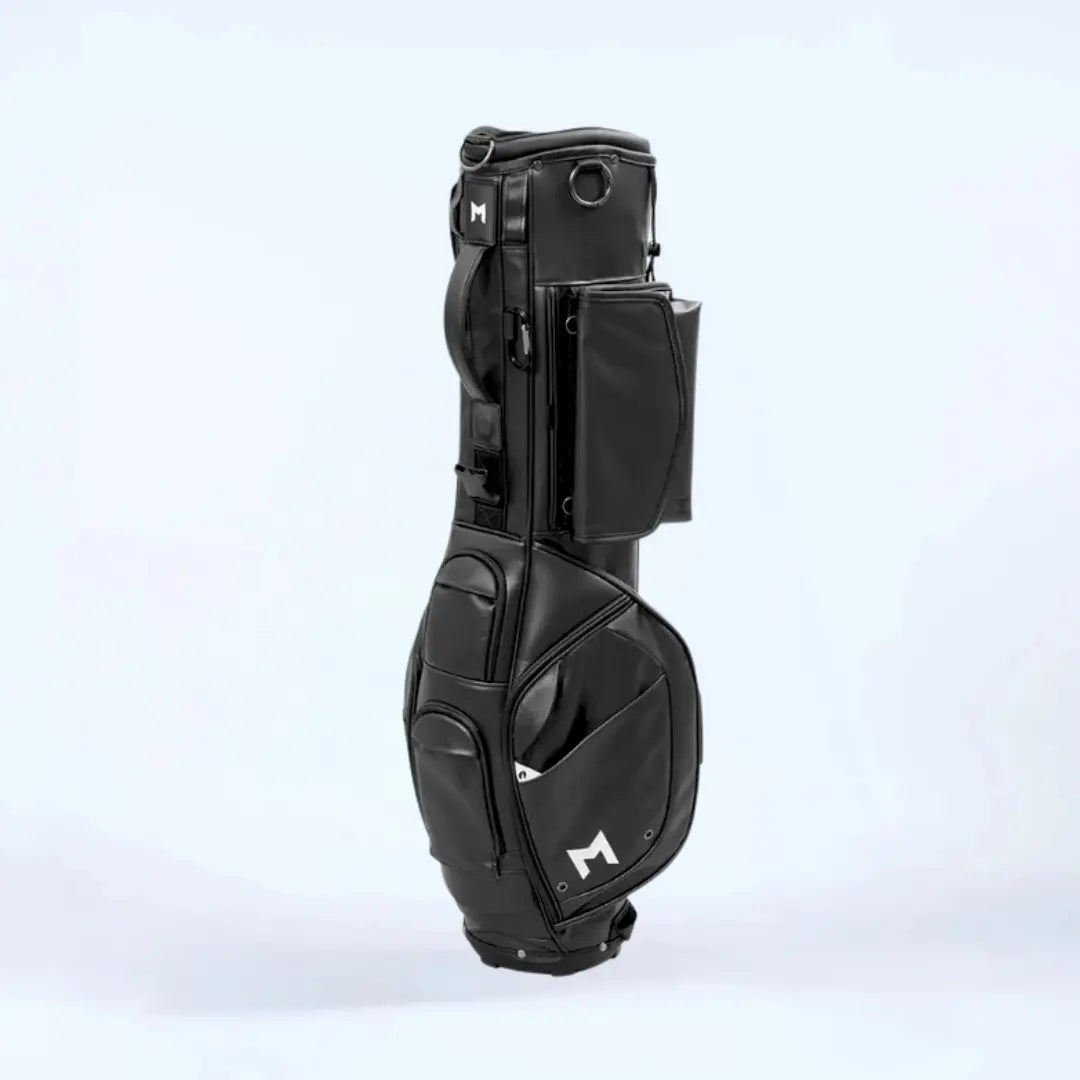
The magnetic pocket system required engineering investment, tooling costs, component qualification, and production process development that a conventional zipper-based design would not. It was more expensive to build correctly. MNML built it correctly.
The solar charging integration required panel specification, electrical engineering, housing design, and waterproofing qualification. It was more expensive than not including it. MNML included it.
The 100% recycled material sourcing required identifying and qualifying suppliers operating at a performance standard equal to or exceeding conventional synthetic materials. Recycled performance materials cost more to source than conventional alternatives at most price points. MNML sources them anyway.
The hand-painted customization program requires skilled artists, time, and a production process that cannot be accelerated without sacrificing quality. It is materially more expensive per unit than factory embroidery. MNML maintains it because it produces something genuinely exceptional.
Every one of these investments was made possible by the decision not to spend the equivalent money on paid athletes and advertising. The product is what it is because the brand is what it is.
Why This Business Model Is a Better Deal for the Golfer
The case for MNML's operating model is not altruistic. It's structural — and it benefits the golfer financially in ways that deserve to be made explicit.
When you buy a bag from a brand that spends heavily on athletes and advertising, a meaningful portion of your purchase price funds those activities. You are paying for the athlete's deal, the ad campaign, and the retailer's margin — in addition to the product.
When you buy from MNML, your purchase price funds the engineering, the materials, and the design. The athlete doesn't exist. The ad campaign doesn't exist. The retailer doesn't exist.
At the same retail price point, you are getting more product and less promotion.
This is not a novel concept — it's the foundational promise of the DTC model done properly. But most DTC brands spend their saved retail margin on paid digital advertising rather than returning it to product quality. MNML's additional decisions — no athlete fees, no advertising dependency — compound the reinvestment effect. The product receives a larger share of the price than at almost any comparable brand.
The Long-Term Bet MNML Is Making
MNML GOLF is operating on a specific long-term thesis: that golfers who research thoroughly, who evaluate products on real criteria rather than brand recognition, and who care about what their equipment is made from and how the brand behind it operates — will consistently choose MNML.
This thesis requires patience. Building brand equity through product performance and organic discovery is slower than building it through paid athlete partnerships and advertising spend. There are competitors with larger marketing budgets, more tour presence, and broader retail distribution.
But the brand MNML is building — earned reputation, informed customers, pricing integrity, product quality as the core competitive advantage — is more durable than one built on borrowed credibility and promotional volume.
The golfer who discovers MNML through research is more valuable than the golfer who encountered it in a sponsored post. They stay longer, refer more, and understand more clearly why the product deserves the price.
That's the brand MNML is building. Slowly, deliberately, without shortcuts.
What This Means When You're Deciding Whether to Buy
If you're evaluating MNML GOLF as a purchase decision, the business model context changes the calculus in specific ways.
On price: The price you see is the price everyone pays. It won't be lower next month. It wasn't lower last month. It reflects the product, not a promotional strategy.
On product claims: MNML has no paid endorsers to make claims on their behalf. Every claim the brand makes about the product — magnetic pockets, solar charging, filming pocket, recycled materials, durability engineering — is supported by the product itself or not at all. There is no athlete's reputation absorbing the risk of an overstatement.
On customer relationships: If something is wrong with your bag, you're talking to the brand. Not a retailer. Not a customer service outsourcing partner. The same people who decided to eliminate zippers and integrate solar charging are the people accountable to you as a customer.
On the purchase decision itself: A golfer who arrives at MNML through research — through pages like this one, through comparisons, through engineering explanations — is being sold to honestly. The brand's growth depends on being worth finding, not on intercepting browsers with targeted ads. That changes what MNML has to be to succeed.
The Bottom Line
Every brand makes choices about where its money goes. Those choices show up in the product.
Brands that pay athletes are paying for borrowed credibility. Brands that buy advertising are paying for intercepted attention. Brands that discount are paying for short-term volume at the expense of long-term positioning. Brands in retail distribution are paying 40–50% of their retail price to a middleman.
MNML GOLF made different choices. No athletes. No advertising dependency. No discounting. No retail. The capital those choices free up goes into the product: magnetic pockets, solar charging, filming pockets, 100% recycled materials, hand-painted customization, engineering that rebuilt the bag from first principles.
When you buy an MNML bag, you are not paying for a tour player's Instagram post. You are paying for the bag.
That's the deal. It's a better one.