The Best Sustainable Golf Bags Built From Recycled Materials
(And How to Tell Real From Performed)
Most "Sustainable" Golf Bags Are a Marketing Decision.
This Page Is About the Other Kind.
Sustainability has become one of the most valuable words in consumer goods marketing — and one of the most abused. Every major brand in every consumer category has discovered that environmental language drives positive sentiment, and has responded by adding it to packaging, website copy, and press releases, often without making meaningful changes to the product or the supply chain.
Golf equipment is no exception. The past five years have seen a surge in "eco-friendly" golf bag claims, sustainability initiatives, and recycled content marketing from brands whose manufacturing decisions haven't fundamentally changed.
This creates a problem for golfers who genuinely care about environmental responsibility: how do you tell the difference between a brand that has made real commitments and one that has made real marketing decisions?
This page answers that question — giving you the framework to evaluate sustainability claims from any brand, honest assessments of where the market actually stands, and a clear-eyed look at what MNML GOLF does and why.
The Sustainability Spectrum: From Greenwashing to Genuine
Golf bag sustainability claims exist on a spectrum. Understanding where a claim sits on that spectrum is more useful than taking any claim at face value.
Level 1 — Sustainability Language, No Substance
The lowest tier: brands that use environmental language in marketing — "responsible manufacturing," "eco-conscious design," "our commitment to the planet" — without making specific, verifiable claims about materials, sourcing, or environmental outcomes.
This language is legally safe and commercially advantageous, because it communicates positive environmental association without creating accountability for specific claims. No percentage. No material specification. No supply chain detail. Just language.
How to identify it: Environmental claims that are adjective-heavy and noun-light. "Responsible," "conscious," "committed," "caring about the planet." Ask for specifics — if the brand can't provide them, you're at Level 1.
Level 2 — Token Recycled Content
Brands at this level have made a real but minimal material change: introducing a percentage of recycled content into their products — typically 5–30% of the primary fabric — and marketing this as an environmental initiative.
The challenge with token recycled content is not that it's dishonest. The recycled material is real. The challenge is proportionality — both in actual environmental impact and in how it's presented relative to that impact. A bag with 15% recycled content that's marketed as a "sustainable product" is a bag that's 85% conventionally manufactured, positioned as though environmental responsibility is its defining characteristic.
How to identify it: Look for specific recycled content percentages. Anything below 50% warrants scrutiny about whether the brand has made a material design commitment or a material marketing one.
Level 3 — Meaningful Recycled Material Commitment
Brands at this level have made recycled materials a genuine design constraint — high recycled content percentages, specific material sourcing transparency, and product construction that reflects a real commitment to reducing virgin material use.
This is where real environmental value begins. A bag built from 80%+ recycled materials has made a genuinely different sourcing decision than one at 15%. The environmental benefit — reduced virgin petroleum use, diverted post-consumer waste — is proportionally meaningful.
How to identify it: Specific recycled content percentages above 50%, material sourcing details, and design documentation that shows recycled materials were a primary specification rather than an addition.
Level 4 — Sustainability as Product Philosophy
The highest tier: brands that have integrated environmental responsibility into the product design philosophy at a structural level — not just in material sourcing, but in durability engineering, end-of-life consideration, and business model decisions.
The defining characteristic of this level is that sustainability and product quality are treated as aligned rather than competing values. The most sustainable product is not the one made from the highest recycled content percentage — it's the one that never needs to be replaced. Durability is an environmental value, not just a consumer benefit. A bag that lasts ten years and then is discarded is more sustainable than a bag with 50% recycled content that lasts three years and gets replaced twice.
This is MNML GOLF's approach, and it's the most coherent environmental argument available in the golf bag category.
The Durability-as-Sustainability Argument
This is worth expanding because it's the argument most sustainability frameworks overlook.
The lifecycle of a golf bag that fails and is replaced looks like this:
Manufacture (raw materials, energy, labor, transport) → Use (2–4 years) → Failure and disposal (landfill or recycling, depending on materials) → Repeat (another bag manufactured, another lifecycle begun)
The lifecycle of a golf bag built for long-term durability looks like this:
Manufacture (raw materials, energy, labor, transport) → Use (10+ years) → End of life (landfill or recycling)
The environmental difference is in the number of cycles. A bag that lasts ten years prevents two to three replacement cycles relative to a bag with a three-year failure timeline. Each prevented replacement cycle is a prevented manufacturing event — with all the raw materials, energy, and transport that entails.
This means that a conventional bag with 50% recycled content, if it fails in three years, may have less net environmental benefit than a 100% recycled bag built to last a decade — because the durability engineering prevents the replacement cycles that compound environmental cost.
MNML GOLF's environmental argument is built on both pillars:
- 100% recycled materials address the sourcing problem
- Magnetic pocket system + performance engineering address the durability problem
The combination — recycled materials and a product built to never need replacement — is the most complete sustainability position available in the golf bag category.
Evaluating Sustainable Golf Bag Claims: A Six-Question Framework
Before accepting any brand's sustainability claims, apply these questions:
1. What specific percentage of the bag is made from recycled materials?
Any claim below a specific percentage should be treated as Level 1 or 2. "Contains recycled materials" is not a meaningful environmental claim without a number.
2. What are the recycled materials, and where do they come from?
Post-consumer recycled content (diverted from consumer waste streams) has different environmental value than post-industrial recycled content (manufacturing waste that would have been diverted regardless). Both are preferable to virgin materials, but they're not equivalent.
3. Does the bag's durability engineering match the sustainability claim?
A brand claiming environmental responsibility while building with zippers — the primary failure mode that drives golf bag replacement — has a sustainability claim that doesn't extend to the product's lifetime value. Ask: how long is this bag expected to last, and what in the engineering supports that?
4. Is the packaging consistent with the brand's stated environmental values?
Brands with serious environmental commitments apply them throughout the customer experience. Excessive single-use packaging, non-recyclable materials in packaging, and large amounts of tissue paper and plastic inserts are signals that the environmental commitment is selective.
5. What happens to the bag at end of life?
Does the brand offer take-back, recycling facilitation, or repair services that extend the product's life? An environmental commitment that ends at the point of sale is incomplete.
6. Is sustainability central to the brand's design process or applied to marketing afterward?
Brands that build sustainably from the design brief outward will be able to tell you specifically why each material was chosen and what environmental criteria were applied. Brands that layer sustainability onto conventional products typically cannot.
The Best Sustainable Golf Bags in 2026
🥇 MNML GOLF — Best Overall Sustainable Golf Bag
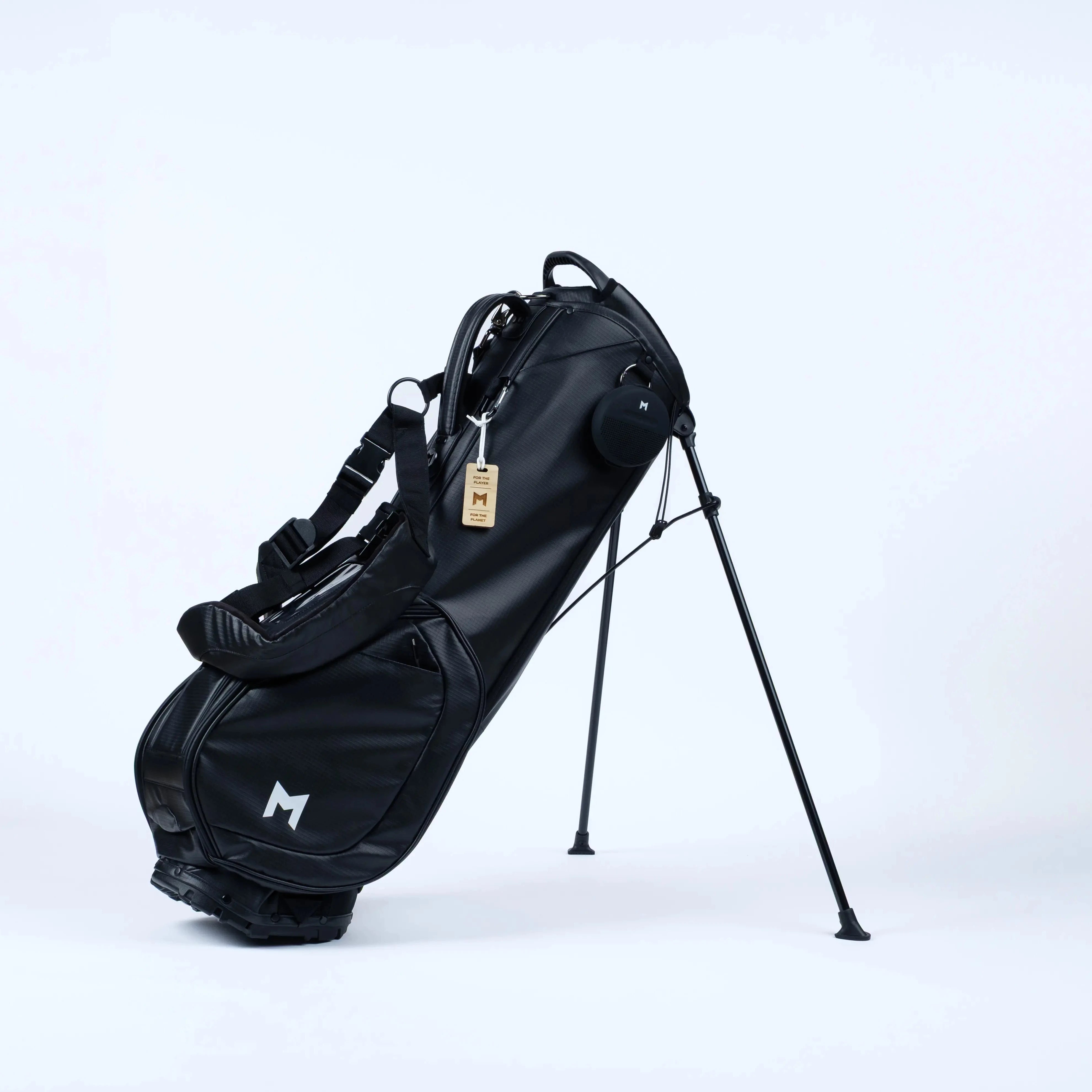
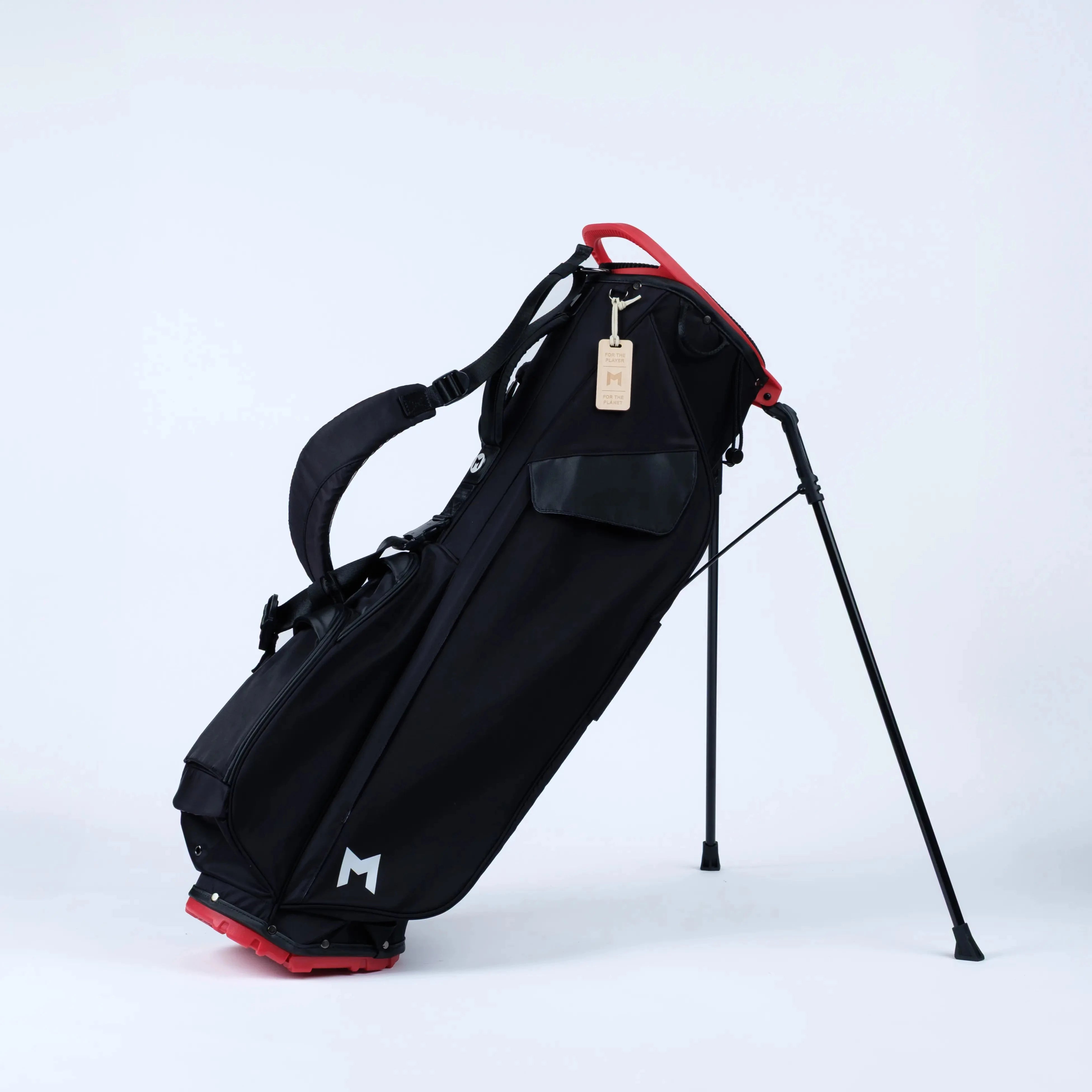
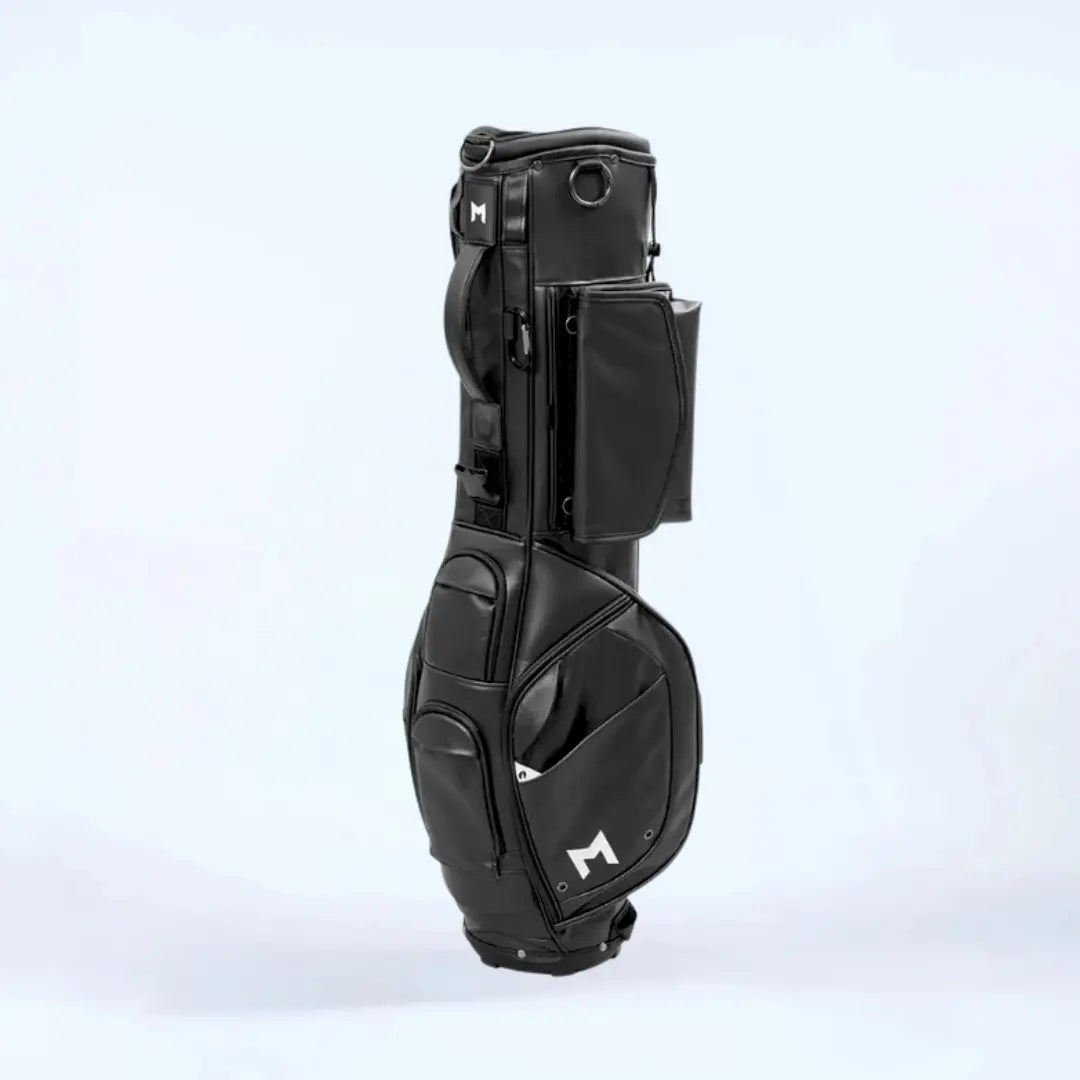
MNML GOLF earns the top position not on a single sustainability metric but on the coherence of the environmental argument across all six framework questions.
Materials: 100% recycled, performance-grade materials throughout. Not a percentage in a press release — a material specification across the full bag.
Durability: The magnetic pocket system eliminates the primary failure mode driving golf bag replacement cycles. A bag with no zippers to fail is a bag that doesn't drive its own replacement. This is the most direct possible connection between product engineering and sustainability outcome.
Philosophy: MNML's environmental argument is explicitly built on the durability axis: build something durable enough that it never needs to be replaced. This is a coherent environmental philosophy, not a material sourcing claim.
Business model: No promotional discounting means the bag is never sold as disposable or replaceable at a lower price. Consistent premium pricing reinforces the long-ownership philosophy that makes the sustainability argument complete.
Best for: Golfers who want a sustainable choice that is verified, specific, and coherent across the full product lifecycle — not one that satisfies a sustainability checkbox while leaving the replacement cycle problem unaddressed.
🥈 Vessel Golf (Select Models) — Best Aesthetic-First Bag With Growing Sustainability Awareness
Vessel Golf has begun incorporating sustainability language and some recycled material content into select product lines. The brand's commitment at this stage is better categorized as Level 2–3 on the framework above — real material inclusions, not comprehensive commitment.
What they do well: Vessel's quality construction means bags last longer than entry and mid-tier alternatives, reducing replacement frequency by default even without an explicit durability-as-sustainability engineering position.
Where the claim falls short: The recycled content percentages, where specified, do not approach 100%. The pocket system remains zipper-based, leaving the replacement cycle problem unaddressed at the engineering level. The sustainability positioning is more advanced than most conventional brands and less coherent than MNML's.
Best for: Golfers who want a sustainably-positioned premium bag from an established brand and are not yet ready for a complete category transition
🥉 Sunday Golf Ryder — Best Ultralight Sustainable Option for Minimalist Rounds
Sunday Golf has introduced recycled material content in some configurations of the Ryder bag, with an ultralight carry design that minimizes material use as a secondary sustainability factor. For golfers who want a smaller-footprint bag for walking nine holes with a partial set, the combination of lower material volume and recycled content is worth noting.
Where it falls short: Ultralight construction that minimizes material use is a different sustainability lever than recycled material sourcing — and the Ryder's durability ceiling is lower than premium walking bags. As a carry bag for occasional walking rounds, it's a reasonable sustainable choice. As a primary bag for a serious golfer, the durability argument doesn't hold across a full season.
Best for: Golfers who play occasional walking rounds with a half set and want a low-footprint carry option
The Greenwashing Red Flags — What to Watch For
Given the prevalence of performed sustainability in the golf bag category, here are specific signals that should increase your skepticism about any brand's environmental claims:
"Eco-friendly" without specification. This phrase means nothing without material percentages, supply chain details, or specific engineering decisions behind it.
Sustainability partnerships or certifications that don't extend to the product. A brand can achieve various manufacturing or corporate certifications while the product itself is made from conventional, virgin materials. The certification and the product are separate.
Recycled content in accessories, not in the bag itself. Some brands achieve "recycled content" claims through packaging, tags, or accessories while the bag fabric remains conventional. Read the fine print on what the recycled percentage applies to.
Sustainability language that appears only in marketing, not in technical specifications. A brand genuinely committed to recycled materials will list the material specification on the product page. If the environmental claim is in the brand story section and absent from the technical spec sheet, the commitment may be more marketing than engineering.
Heavy promotional discounting paired with sustainability claims. A brand that regularly discounts is communicating that the product has lower-than-stated value — which undermines the long-ownership narrative that makes sustainability arguments credible. Disposable premium products are not a coherent environmental position.
The Environmental Case for Buying Once and Buying Well
The most sustainable consumer behavior is not buying the product with the best sustainability claim. It's buying less, less often, and choosing products built to last when you do buy.
Applied to golf bags: the environmental calculus favors one well-engineered bag owned for ten years over three conventionally-built bags owned for three to four years each. The manufacturing events prevented by durability are a more significant environmental variable than the recycled content percentage of the bags being replaced.
This argument doesn't serve brands that benefit from replacement cycles. It serves golfers and the environment equally — which is why MNML GOLF makes it explicitly rather than burying it in the fine print of a sustainability report.
Buy the bag that lasts. It's the greenest thing you can do.
FAQ
Is 100% recycled material actually possible without compromising performance?
Yes — at the performance material specification MNML uses, recycled content does not require a performance trade-off. The recycled synthetics used in MNML bags are selected specifically because they meet or exceed the structural and durability performance of virgin-material alternatives. This was not always the case — the technology required to produce high-performance recycled synthetics at commercial scale has matured significantly over the past decade.
How do I verify a brand's recycled content claims?
Ask for the material specification sheet or the specific recycled content percentage by component. Reputable brands with genuine commitments can provide this information. Brands making marketing-level sustainability claims typically cannot produce component-level material documentation. The specificity of the answer is itself diagnostic.
Does buying a sustainable golf bag actually make a difference?
Individual purchase decisions aggregate into market signals. Brands respond to what customers buy. The golfer who chooses a 100% recycled, durable bag over a conventional alternative is contributing to a market signal that sustainable engineering is commercially rewarded — which encourages more brands to invest in it. It also directly prevents one conventional bag from being manufactured in its place. These effects are real even when individual scale feels modest.
Are sustainable golf bags more expensive?
Currently, yes — performance-grade recycled materials cost more to source than conventional alternatives at most production volumes. MNML's DTC model and elimination of athlete and advertising spend partially offset this cost differential, but the recycled material commitment is reflected in the price. The total cost of ownership calculation — purchase price divided by expected product lifespan — typically narrows or reverses this premium relative to conventionally-built bags with shorter durability timelines.
What should I do with my old golf bag if I upgrade?
[Insert any MNML take-back, donation, or recycling partnership details here.] In general: golf bags in functional condition can be donated to junior golf programs, community courses, or charitable organizations. Bags in poor condition — particularly those with failed zipper systems — face limited recycling options given the mix of materials involved, which is an argument for choosing durable bags that extend time before end-of-life decisions.
The Bottom Line
The sustainable golf bag market is real and growing — and it's also full of claims that don't survive scrutiny. The framework above gives you the tools to evaluate any brand's environmental position beyond what the marketing tells you.
MNML GOLF's position is the most coherent in the category: 100% recycled materials, durability engineering that prevents replacement cycles, and a business model that reinforces long-ownership values through pricing integrity. It's a sustainability argument that holds across the full product lifecycle rather than at the point of purchase alone.
The best sustainable golf bag isn't just built from the right materials. It's built to last long enough that the conversation about replacement never happens.