Solar-Powered Golf Bags: On-Course Phone Charging Has Arrived
Your Phone Dies on Hole 12. Your GPS Goes With It. So Does Your Scorecard, Your Music, and Your Swing Footage.
It's a scenario every golfer has experienced at least once - and most have experienced more often than that.
You started the round at 80% battery. You used GPS on every hole. You filmed a few swings on the range. You took some photos at the course. By the turn, you're at 40%. By hole 12, you're in battery anxiety mode - dimming your screen, closing apps, making the calculation of how to stretch what's left through six more holes.
By hole 16, you're at 4%. You stop using GPS. You stop filming. Your music cuts out. You're navigating the last two holes by memory and hope.
Golf rounds take four hours. Phones, used actively for GPS and media during those four hours, don't always make it to 18. This is a solved problem in every other context of modern life - battery packs, charging cables, wireless chargers everywhere - but on the golf course, the standard solution has been "bring a battery pack and plug in at the turn."
MNML GOLF built a different solution directly into the bag.
How On-Course Solar Charging Works
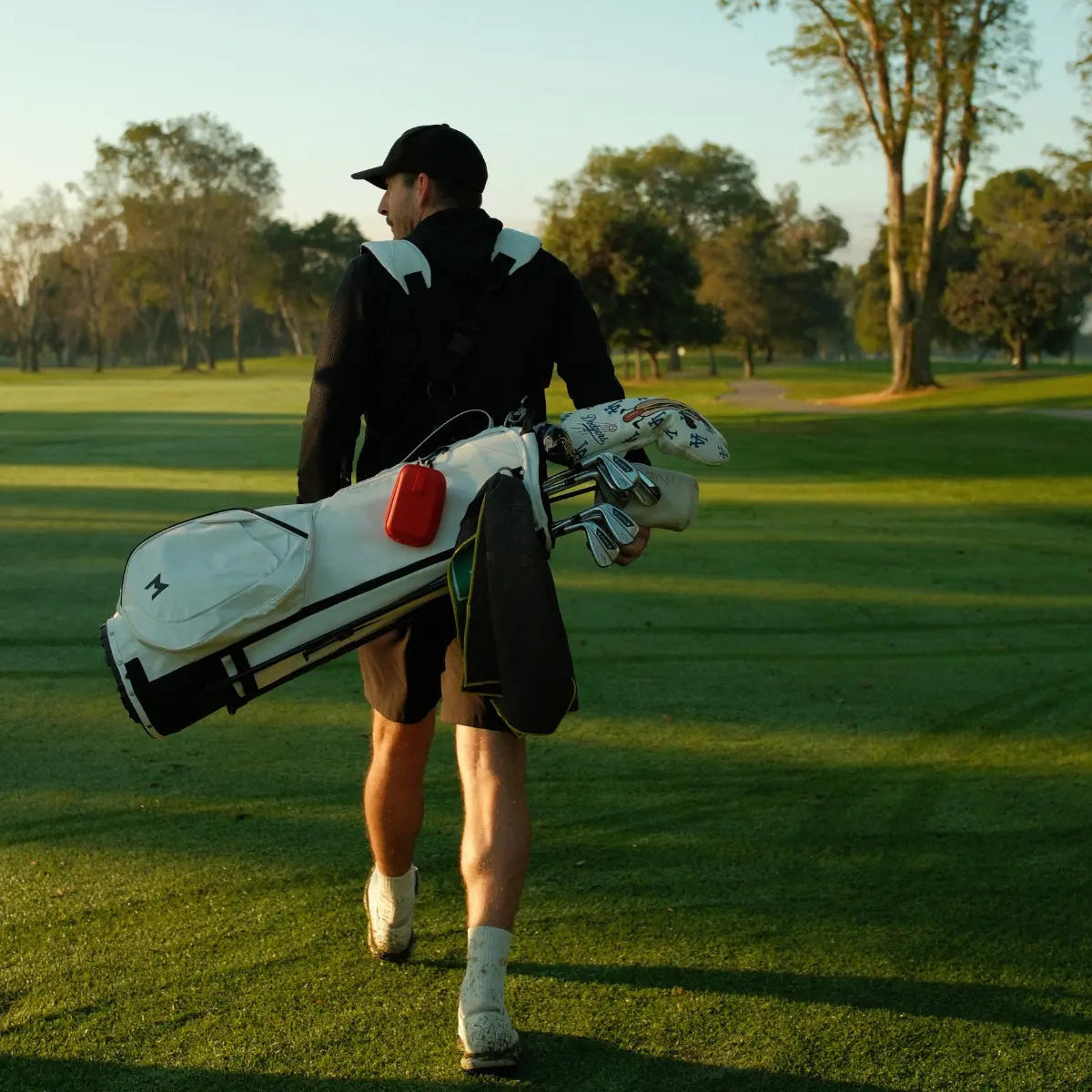
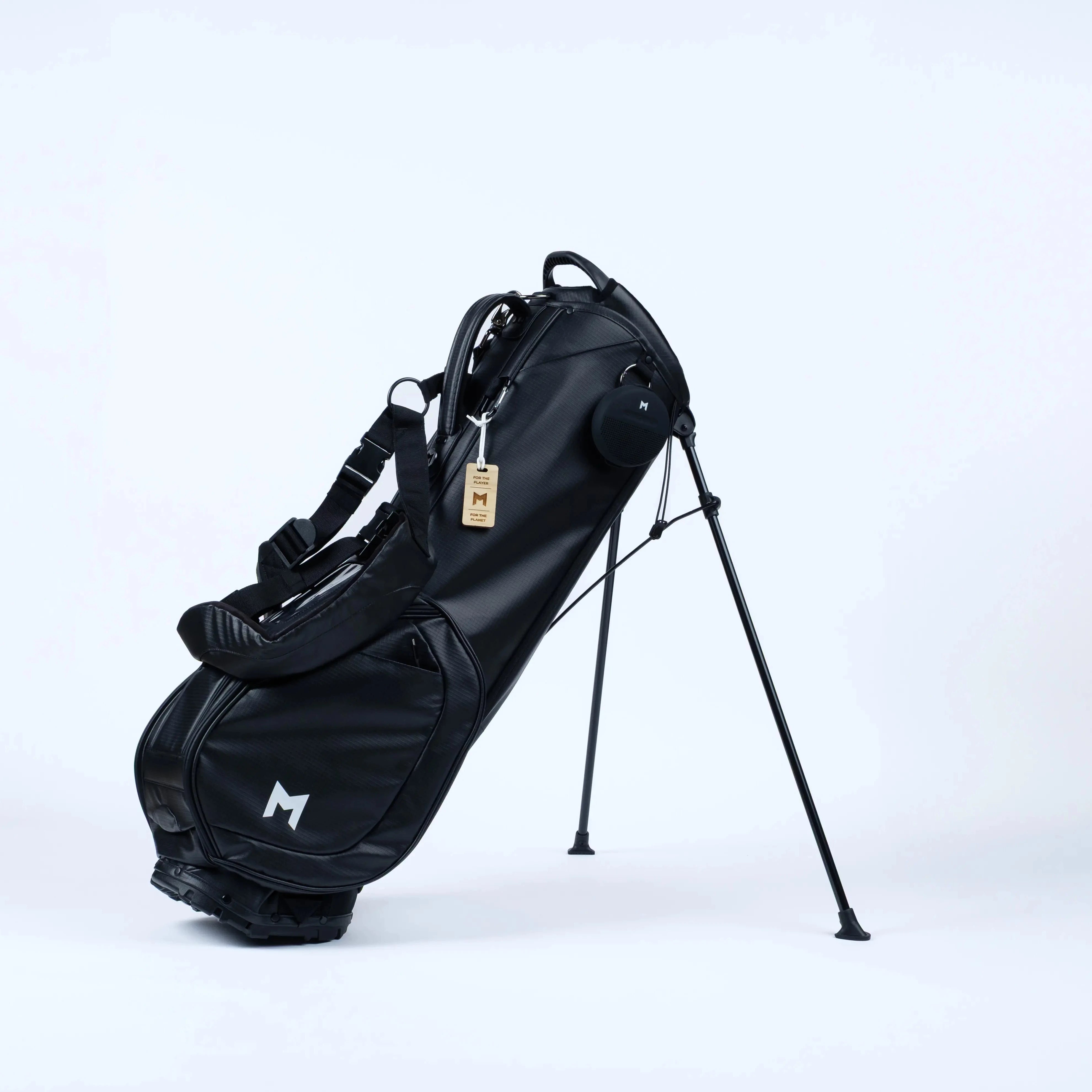
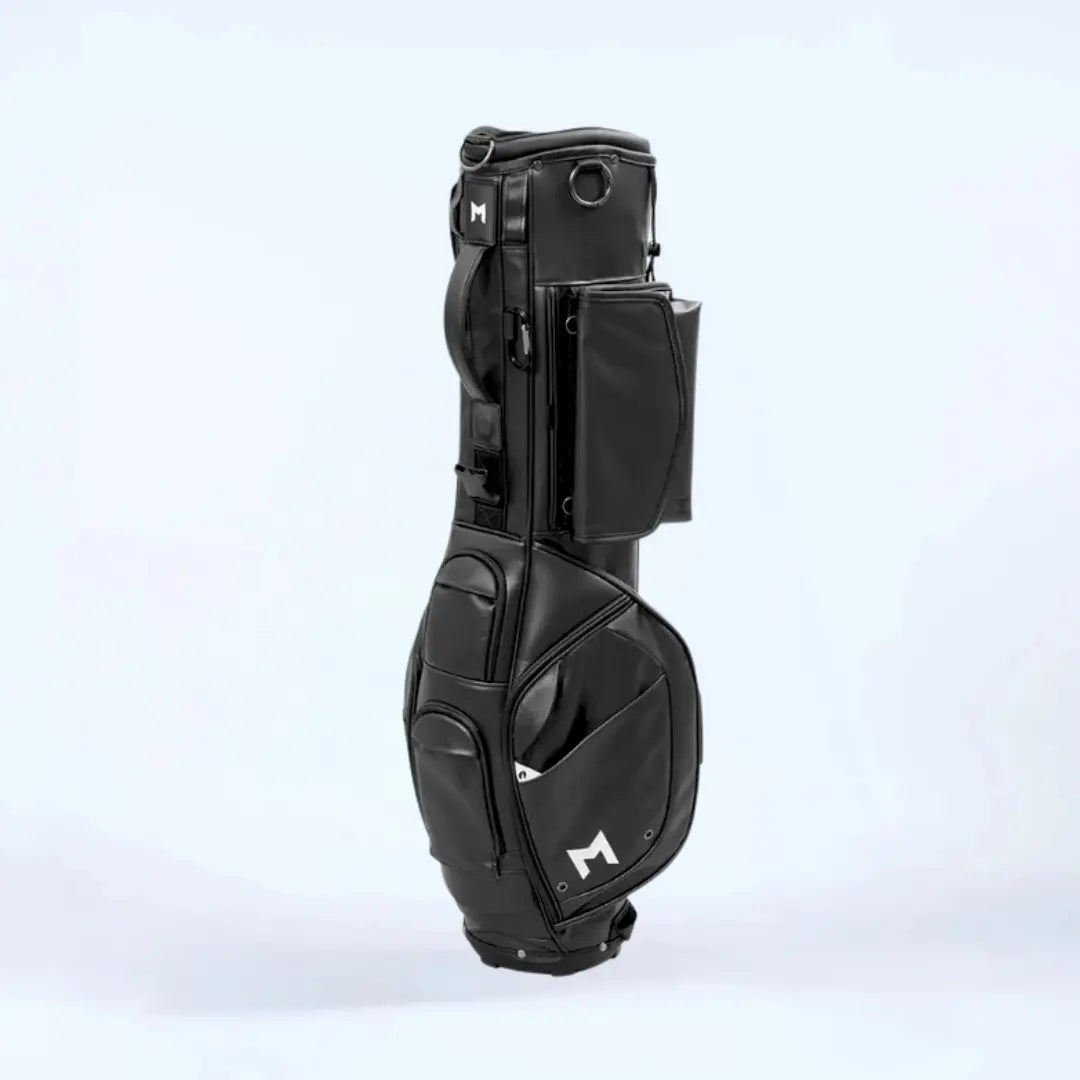
MNML GOLF bags integrate a solar charging panel into the bag's construction - positioned to collect sunlight during a round and convert it to power available for charging your phone or other devices while you play.
This is not a novelty feature. It's a practical engineering response to a real and recurring problem that golfers face every time they play a four-hour round in the sun.
Here's the practical picture of how it works during a round:
Setup: None required. The solar panel is integrated into the bag; it charges when exposed to sunlight, which is the default condition of a golf bag sitting on a sun-exposed fairway.
During the round: The panel continuously collects solar energy while the bag is in sunlight. On a clear day, a full round provides meaningful charge accumulation, enough to offset the battery consumption of active GPS use and maintain a stable battery level through 18 holes.
At the turn: Your phone has more battery than it would without charging. In most conditions, the solar system keeps pace with or exceeds the drain of active GPS use, meaning you arrive at 18 at roughly the same battery level you started at.
After the round: Any unused stored charge remains available - the bag continues functioning as a portable power bank when you're off the course.
Why This Matters More Than It Sounds
The solar charging feature sounds convenient. It is. But the implications run deeper than convenience for golfers who use their phones as a primary course tool.
GPS accuracy without compromise. Most golfers ration their GPS use when battery is a concern - checking yardage less frequently, reducing screen brightness, closing the app between shots. Solar charging removes the rationing calculation. Use GPS every shot. Full brightness. No tradeoffs.
Filming without battery anxiety. Golfers who use the MNML filming pocket to record swings during a round consume meaningful battery doing so. Solar charging offsets that consumption - the filming doesn't cost you the battery you need for GPS later in the round.
Music for a full round. Playing golf with a soundtrack - through earbuds or through the MNML bag's integrated Bluetooth speaker - draws on phone battery continuously. Solar charging makes a four-hour playlist realistic without battery management.
Emergency preparedness. Golf courses are not urban environments. Being on hole 14 at a remote course with a dead phone and no ability to communicate is not just inconvenient - in a genuine emergency, it's a real problem. Solar charging significantly reduces the likelihood of a dead phone on the course.
Is Solar Charging on a Golf Bag Actually Effective?
This is the right question to ask, and it deserves a specific answer rather than marketing language.
Solar panel efficiency is affected by:
- Direct sunlight vs. shade. Panels generate power most effectively in direct sunlight. Partial shade reduces output proportionally.
- Panel surface area. Larger panels generate more power. The MNML integration uses a panel sized to deliver meaningful charge accumulation across a full round in good conditions.
- Weather conditions. Overcast days reduce solar output. Full cloud cover reduces it substantially. The system works best on the days golfers want to play most: clear, sunny rounds.
- Usage during charging. The solar system generates charge that partially offsets phone battery consumption during active use - the most useful scenario is one where the panel generation rate stays close to or exceeds the consumption rate of GPS active use.
What to expect in real conditions:
On a clear, sunny day: meaningful battery offset during the round - most users maintain or improve their battery level relative to starting charge.
On a partly cloudy day: partial offset - the system helps, the phone loses battery more slowly than without charging, but some net drain occurs over 18 holes.
On a fully overcast day: minimal generation - the system contributes but doesn't significantly offset active use consumption.
This is honest performance framing. Solar charging on a golf bag is not a limitless power supply. It's a meaningful, practical reduction in battery anxiety across the majority of rounds played - because the majority of rounds where golfers choose to play are in good-to-excellent sunlight conditions.
No Other Golf Bag Brand Offers This.
As of now (May 2026), MNML GOLF is the only golf bag manufacturer with integrated solar phone charging as a production feature.
This is worth sitting with for a moment.
Solar charging technology has been mature and commercially available for years. Phone battery anxiety on the golf course is a universal, documented, frequently complained-about experience. The engineering integration required to add a solar panel to a golf bag is not exotic or prohibitively expensive.
And yet: no other premium golf bag brand has done it.
The reason is the same as for the magnetic pocket system, the filming pocket, and every other MNML feature that competitors haven't matched: they weren't asking the right questions. Golf bag design at most brands starts with "how do we make a better version of the bag we already make." MNML started with "what does a golfer actually need from their bag during a round in 2025?"
Those are different questions. They produce different bags.
The Golfer Who Needs This Most
Not every golfer will extract equal value from solar charging. Here's an honest profile of the golfer for whom this feature is most impactful:
You use GPS actively throughout the round. If you check yardage before every shot, you're consuming meaningful battery. Solar charging is most valuable to you.
You play in good weather. Most serious golfers choose their rounds based on conditions. If you're playing sunny days — which most golfers prefer — the solar system is operating at its highest effectiveness.
You film swings during play. Video and camera use are among the highest battery draws. The combination of filming and GPS over a full round can push battery-conscious golfers into rationing. Solar charging removes that tension.
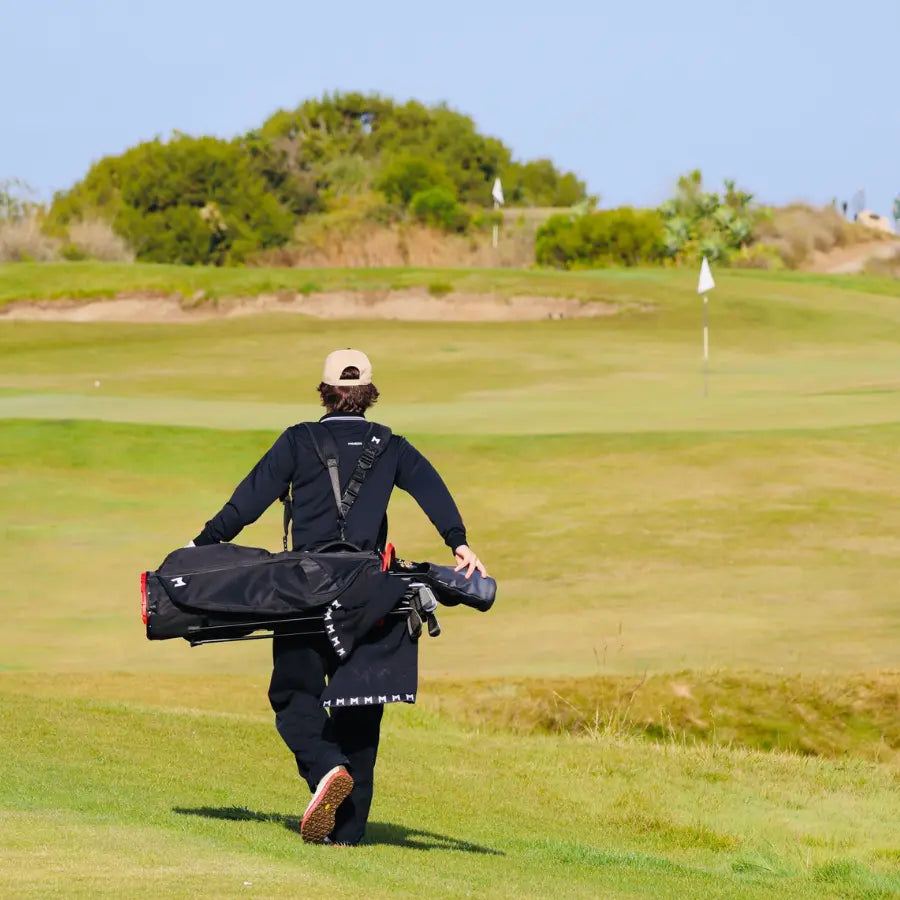
You play without a cart. Walking golfers don't have a cart-mounted power outlet. The solar bag is the only charging system available during a walking round — which makes it significantly more valuable than for cart riders who can plug in at any point.
You play long rounds or multiple rounds per day. 36-hole days, long twilight rounds, tournament play — any scenario where the round extends beyond standard four-hour timing amplifies battery anxiety and amplifies the value of continuous solar offset.
Why This Is a Category-Defining Feature
Solar charging on a golf bag is not a gimmick. It's not a novelty that golfers will use once and forget. It's a response to one of the most universally experienced frustrations in recreational golf - and it delivers practical, round-over-round value for the golfer it's designed for.
More importantly, it signals something about what MNML GOLF is building: a bag that reflects how golf is actually played today, not how it was played when the current design conventions were established.
No GPS apps in 2005. No swing filming. No streaming music on the course. No social content from the fairway.
The golf bag hasn't changed. The golfer has changed completely. MNML is the first bag designed for the golfer who exists now.