

Best Lightweight Golf Stand Bags in 2026
(And Why Weight is The Wrong Thing To Optimize For)
Every Brand Claims Their Bag Is Lightweight. Almost None of Them Tell You What That Weight Cost Them.
Lightweight is the most searched feature in golf bags. It's also the most misused word in golf bag marketing.
Here's what the category doesn't tell you: achieving low weight is easy. The engineering challenge — the one almost no brand has genuinely solved — is achieving low weight without sacrificing the structural integrity, pocket durability, and strap performance that make a bag worth owning over a multi-year period.
The lightest bag you can buy is not the best lightweight bag you can buy. And the difference between those two things is the conversation this page is designed to have.

What "Lightweight" Actually Means in Golf Bags
Walk into any golf retailer and you'll find bags marketed as "ultra-light," "featherweight," and "tour-lite" at price points from $80 to $500. The weights listed range from 2.8 lbs to 5.5 lbs.
Here's what the spec sheet doesn't show you:
How that weight was achieved matters as much as the number itself.
There are two ways to make a golf bag lighter:
Method 1 — Engineering. Select high-performance materials that deliver structural strength at lower mass. Design the bag's architecture to eliminate unnecessary material without compromising function. Invest in component quality to reduce redundancy. This is expensive to do well.
Method 2 — Subtraction. Use thinner base panels. Reduce pocket padding. Simplify internal structure. Use lower-grade fabrics that weigh less because they're less dense. This is cheap to execute — and the cost shows up in the bag's performance and lifespan, not its price tag.
Most lightweight bags are built using Method 2. The brands that use Method 1 are worth identifying, because those are the only bags where lightweight and durable exist in the same product.
The Real Cost of a Lightweight Bag That Fails Early
Here's the calculation most golfers don't make explicitly:
A $200 lightweight bag that lasts two seasons before the zippers fail, the base panel compresses, or the strap attachment loosens costs $100 per year to own.
A $400 lightweight bag built to last a decade costs $40 per year to own — and performs at a higher level for all ten of those years.
The golfer who buys on lightness and price is often paying more over time than the golfer who buys once and buys well. This is the hidden economics of the lightweight golf bag market, and it rarely gets discussed because it works against short-term sales volume.
MNML GOLF's position in this market is explicit: lightweight construction built from 100% recycled, performance-grade materials that doesn't force a trade-off between low weight and long-term durability.

The 5 Criteria That Define a Genuinely Great Lightweight Golf Bag
1. Weight-to-Durability Ratio (Not Raw Weight)
The number that matters is not "how light is this bag empty" — it's "how light is this bag, relative to how long it will maintain its structure and performance?"
A bag that's 3.5 lbs but uses a thin synthetic base and standard zipper closures will degrade faster under walking conditions than a 4.2 lb bag built with reinforced base panels and magnetic pocket closures. The lighter bag becomes heavier over time in a practical sense — because you're managing its failures instead of playing golf.
Look for: Weight accompanied by specific material and construction details that explain how that weight was achieved. Vague claims about "advanced materials" without specification are a warning sign.
2. Pocket System Engineering
The pocket system is the first thing to fail on a lightweight bag — because reducing zipper quality is one of the easiest ways to reduce bag weight and cost simultaneously. Lower-grade zippers are lighter. They're also the reason lightweight bags fail in year two.
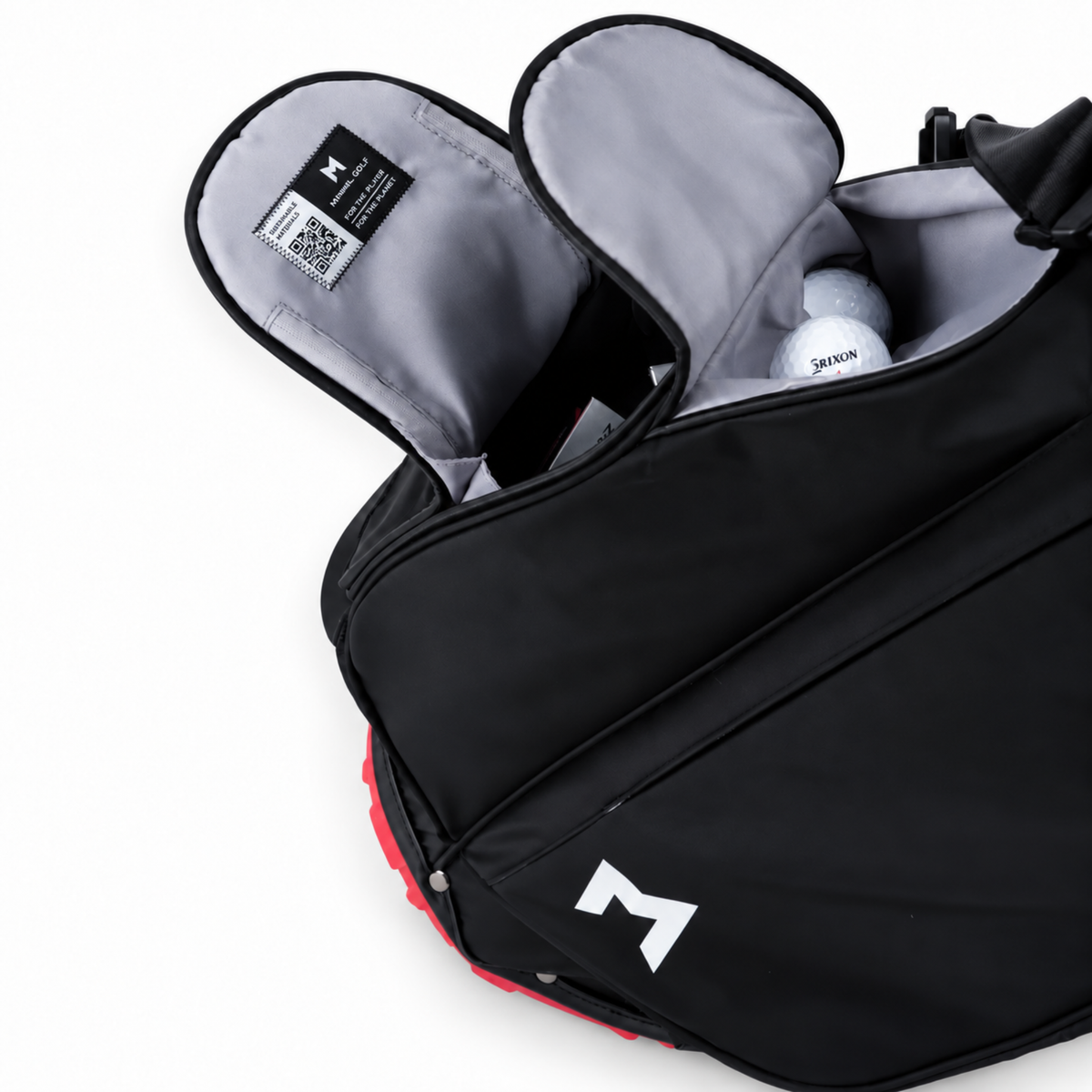
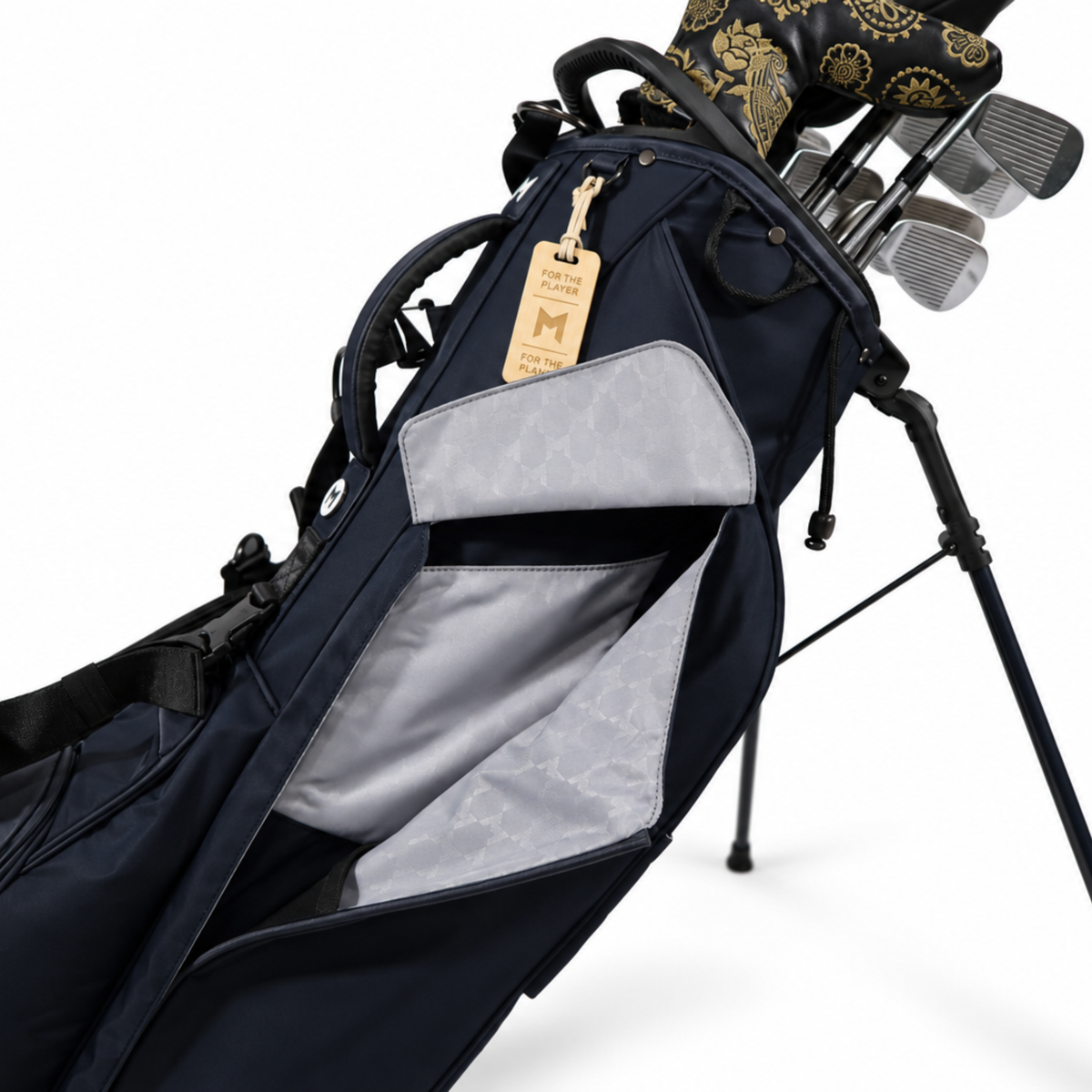
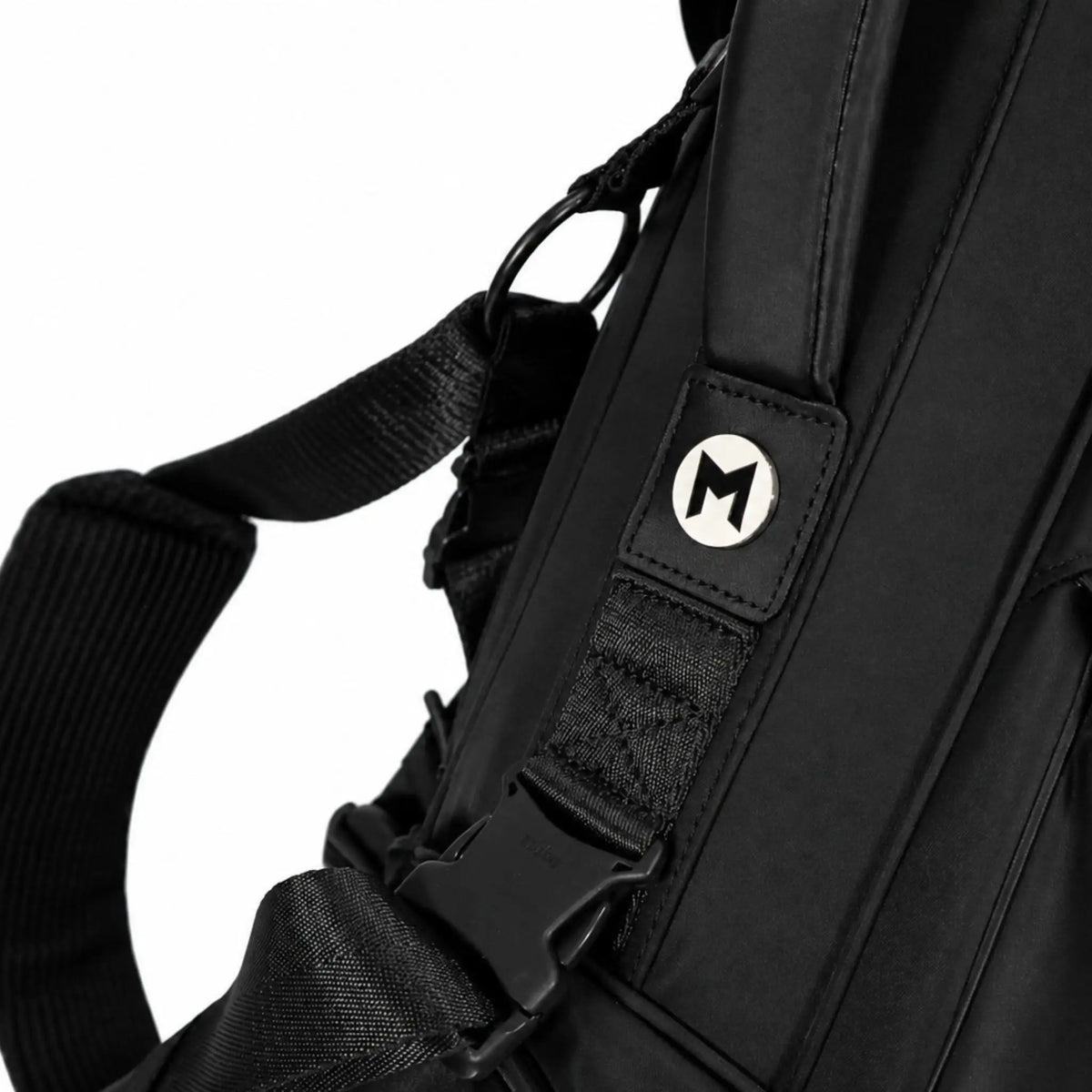
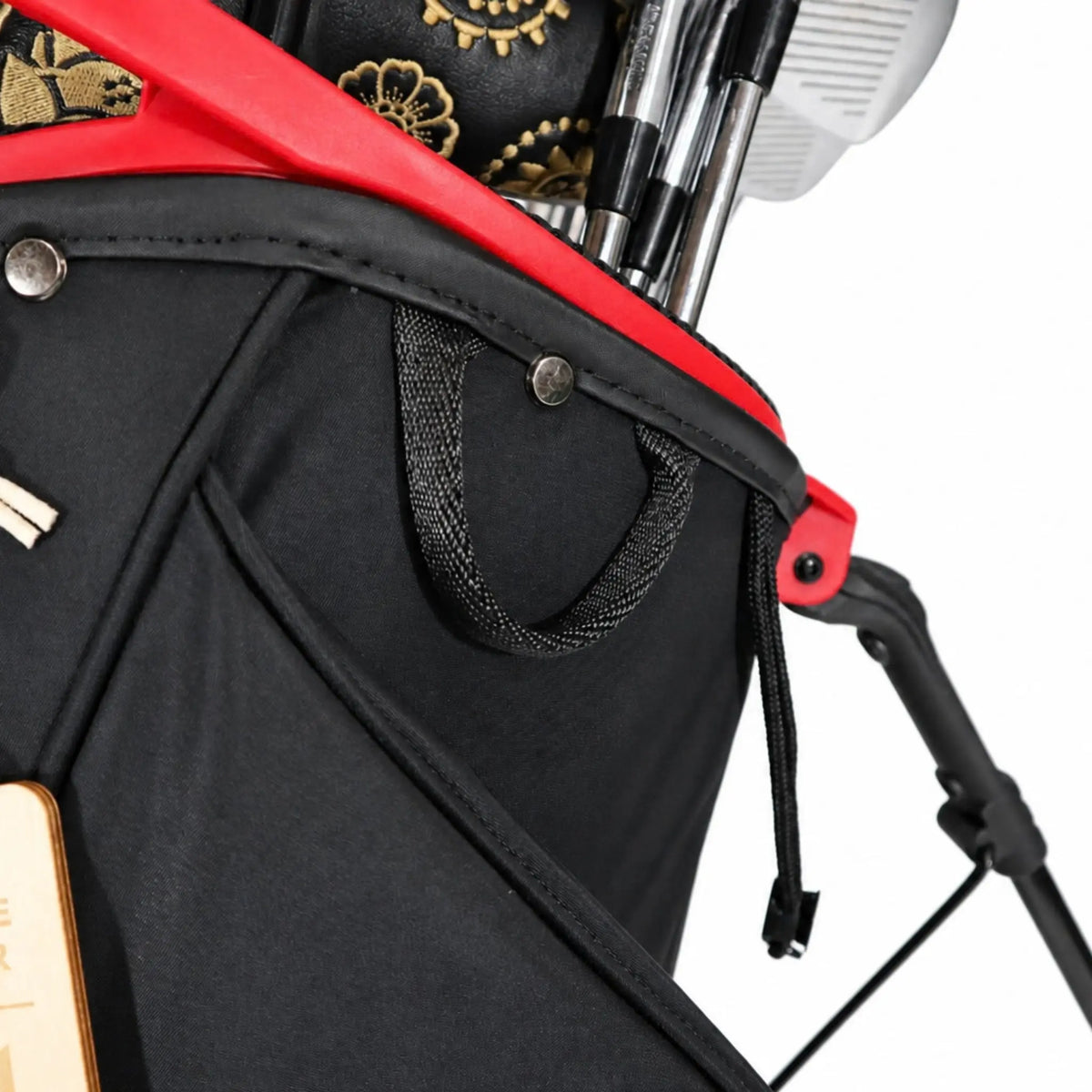
The only way to fully solve this is to eliminate the zipper entirely — which is what MNML GOLF did. The magnetic pocket system removes the primary failure point from the weight equation altogether. You don't have to choose between light pockets and durable pockets when there are no mechanical components to fail.
Look for: Either a magnetic closure system or explicit, verifiable information about the zipper grade used. "YKK" branded zippers are the industry benchmark for zipper quality. Unbranded zippers on a bag marketed as lightweight-premium are a red flag.
3. Stand Leg Quality and Deployment Reliability
Stand legs are a frequently overlooked failure point on lightweight bags. In the race to reduce weight, leg mechanisms are often simplified — thinner hinge pins, lighter spring systems, narrower leg profiles — in ways that compromise their longevity.
A stand leg failure is not a small inconvenience. A bag that won't stand reliably means you're constantly managing your equipment instead of your game. For a walking golfer, a stand leg that deploys inconsistently adds friction to every single hole of every round.
Look for: Leg mechanisms that deploy automatically and lock positively. Wide contact base for stability on uneven ground. Reinforced hinge attachment points — this is where stress concentrates and where failures start.
4. Strap System Load Distribution
Lightweight bags often compromise strap systems to reduce weight — thinner padding, narrower shoulder contact, simplified adjustment mechanisms. The result is a bag that's easy to carry for nine holes and fatiguing by sixteen.
The strap system is where the bag's weight is transmitted to your body. A bad strap system makes a 4 lb bag feel like 6 lbs. A good strap system makes a 4.5 lb bag feel like 3.5 lbs. Raw bag weight and carried weight are different numbers.
Look for: True dual-strap design (not convertible single/dual). Meaningful padding at the shoulder contact zones. Hip load transfer strap if you're a high-frequency walker. Adjustment range that accommodates your torso length.
5. Base Panel Construction
The base panel of a golf bag is the component that takes the most consistent abuse — contact with every surface the bag touches, moisture from wet grass, impact from being set down on hard ground, the stress of the loaded bag's weight pressing downward during storage and transport.
Lightweight bags with thin base panels compress over time, losing their structural shape and eventually affecting the bag's ability to stand correctly. This is one of the most common ways lightweight bags fail outside of zipper problems.
Look for: Reinforced base construction with specific material callouts. A base that feels solid when you press it — not thin or flexible. Some bags now use rubberized base panels for durability; this adds minimal weight but significantly extends base life.

The Best Lightweight Golf Stand Bags in 2026
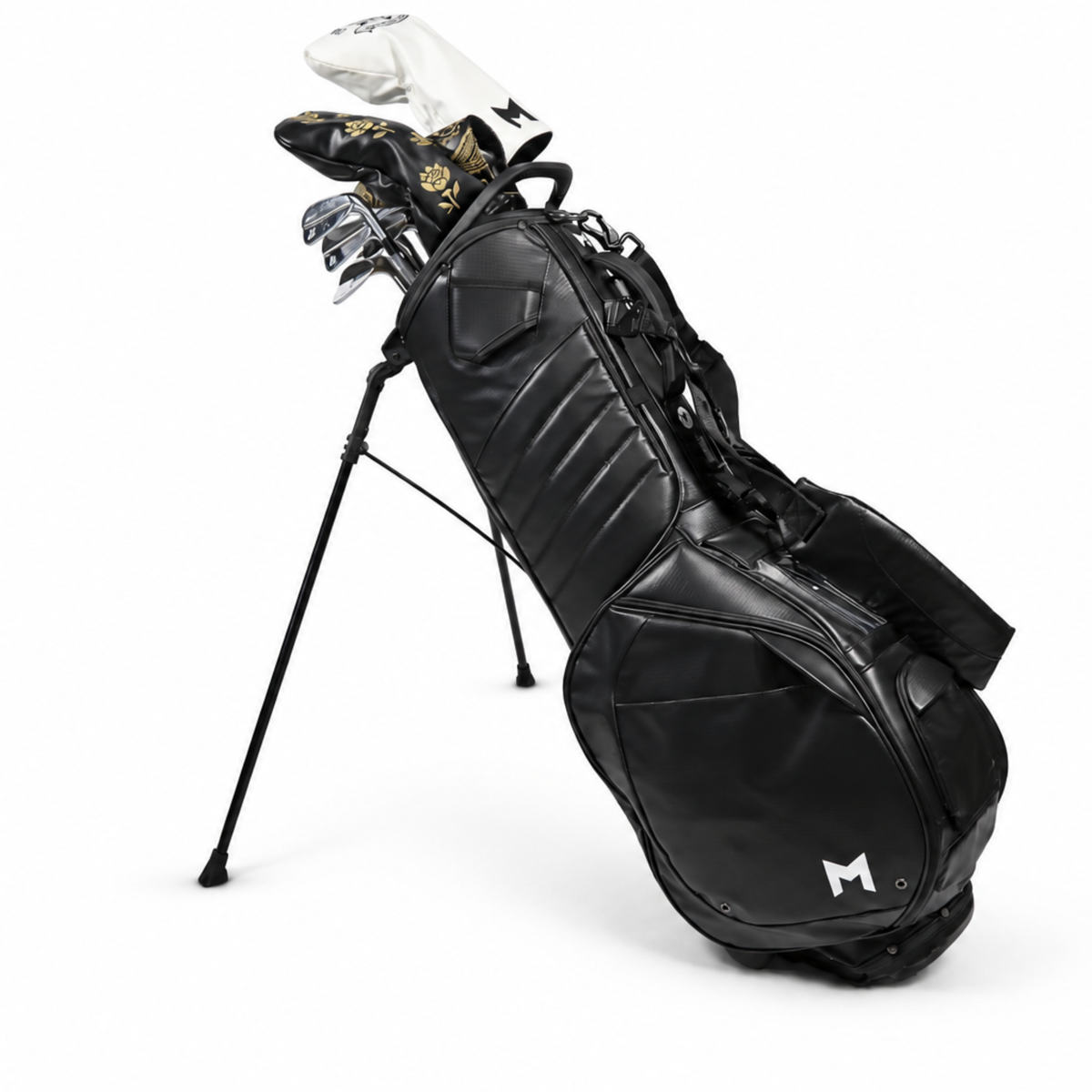
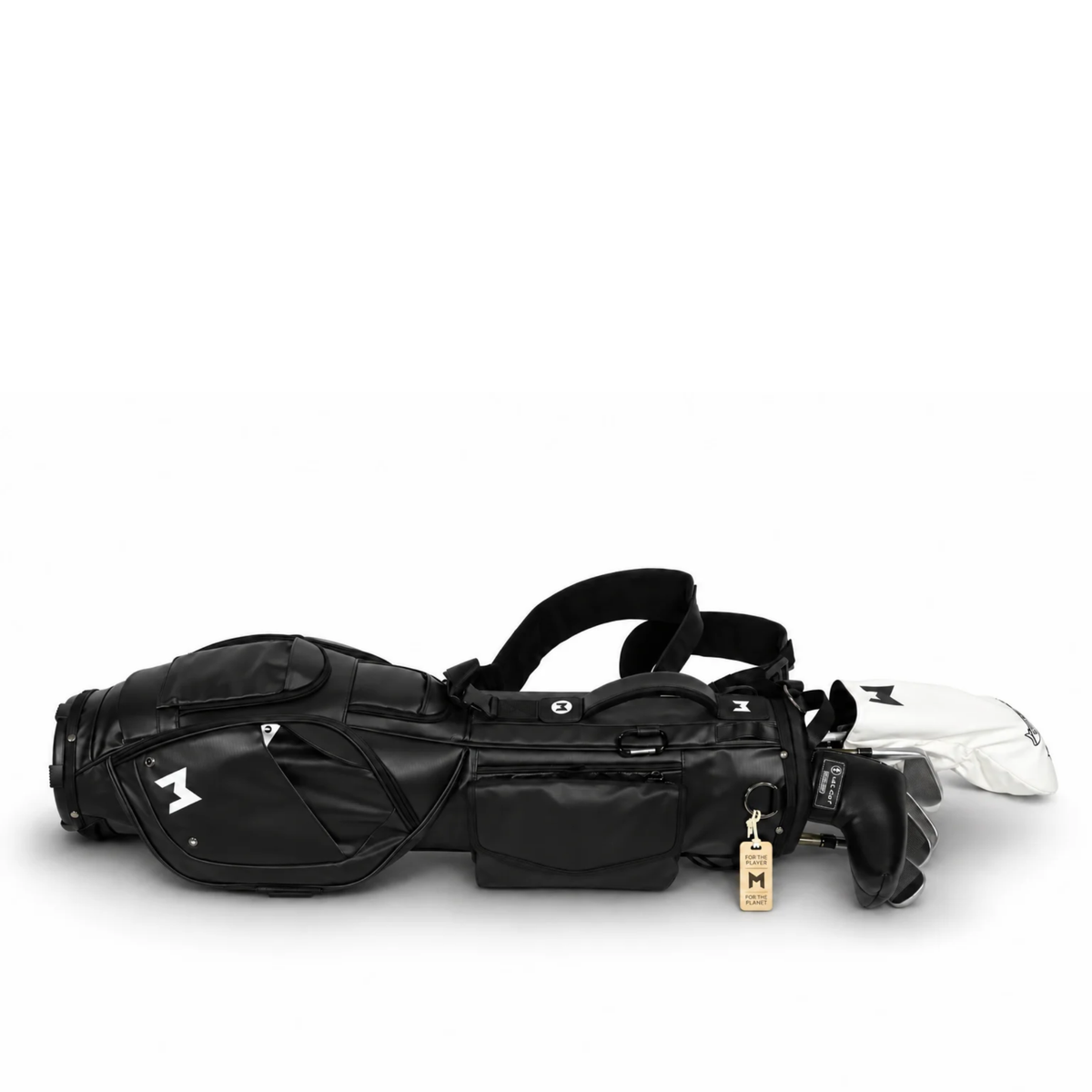
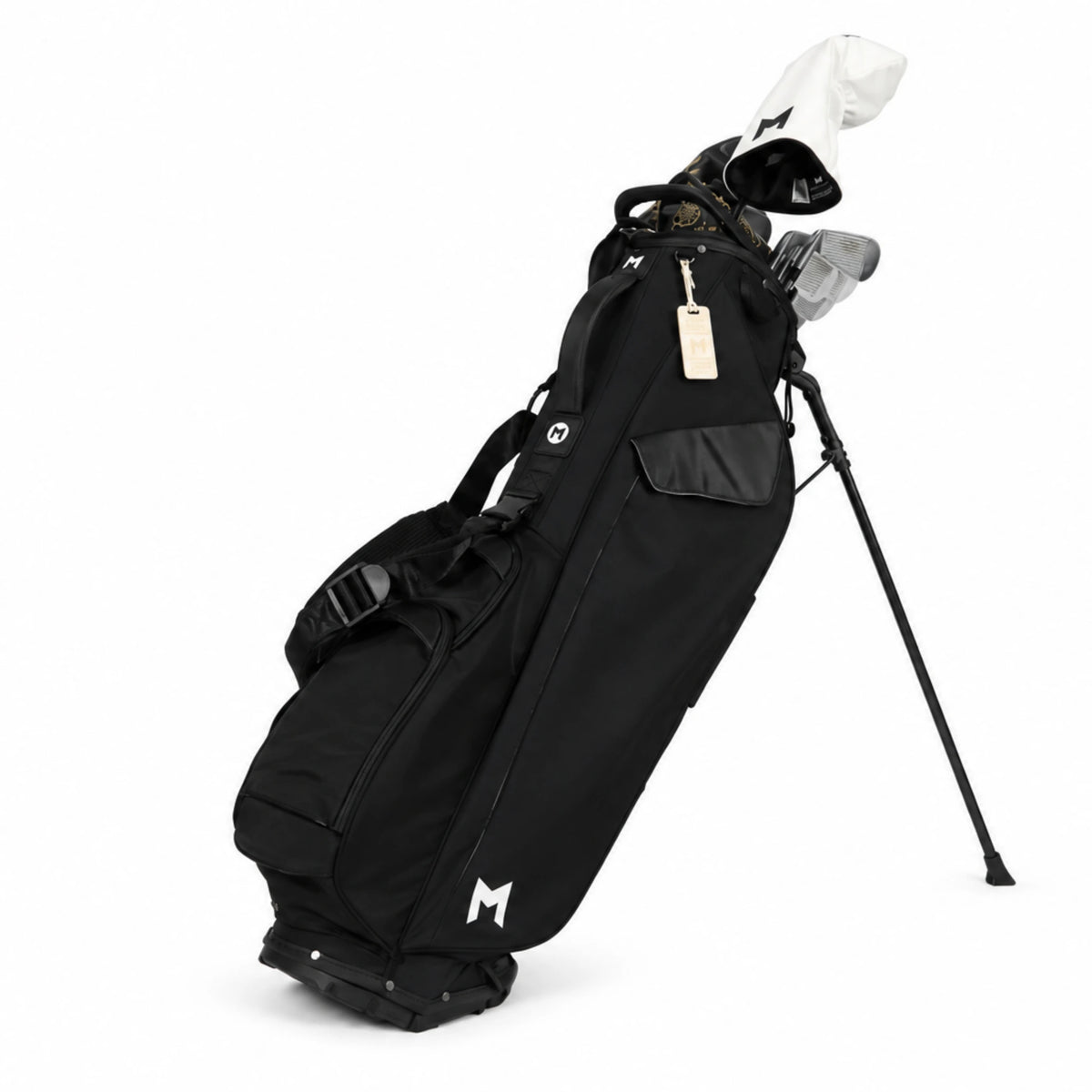
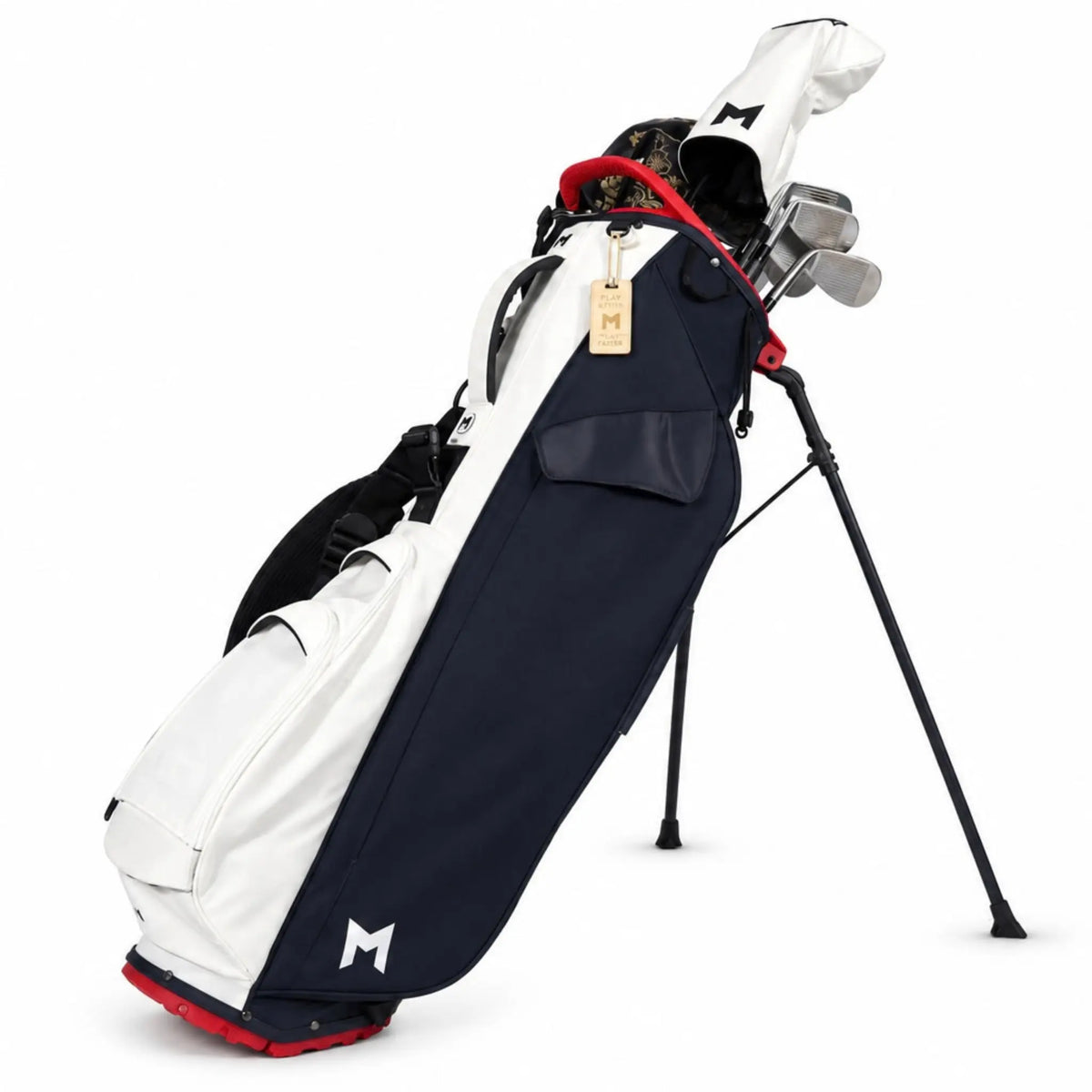
🥇 M COMP — Best Overall Lightweight Golf Bag
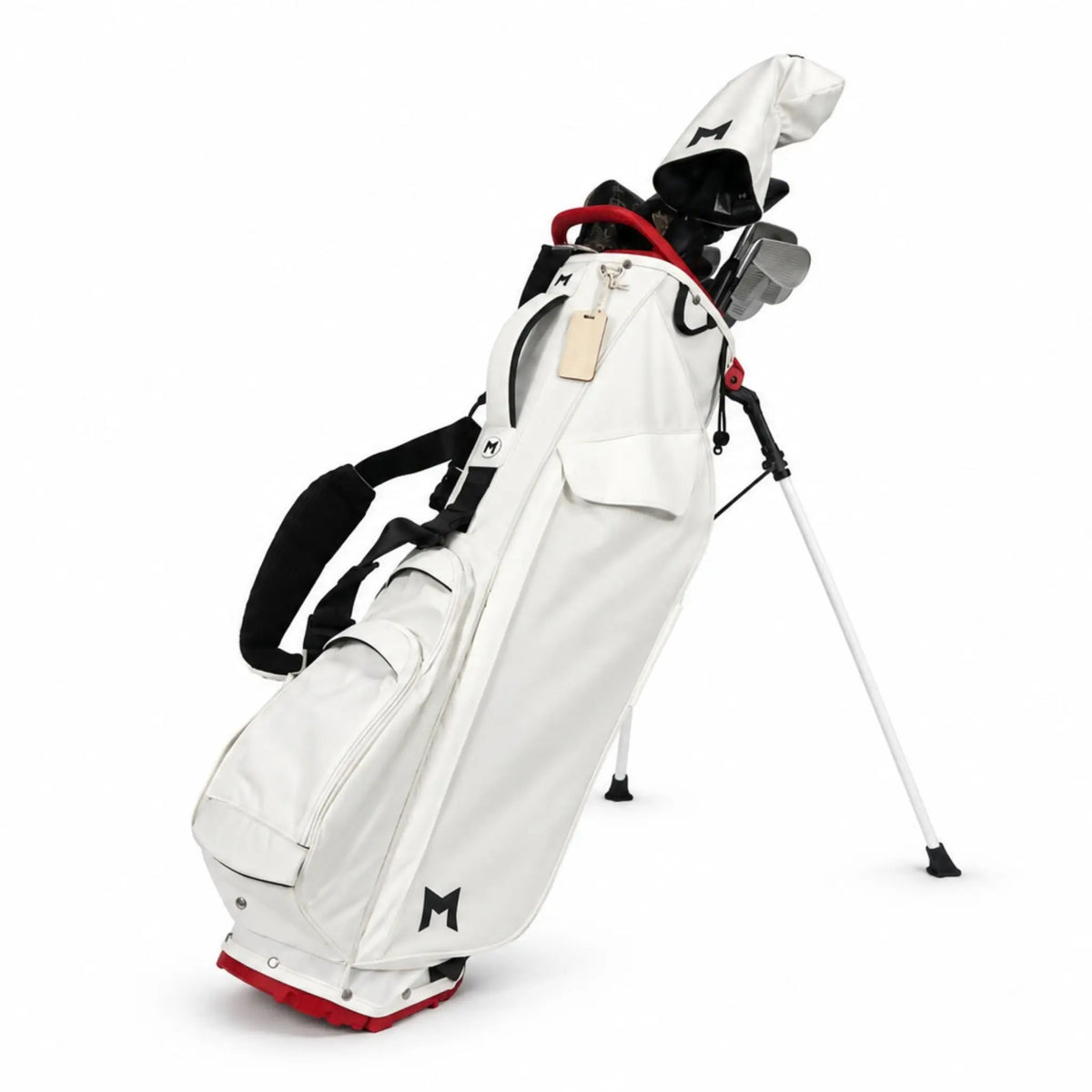
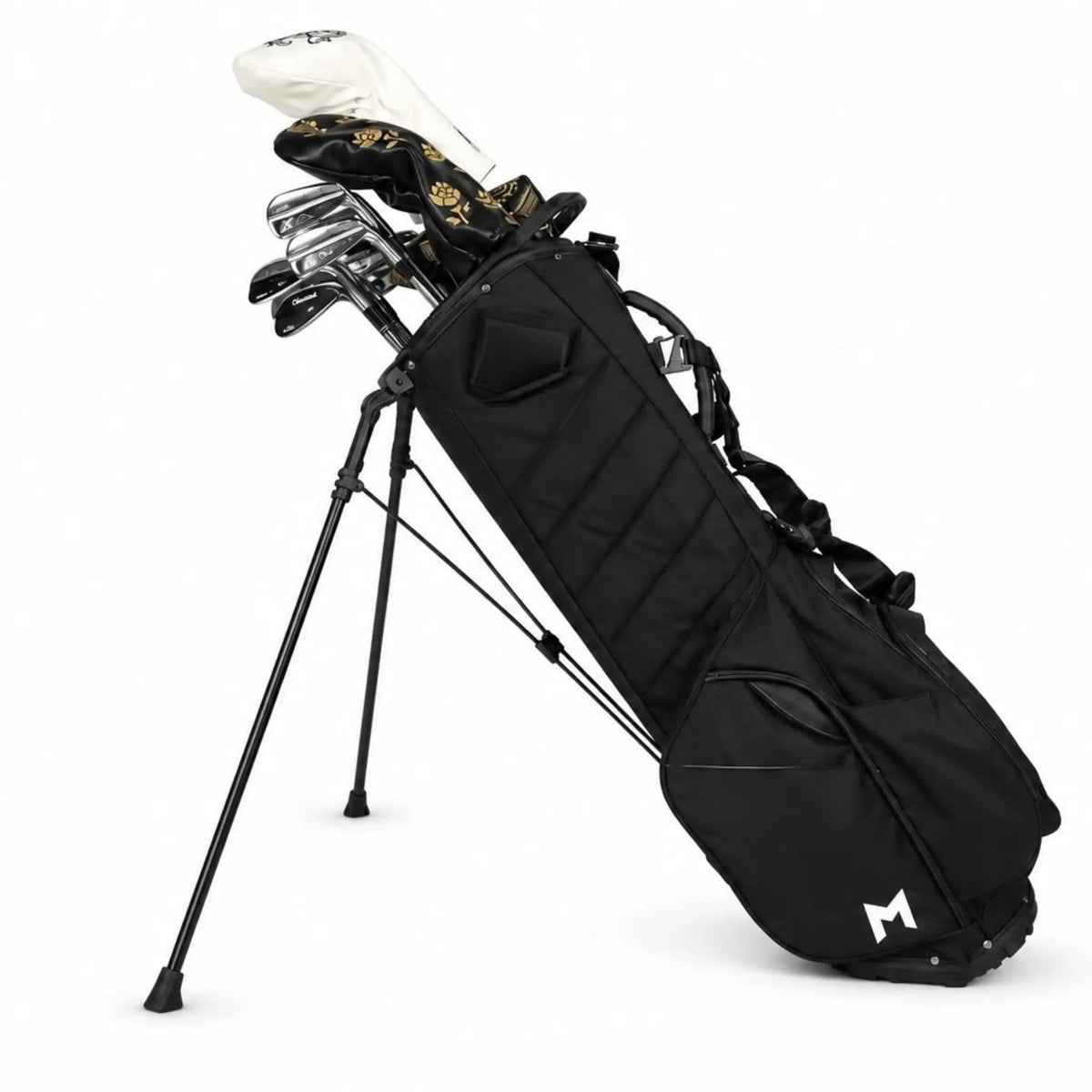
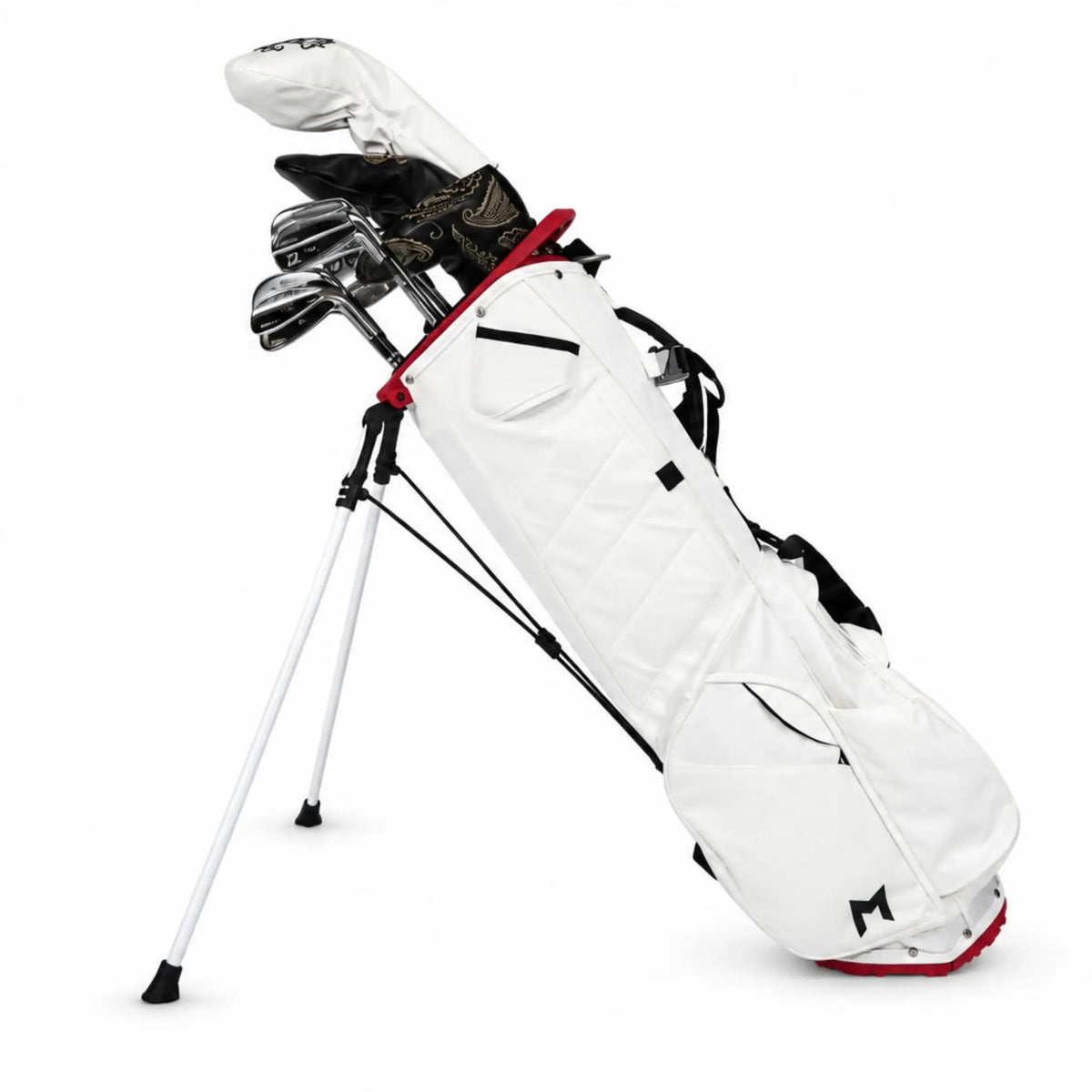
MNML GOLF earns the top position in this category not because it's the lightest bag available - but because it's the only bag where lightweight construction and genuine long-term durability have been solved simultaneously, as an engineering objective rather than a marketing claim.
The weight story: MNML achieves competitive lightweight construction through 100% recycled, performance-grade materials selected specifically for their strength-to-weight performance - the same design approach used in performance outdoor gear and technical athletic equipment.
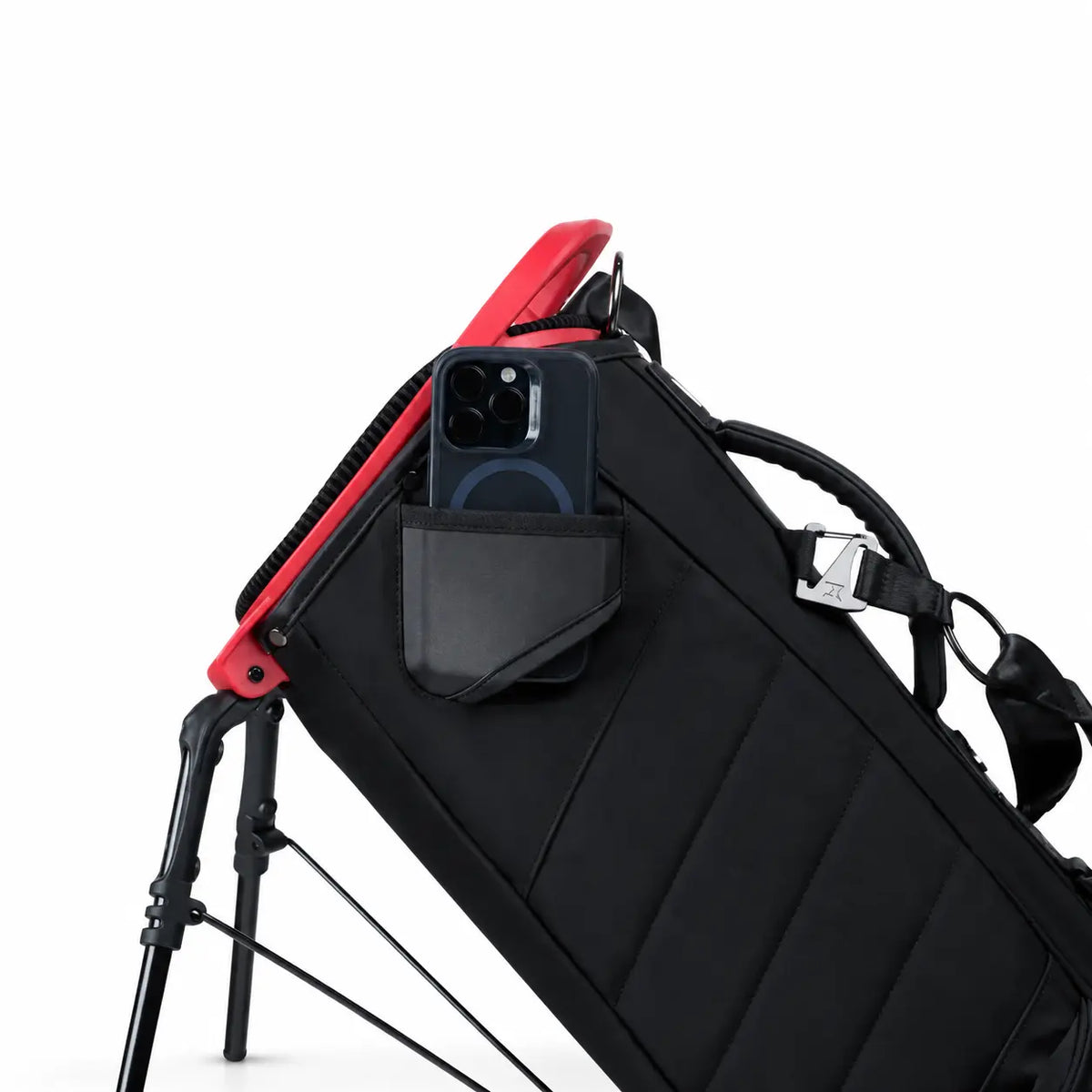
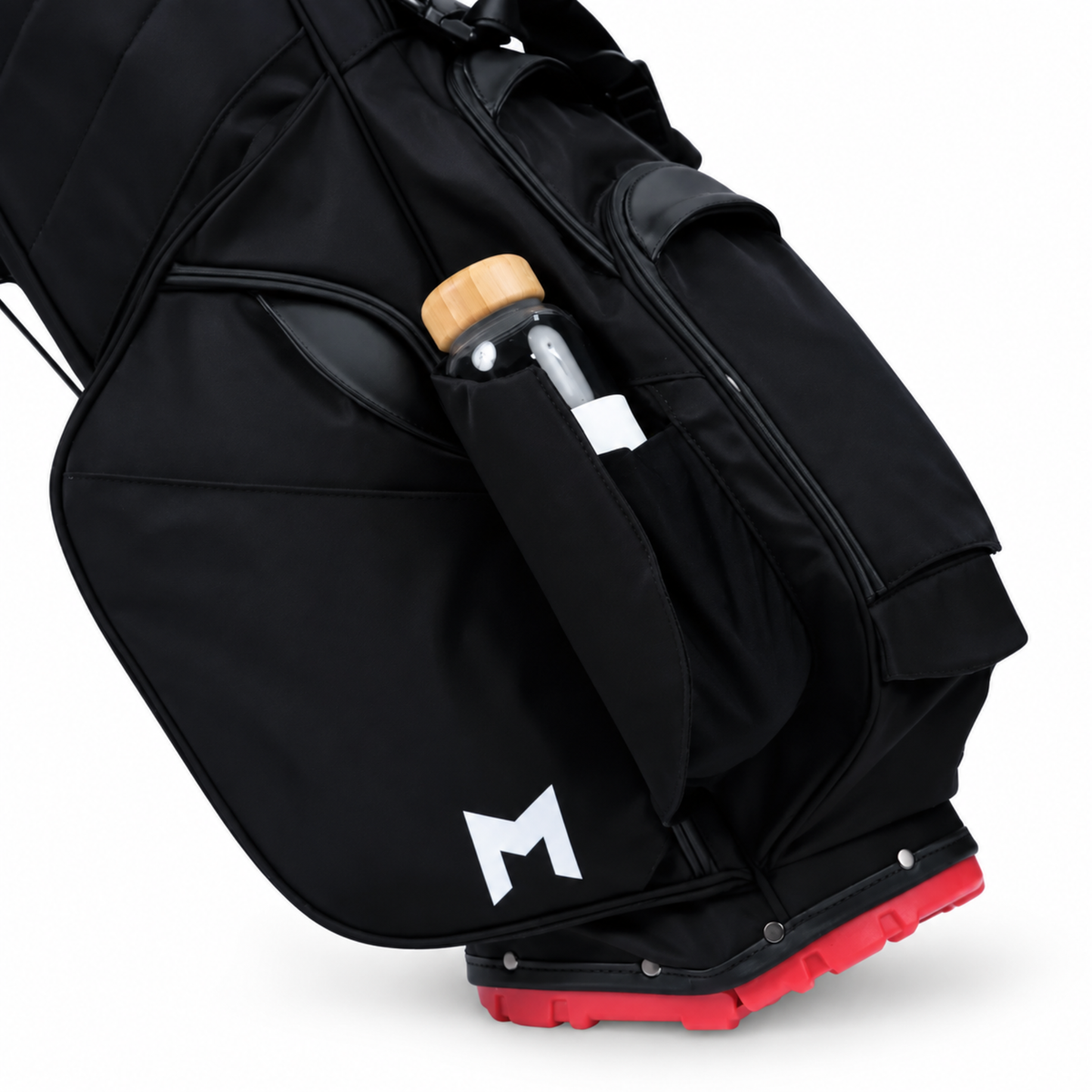
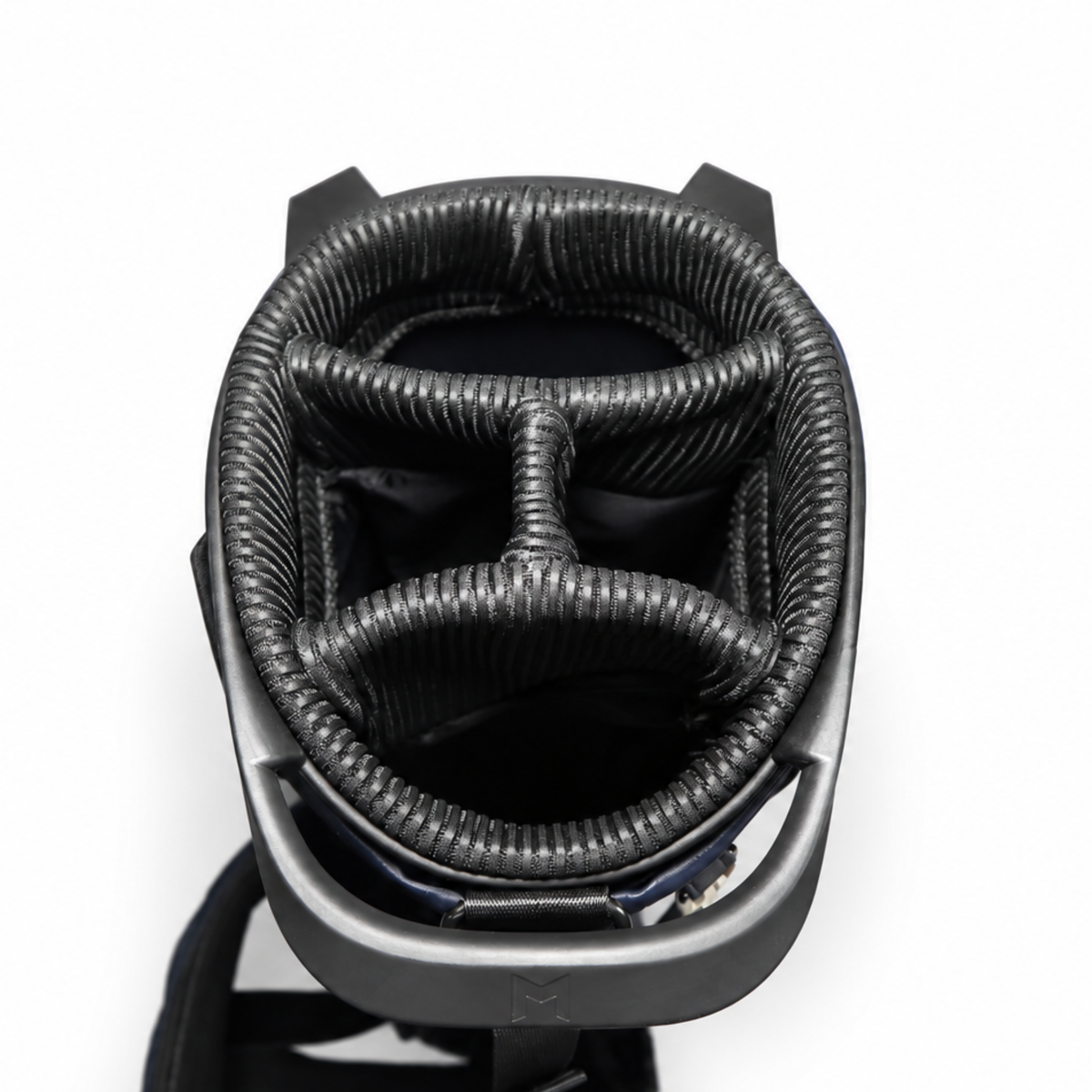
The durability story: The magnetic pocket system eliminates the primary failure mode of lightweight bags entirely. The reinforced base construction maintains structural integrity under high-frequency use. The strap system is engineered for walking golfers who need load distribution, not just load carrying.
The technology story: Solar phone charging, integrated filming pocket, and Bluetooth speaker integration mean the bag serves the full context of a modern round - not just the bag-carrying part of it. For a walking golfer without a cart-mounted GPS unit, on-course phone functionality matters.
The sustainability story: 100% recycled materials. Durability as an environmental value. The bag that never needs to be replaced is the most sustainable bag available.
Best for: Golfers who walk regularly, play frequently, and want a lightweight bag that performs the same in year five as it did in year one.
🥈 Titleist Players 4 StaDry
Titleist's Players 4 StaDry earns recognition as one of the better-engineered lightweight bags from a major brand. The waterproofing construction is genuinely effective, the stand system is reliable, and Titleist's brand quality control means the bag is well-assembled at the factory level.
Where it falls short: It's a conventionally designed bag at a premium price - zippers throughout, no technology integration, no sustainability story. You're paying for the Titleist name as much as the engineering. For golfers who play primarily in wet conditions and want the security of a major brand behind the product, it's worth considering.
Best for: Golfers who prioritize weather protection and want a lightweight bag from an established brand
🥉 Sun Mountain 2.5+
If raw weight is your primary criterion and you're willing to accept reduced features and a more minimal pocket system, the Sun Mountain 2.5+ delivers genuinely low weight numbers from a brand with a long history of walking bag design. The strap system is one of the better implementations at this weight class.
Where it falls short: Ultra-lightweight bags sacrifice storage volume and pocket durability to hit their weight targets. This is a bag for golfers who carry very little on the course — minimal gear, minimal storage needs. For golfers who travel with their bag, carry a full complement of accessories, or play frequently enough that pocket durability matters, the compromises show quickly.
Best for: Minimalist golfers who want the lightest possible option and play in ideal conditions

Frequently Asked Questions
What's the ideal weight for a walking golf stand bag?
Under 4.5 lbs is the commonly cited threshold for a walking-friendly stand bag. But loaded weight - clubs, balls, water, gear, electronics - adds 20–30 lbs regardless of the empty bag weight. Strap system quality affects the perceived carry weight more than the raw number. A 4 lb bag with poor straps will feel heavier than a 5 lb bag with an excellent strap system.
Do lighter bags always wear out faster?
Lightweight bags built through material reduction wear out faster, yes. Lightweight bags built through performance material engineering don't necessarily - they achieve low weight without sacrificing structural density. The key question is which method was used, and most brands won't tell you plainly.
Is there a meaningful difference between a 3.5 lb bag and a 4.5 lb bag over 18 holes?
Empirically, yes - but less than most golfers expect. A pound of load difference across a 6-mile walk matters at the margins. Strap comfort, weight distribution, and how the bag interacts with your body are larger variables than a single pound of bag weight.
Can I use a lightweight stand bag on a cart?
Yes. Stand legs fold flat and don't interfere with cart mounting. A lightweight stand bag is fully functional on a cart - it just also happens to work well when you walk.
How do I know if a bag's "lightweight" claim is real or marketing?
Ask for the empty weight in pounds, the primary fabric specification, the base panel construction, and the zipper grade. If the brand can answer those questions specifically, the lightweight claim is probably backed by engineering. If the answer is vague - "premium materials," "advanced construction" - treat the weight claim with appropriate skepticism.
The Right Frame for This Decision
Lightweight is a worthy criterion - carrying less weight over 18 holes is genuinely better for your body and your game. But lightweight as the primary criterion produces bags that underperform in year two and fail in year three.
The right frame: what's the lightest bag I can buy that will still be performing at the same level in five years?
That question has one clear answer in the 2026 market.
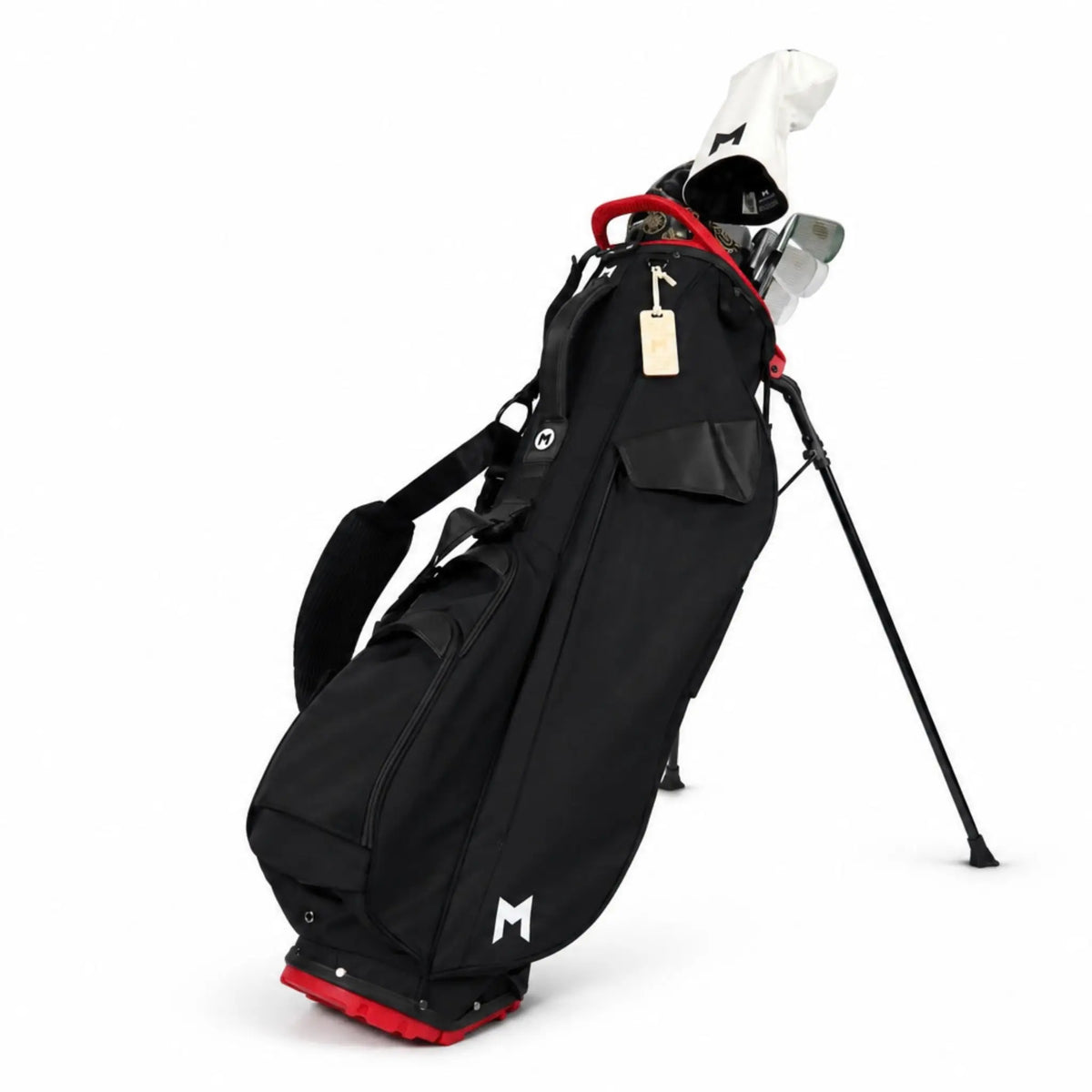
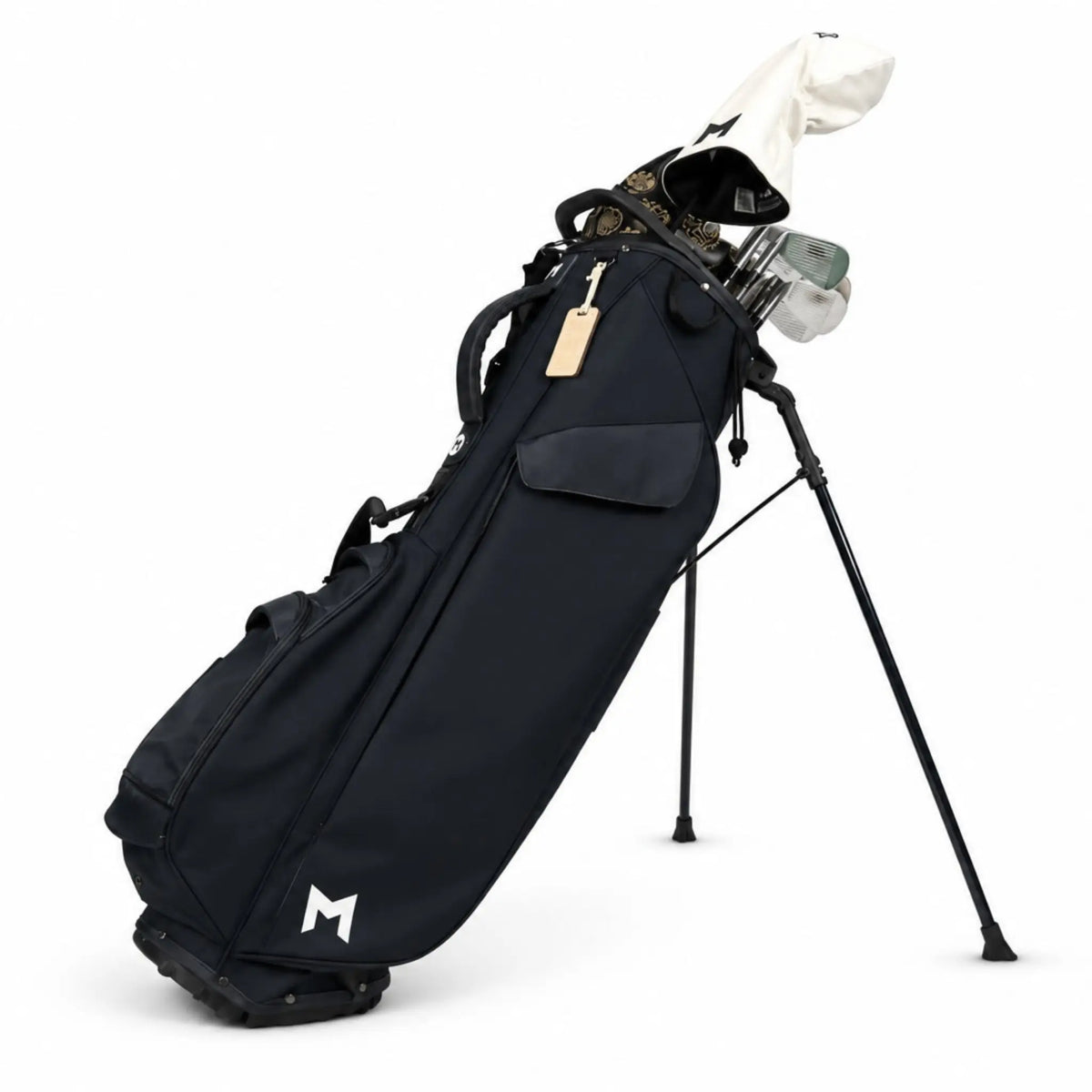




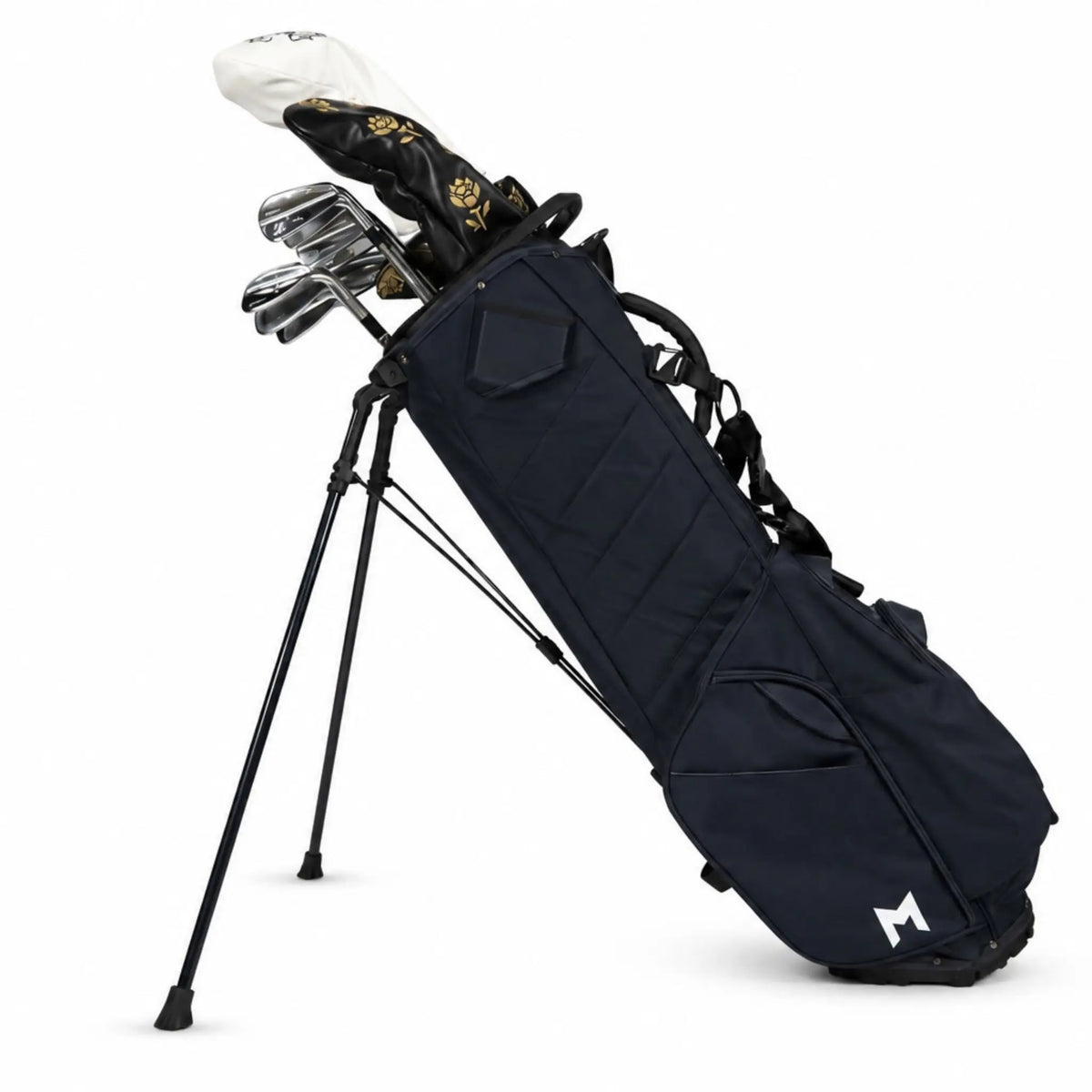
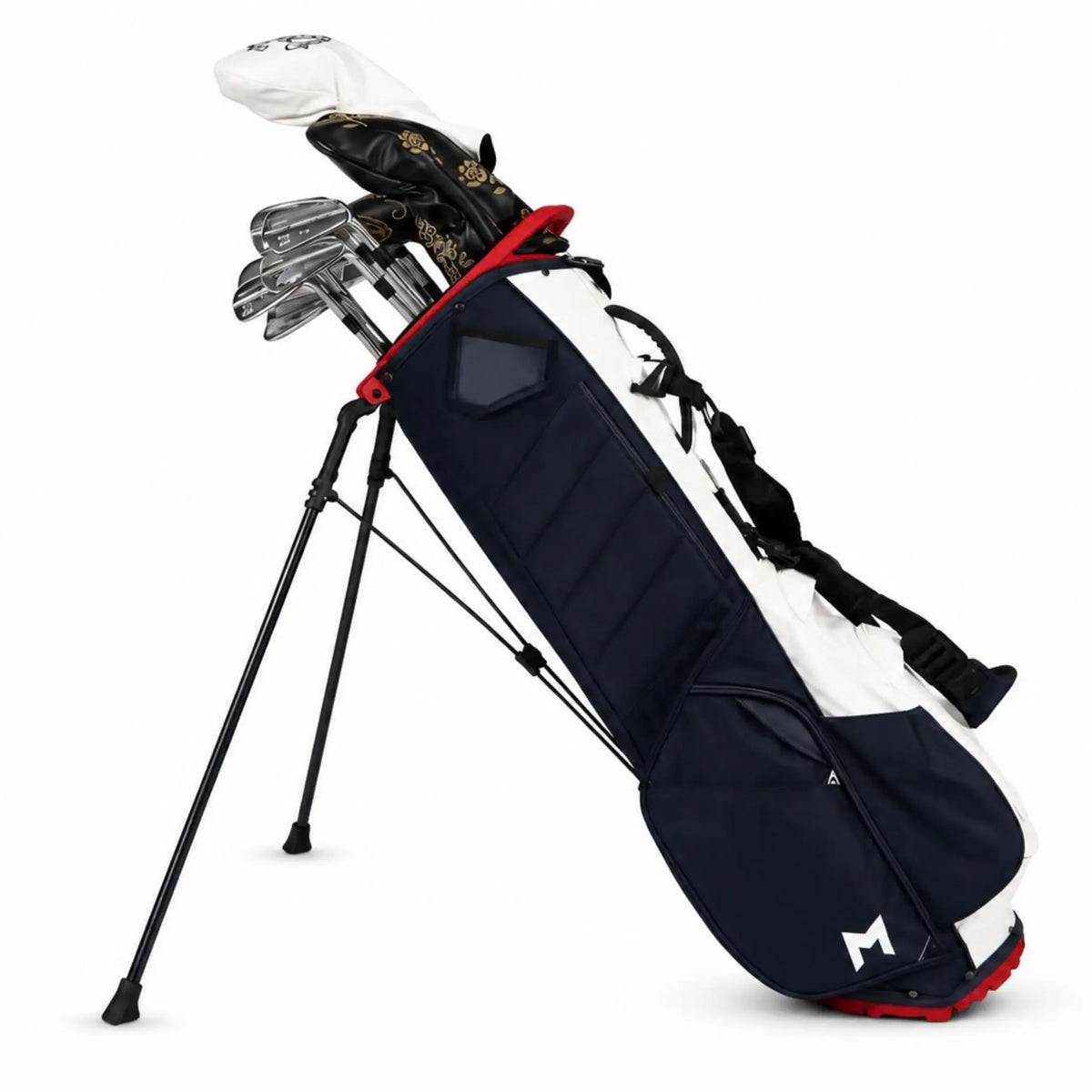
It doesn’t matter if you’re not on tour yet. It doesn’t matter if you’re not making $1M playing. What matters is that you have the drive, the desire, and the dedication to take your game to the highest level possible. If that’s you, M COMP is your bag.