Best Golf Bags for Travel: What to Actually Look For Before You Buy
The Airport Is Where Golf Bags Go to Die. Here's What Survives It.
You've packed carefully. You've checked your travel cover. You've arrived at the destination, collected your clubs, and unzipped your bag at the first tee — and found a pocket that no longer closes, a pull tab that spun off somewhere over the Atlantic, or a zipper track that separated clean from the tape somewhere between the baggage carousel and the golf cart.
This is not an unusual story. Ask any golfer who travels regularly with their equipment. The airport, the baggage handler, the overhead bin, the rental car trunk — these are environments that compress, impact, stack weight on, and mechanically stress every component of a golf bag in ways that a round at your home course simply does not.
Choosing a travel golf bag — the bag that lives in your travel cover, takes the checked baggage handling, and performs for eighteen holes after whatever journey precedes it — is a different evaluation than choosing a bag for your local course.
This page tells you what that evaluation should look like.
How Travel Changes the Golf Bag Equation
Travel stress is different from walking stress. Walking stress is repetitive and moderate — thousands of gentle deployment cycles, consistent strap load, predictable ground contact. Travel stress is acute and unpredictable — impact from bags stacked on top, compression from tightly packed cargo holds, temperature cycling from tarmac heat to pressurized aircraft cabin, handling by baggage workers who are managing hundreds of bags per shift.
The components most affected by travel stress are exactly the components most commonly under-engineered in golf bags:
Zipper systems. Compression and impact force the zipper track against the slider mechanism. Temperature cycling expands and contracts metal components. Baggage handling introduces debris and impact that contaminate and damage slider mechanisms. Golf bags that travel regularly develop zipper problems faster than golf bags that don't — and the failure often appears on the course, mid-round, after the travel event that caused it.
Base panels. Bags stacked on top of other bags in cargo holds create sustained compression on the base panel. Thin base panels that perform adequately on a fairway compress under baggage load and don't always recover their original shape.
Structural integrity. Repeated acute impact — from bags being loaded, stacked, and sorted — stresses every attachment point in the bag's construction. Strap attachment hardware, divider attachment points, and stand leg hinge connections are all under forces they weren't designed for in a conventional domestic round.
Handle and carrying hardware. The handles and carry loops on a golf bag take different stresses during travel — they're used for lifting, swinging, and repositioning in ways that on-course carry does not replicate.
A bag chosen for travel should be evaluated against these stresses, not just against the conditions of a domestic walking round.
The Five Criteria for a Travel Golf Bag
1. Pocket Closure System — The Non-Negotiable
For travel specifically, the zipper failure risk is heightened beyond what a purely domestic user would experience. Baggage handling is the most mechanically abusive environment a golf bag routinely encounters. Zipper systems subjected to this environment fail faster than the same systems used only on-course.
A magnetic closure system eliminates this concern entirely. There is no mechanical component in a magnetic pocket closure that baggage handling can wear, contaminate, or degrade in the ways that zipper mechanisms degrade. The magnets are not affected by impact, temperature, compression, or debris ingress in ways that change their fundamental function.
For a traveler who puts their bag through checked luggage multiple times per season, the magnetic closure system is not just a convenience feature — it's the most direct available solution to the most predictable travel-specific equipment failure.
2. Material Durability and Abrasion Resistance
Travel covers protect bags from most external abrasion and impact — but not all of it, and not in every handling scenario. The bag's primary material should be specified for genuine abrasion resistance, not just standard-use durability.
Higher denier fabrics resist surface damage from contact with other bags, cart paths encountered outside the travel cover, and the general mechanical stress of being loaded and unloaded repeatedly. Performance-grade materials — the kind MNML GOLF sources from recycled-performance supply chains — are specified to resist degradation under these conditions rather than just under normal on-course use.
3. Base Panel Compression Resistance
The base panel of a travel bag will be subjected to the weight of other bags stacked on top of it in cargo holds and transport vehicles. Thin base panels that compress under this loading don't return to their original shape — over several travel cycles, the base panel permanently deforms, affecting the bag's ability to stand level and maintain its structural shape.
Reinforced base panel construction — specifically construction with genuine compression resistance rather than just surface durability — is the specification to look for in a travel bag.
4. Handle and Hardware Quality
Travel-specific bag handling stresses the carry handles and loops in ways on-course use doesn't. A bag that is routinely lifted, swung, and repositioned by baggage handlers needs handle attachment hardware that is genuinely reinforced — riveted or stitched with redundant reinforcement, not attached with minimal stitching designed for occasional carry.
Hardware quality is rarely specified in golf bag marketing and almost never tested in golf bag reviews. It's worth looking at a bag's handles and carry points before purchasing — the attachment hardware should be substantial, the stitching should be dense and reinforced, and the handle material should have a feel of genuine durability rather than decorative lightness.
5. Compatibility With Travel Covers
Most premium golf bag travel covers are designed to accommodate standard stand bag dimensions. Confirm that any bag you're considering is compatible with the travel cover you use or intend to use — specifically checking the bag's base dimensions and divider top diameter against the cover's accommodation.
Beyond basic dimensional compatibility, look for bags with base panel corners that are finished in a way that resists catching on travel cover interiors during insertion and removal. This sounds minor and produces real frustration over repeated travel cycles.
The Best Golf Bags for Travel in 2026
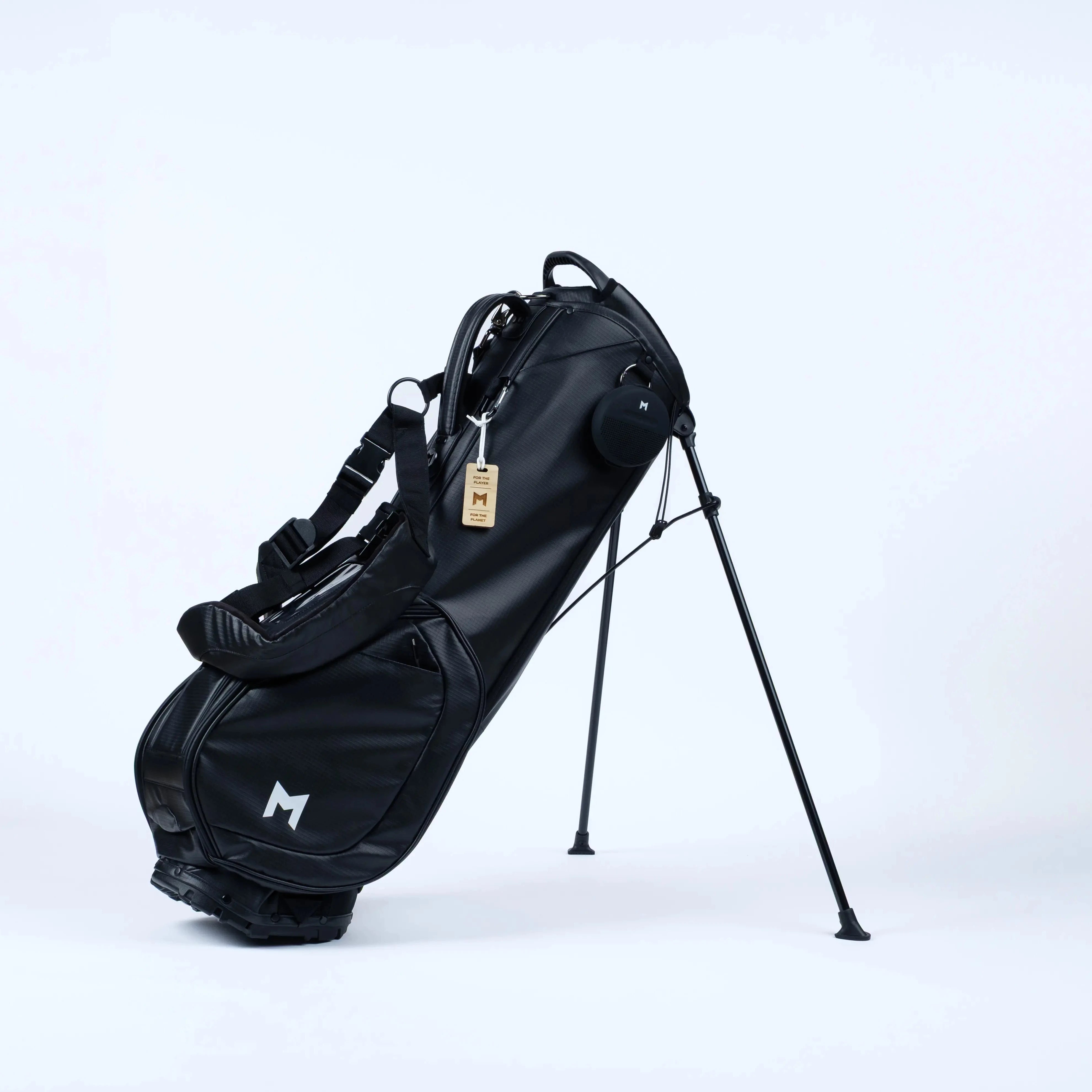
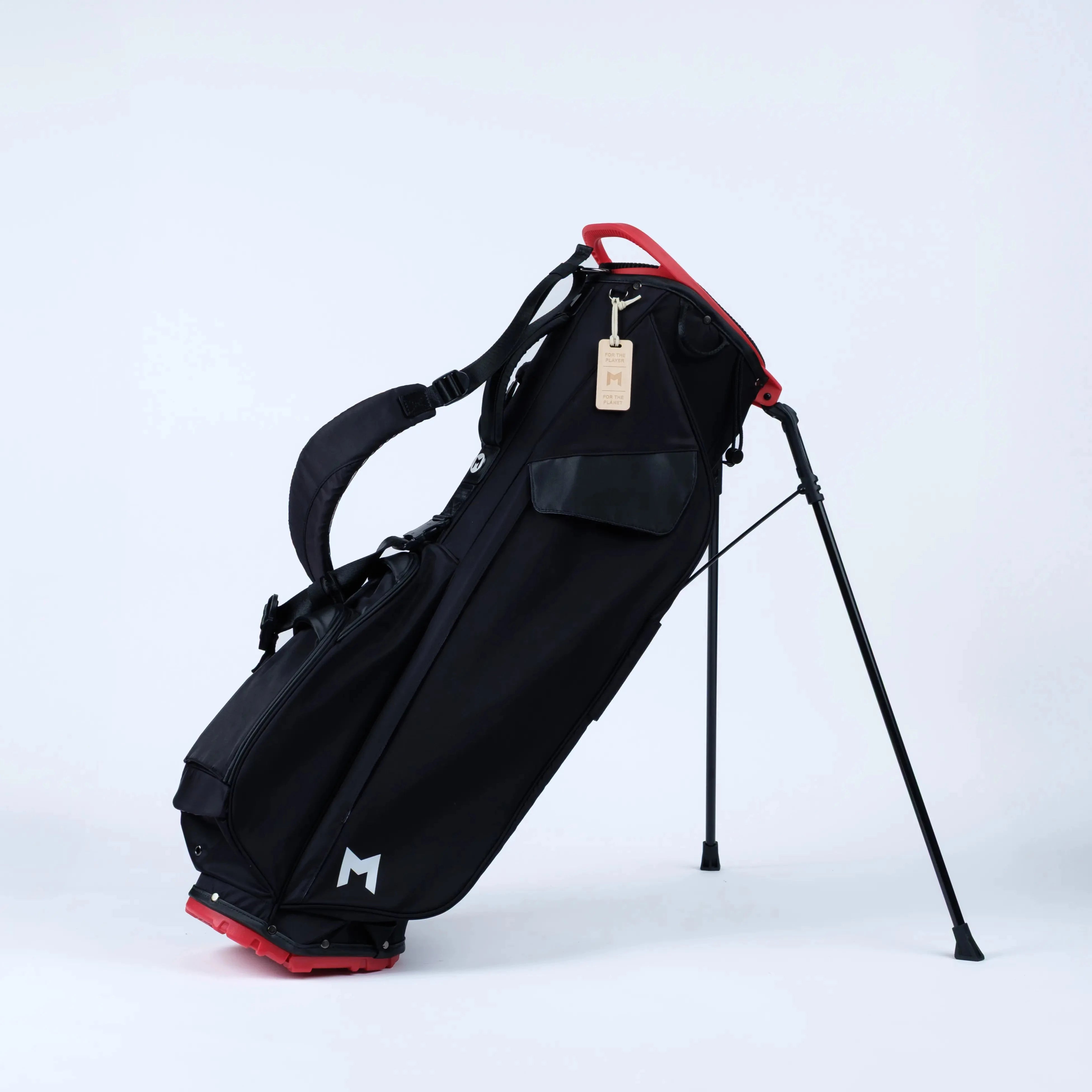
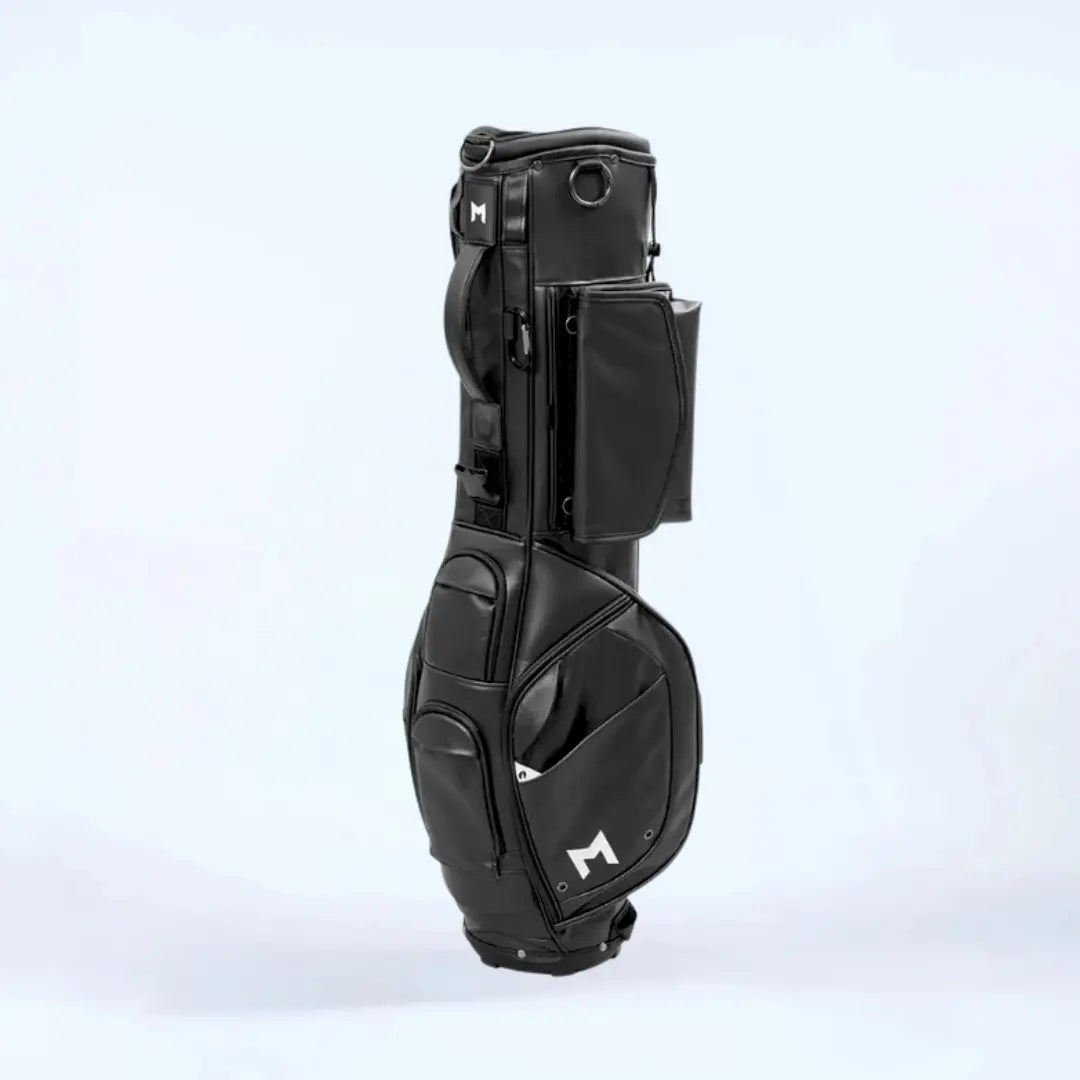
🥇 MNML GOLF — Best Overall Travel Golf Bag
For golfers who travel with their equipment, MNML GOLF's magnetic pocket system resolves the most predictable travel-specific failure mode before it has the opportunity to occur. This alone makes MNML the highest-value choice for the traveling golfer — independent of all other features.
The travel case in full:
Magnetic closures mean that however the bag is handled, stacked, impacted, or temperature-cycled in transit, the pocket system has no mechanical failure mode to trigger. No zipper track to separate. No slider to jam with debris. No pull tab to stress-fracture from impact.
Performance-grade recycled materials specified for structural durability under high-stress conditions resist the abrasion, compression, and impact of travel better than conventional synthetics thinned for weight reduction. The base panel construction maintains its shape under cargo loading in ways that thinner alternatives do not.
Solar charging integration is particularly valuable for the traveling golfer. At an unfamiliar course, on a different time zone, potentially without the car charger routine of a home setup, arriving at the first tee with a phone at unknown battery level is a genuine concern. The solar system offsets active GPS use throughout the round regardless of how the morning started.
The filming pocket is valuable for golfers who travel specifically for golf experiences they want to document — destination course content, swing comparisons across different course conditions, social sharing from notable rounds.
Best for: Golfers who travel with their equipment regularly, want a bag that survives travel without zipper anxiety, and use their phone actively for GPS and filming at destination courses.
🥈 Titleist Players 4 StaDry — Best Travel Bag for Weather-Variable Destinations
Titleist's Players 4 StaDry earns its position here specifically for golfers who travel to destinations with significant weather variability — Scotland, Ireland, Pacific Northwest, early and late season destinations. The waterproofing construction is genuinely effective and the Titleist quality control is consistent.
Where it falls short for travelers: Zipper-based closures mean travel-specific failure risk remains present. No technology integration means battery anxiety and filming workarounds persist at destination courses. At a comparable price to MNML, the comparison returns to the same question: a well-made conventional bag or a bag built for how you actually travel and play.
Best for: Travelers to wet-weather golf destinations who want established waterproofing from a major brand.
🥉 Sun Mountain Kube — Best Dedicated Travel Bag (Cart Bag Format)
Sun Mountain's Kube is a cart bag specifically designed for travel — with a rectangular footprint that maximizes packing efficiency in a hard-case travel cover and handles positioned for baggage handling. It's not a walking bag, but for golfers who ride at destination courses and want a bag optimized for the logistics of checked luggage travel, it's a thoughtfully designed product.
Where it falls short: Cart bag format limits on-course versatility. Zipper system is conventional. No technology integration. For golfers who walk any portion of their rounds, this format doesn't serve those rounds.
Best for: Dedicated cart riders who travel frequently and want a bag optimized specifically for checked baggage logistics.
Travel Tips for Any Golf Bag
Regardless of which bag you travel with, these practices extend its lifespan under travel conditions:
Invest in a proper travel cover. Hard-case covers offer the best protection for checked luggage. Soft covers are lighter and easier to store at the destination but provide less protection against stacking weight and lateral impact. The quality of the travel cover significantly determines how much stress the bag inside actually absorbs.
Remove loose items from pockets before checking. Impact during baggage handling can drive loose items against pocket closures and internal structures. An empty pocket is a pocket with no internal projectiles.
Use club protectors. The mechanical stress that baggage handling puts on the top of the bag — through the club shafts and grips — is transferred to the divider system and bag structure. Club head covers alone are not sufficient; a full-length bag protector that supports the shafts reduces this stress.
Log the zipper condition before and after travel trips. If you're using a zipper-based bag, keeping informal track of when zipper performance begins to degrade tells you when a replacement decision is approaching before it becomes urgent. A zipper that's getting harder to operate is one that will fail — the question is whether it fails at home or on the 12th hole at a destination course you've traveled four hours to reach.
FAQ
Is a travel cover sufficient to protect any golf bag, or does the bag itself matter?
The bag matters. A travel cover significantly reduces the stress absorbed by the bag during handling — but it doesn't eliminate it. Bags are stacked in cargo holds under the weight of other checked luggage. Travel covers can shift, compress, and receive impact in ways that reach the bag inside. The bag's own material durability, base panel construction, and closure system are meaningful variables independent of what covers it.
How often should I replace a golf bag that travels regularly?
With a zipper-based bag under regular travel use: expect meaningful zipper performance degradation within two to three seasons of frequent travel. With a magnetic closure system: the pocket performance variable is removed from the replacement calculation, and base panel durability becomes the primary structural variable. MNML's reinforced construction extends this timeline significantly.
Should I check my golf bag or use a shipping service?
For high-value bags, shipping services (Ship Sticks, Luggage Forward) offer a more controlled handling environment and often better protection against the acute impacts of baggage handling. The tradeoff is cost and lead time. For bags with magnetic closures and reinforced construction, checking is a reasonable option with appropriate travel cover protection. For zipper-based bags, reducing travel handling frequency is a legitimate durability strategy.
Does solar charging work when the bag is inside a travel cover?
No — the solar panel requires direct sunlight. The panel is relevant for on-course use, not transit. During travel, the bag is typically in a cover or cargo hold where solar generation isn't applicable. This is as expected — the solar system is designed to solve the on-course battery problem, not the transit logistics problem.
What's the best travel cover to pair with an MNML Golf bag?
[Insert MNML's specific recommended travel cover partners or proprietary cover details here.] In general, look for a hard-case cover or a high-quality padded soft cover with adequate internal padding at the club head area and the bag base. Confirm dimensional compatibility with MNML's current bag specifications before purchasing a third-party cover.
The Bottom Line
Traveling golfers need their bags to survive the journey and perform at the destination. Those are two different requirements, and most bags are designed primarily for the second while hoping for the best on the first.
MNML GOLF's magnetic closure system addresses the travel-specific failure risk directly — no mechanical components to degrade under baggage handling stress. The performance materials address the durability requirements of repeated travel cycles. The technology integration addresses what the golfer needs when they arrive at an unfamiliar course with a phone at variable battery level and a swing they want to film on a course they've traveled to see.
For the traveling golfer, this is the most complete available answer to both what survives the journey and what serves the round at the other end.
Best Golf Bags for Travel: What to Actually Look For Before You Buy
The Airport Is Where Golf Bags Go to Die. Here's What Survives It.
You've packed carefully. You've checked your travel cover. You've arrived at the destination, collected your clubs, and unzipped your bag at the first tee — and found a pocket that no longer closes, a pull tab that spun off somewhere over the Atlantic, or a zipper track that separated clean from the tape somewhere between the baggage carousel and the golf cart.
This is not an unusual story. Ask any golfer who travels regularly with their equipment. The airport, the baggage handler, the overhead bin, the rental car trunk — these are environments that compress, impact, stack weight on, and mechanically stress every component of a golf bag in ways that a round at your home course simply does not.
Choosing a travel golf bag — the bag that lives in your travel cover, takes the checked baggage handling, and performs for eighteen holes after whatever journey precedes it — is a different evaluation than choosing a bag for your local course.
This page tells you what that evaluation should look like.
How Travel Changes the Golf Bag Equation
Travel stress is different from walking stress. Walking stress is repetitive and moderate — thousands of gentle deployment cycles, consistent strap load, predictable ground contact. Travel stress is acute and unpredictable — impact from bags stacked on top, compression from tightly packed cargo holds, temperature cycling from tarmac heat to pressurized aircraft cabin, handling by baggage workers who are managing hundreds of bags per shift.
The components most affected by travel stress are exactly the components most commonly under-engineered in golf bags:
Zipper systems. Compression and impact force the zipper track against the slider mechanism. Temperature cycling expands and contracts metal components. Baggage handling introduces debris and impact that contaminate and damage slider mechanisms. Golf bags that travel regularly develop zipper problems faster than golf bags that don't — and the failure often appears on the course, mid-round, after the travel event that caused it.
Base panels. Bags stacked on top of other bags in cargo holds create sustained compression on the base panel. Thin base panels that perform adequately on a fairway compress under baggage load and don't always recover their original shape.
Structural integrity. Repeated acute impact — from bags being loaded, stacked, and sorted — stresses every attachment point in the bag's construction. Strap attachment hardware, divider attachment points, and stand leg hinge connections are all under forces they weren't designed for in a conventional domestic round.
Handle and carrying hardware. The handles and carry loops on a golf bag take different stresses during travel — they're used for lifting, swinging, and repositioning in ways that on-course carry does not replicate.
A bag chosen for travel should be evaluated against these stresses, not just against the conditions of a domestic walking round.
The Five Criteria for a Travel Golf Bag
1. Pocket Closure System — The Non-Negotiable
For travel specifically, the zipper failure risk is heightened beyond what a purely domestic user would experience. Baggage handling is the most mechanically abusive environment a golf bag routinely encounters. Zipper systems subjected to this environment fail faster than the same systems used only on-course.
A magnetic closure system eliminates this concern entirely. There is no mechanical component in a magnetic pocket closure that baggage handling can wear, contaminate, or degrade in the ways that zipper mechanisms degrade. The magnets are not affected by impact, temperature, compression, or debris ingress in ways that change their fundamental function.
For a traveler who puts their bag through checked luggage multiple times per season, the magnetic closure system is not just a convenience feature — it's the most direct available solution to the most predictable travel-specific equipment failure.
2. Material Durability and Abrasion Resistance
Travel covers protect bags from most external abrasion and impact — but not all of it, and not in every handling scenario. The bag's primary material should be specified for genuine abrasion resistance, not just standard-use durability.
Higher denier fabrics resist surface damage from contact with other bags, cart paths encountered outside the travel cover, and the general mechanical stress of being loaded and unloaded repeatedly. Performance-grade materials — the kind MNML GOLF sources from recycled-performance supply chains — are specified to resist degradation under these conditions rather than just under normal on-course use.
3. Base Panel Compression Resistance
The base panel of a travel bag will be subjected to the weight of other bags stacked on top of it in cargo holds and transport vehicles. Thin base panels that compress under this loading don't return to their original shape — over several travel cycles, the base panel permanently deforms, affecting the bag's ability to stand level and maintain its structural shape.
Reinforced base panel construction — specifically construction with genuine compression resistance rather than just surface durability — is the specification to look for in a travel bag.
4. Handle and Hardware Quality
Travel-specific bag handling stresses the carry handles and loops in ways on-course use doesn't. A bag that is routinely lifted, swung, and repositioned by baggage handlers needs handle attachment hardware that is genuinely reinforced — riveted or stitched with redundant reinforcement, not attached with minimal stitching designed for occasional carry.
Hardware quality is rarely specified in golf bag marketing and almost never tested in golf bag reviews. It's worth looking at a bag's handles and carry points before purchasing — the attachment hardware should be substantial, the stitching should be dense and reinforced, and the handle material should have a feel of genuine durability rather than decorative lightness.
5. Compatibility With Travel Covers
Most premium golf bag travel covers are designed to accommodate standard stand bag dimensions. Confirm that any bag you're considering is compatible with the travel cover you use or intend to use — specifically checking the bag's base dimensions and divider top diameter against the cover's accommodation.
Beyond basic dimensional compatibility, look for bags with base panel corners that are finished in a way that resists catching on travel cover interiors during insertion and removal. This sounds minor and produces real frustration over repeated travel cycles.
The Best Golf Bags for Travel in 2025
🥇 MNML GOLF — Best Overall Travel Golf Bag
For golfers who travel with their equipment, MNML GOLF's magnetic pocket system resolves the most predictable travel-specific failure mode before it has the opportunity to occur. This alone makes MNML the highest-value choice for the traveling golfer — independent of all other features.
The travel case in full:
Magnetic closures mean that however the bag is handled, stacked, impacted, or temperature-cycled in transit, the pocket system has no mechanical failure mode to trigger. No zipper track to separate. No slider to jam with debris. No pull tab to stress-fracture from impact.
Performance-grade recycled materials specified for structural durability under high-stress conditions resist the abrasion, compression, and impact of travel better than conventional synthetics thinned for weight reduction. The base panel construction maintains its shape under cargo loading in ways that thinner alternatives do not.
Solar charging integration is particularly valuable for the traveling golfer. At an unfamiliar course, on a different time zone, potentially without the car charger routine of a home setup, arriving at the first tee with a phone at unknown battery level is a genuine concern. The solar system offsets active GPS use throughout the round regardless of how the morning started.
The filming pocket is valuable for golfers who travel specifically for golf experiences they want to document — destination course content, swing comparisons across different course conditions, social sharing from notable rounds.
Best for: Golfers who travel with their equipment regularly, want a bag that survives travel without zipper anxiety, and use their phone actively for GPS and filming at destination courses.
🥈 Titleist Players 4 StaDry — Best Travel Bag for Weather-Variable Destinations
Titleist's Players 4 StaDry earns its position here specifically for golfers who travel to destinations with significant weather variability — Scotland, Ireland, Pacific Northwest, early and late season destinations. The waterproofing construction is genuinely effective and the Titleist quality control is consistent.
Where it falls short for travelers: Zipper-based closures mean travel-specific failure risk remains present. No technology integration means battery anxiety and filming workarounds persist at destination courses. At a comparable price to MNML, the comparison returns to the same question: a well-made conventional bag or a bag built for how you actually travel and play.
Best for: Travelers to wet-weather golf destinations who want established waterproofing from a major brand.
🥉 Sun Mountain Kube — Best Dedicated Travel Bag (Cart Bag Format)
Sun Mountain's Kube is a cart bag specifically designed for travel — with a rectangular footprint that maximizes packing efficiency in a hard-case travel cover and handles positioned for baggage handling. It's not a walking bag, but for golfers who ride at destination courses and want a bag optimized for the logistics of checked luggage travel, it's a thoughtfully designed product.
Where it falls short: Cart bag format limits on-course versatility. Zipper system is conventional. No technology integration. For golfers who walk any portion of their rounds, this format doesn't serve those rounds.
Best for: Dedicated cart riders who travel frequently and want a bag optimized specifically for checked baggage logistics.
Travel Golf Bag Comparison Table
| MNML GOLF | Titleist StaDry | Sun Mountain Kube | |
|---|---|---|---|
| Pocket system | 100% Magnetic | Zippers | Zippers |
| Travel-specific failure risk | None (no zippers) | Zipper degradation | Zipper degradation |
| Solar charging | ✅ | ❌ | ❌ |
| Filming pocket | ✅ | ❌ | ❌ |
| Base panel construction | Performance-grade reinforced | Reinforced | Cart-optimized |
| Walking capability | ✅ Full walking optimization | ✅ | ❌ Cart only |
| Recycled materials | ✅ 100% | ❌ | ❌ |
| Price tier | Premium | Premium | Mid–Premium |
Travel Tips for Any Golf Bag
Regardless of which bag you travel with, these practices extend its lifespan under travel conditions:
Invest in a proper travel cover. Hard-case covers offer the best protection for checked luggage. Soft covers are lighter and easier to store at the destination but provide less protection against stacking weight and lateral impact. The quality of the travel cover significantly determines how much stress the bag inside actually absorbs.
Remove loose items from pockets before checking. Impact during baggage handling can drive loose items against pocket closures and internal structures. An empty pocket is a pocket with no internal projectiles.
Use club protectors. The mechanical stress that baggage handling puts on the top of the bag — through the club shafts and grips — is transferred to the divider system and bag structure. Club head covers alone are not sufficient; a full-length bag protector that supports the shafts reduces this stress.
Log the zipper condition before and after travel trips. If you're using a zipper-based bag, keeping informal track of when zipper performance begins to degrade tells you when a replacement decision is approaching before it becomes urgent. A zipper that's getting harder to operate is one that will fail — the question is whether it fails at home or on the 12th hole at a destination course you've traveled four hours to reach.
FAQ
Is a travel cover sufficient to protect any golf bag, or does the bag itself matter? The bag matters. A travel cover significantly reduces the stress absorbed by the bag during handling — but it doesn't eliminate it. Bags are stacked in cargo holds under the weight of other checked luggage. Travel covers can shift, compress, and receive impact in ways that reach the bag inside. The bag's own material durability, base panel construction, and closure system are meaningful variables independent of what covers it.
How often should I replace a golf bag that travels regularly? With a zipper-based bag under regular travel use: expect meaningful zipper performance degradation within two to three seasons of frequent travel. With a magnetic closure system: the pocket performance variable is removed from the replacement calculation, and base panel durability becomes the primary structural variable. MNML's reinforced construction extends this timeline significantly.
Should I check my golf bag or use a shipping service? For high-value bags, shipping services (Ship Sticks, Luggage Forward) offer a more controlled handling environment and often better protection against the acute impacts of baggage handling. The tradeoff is cost and lead time. For bags with magnetic closures and reinforced construction, checking is a reasonable option with appropriate travel cover protection. For zipper-based bags, reducing travel handling frequency is a legitimate durability strategy.
Does solar charging work when the bag is inside a travel cover? No — the solar panel requires direct sunlight. The panel is relevant for on-course use, not transit. During travel, the bag is typically in a cover or cargo hold where solar generation isn't applicable. This is as expected — the solar system is designed to solve the on-course battery problem, not the transit logistics problem.
What's the best travel cover to pair with an MNML Golf bag? [Insert MNML's specific recommended travel cover partners or proprietary cover details here.] In general, look for a hard-case cover or a high-quality padded soft cover with adequate internal padding at the club head area and the bag base. Confirm dimensional compatibility with MNML's current bag specifications before purchasing a third-party cover.
The Bottom Line
Traveling golfers need their bags to survive the journey and perform at the destination. Those are two different requirements, and most bags are designed primarily for the second while hoping for the best on the first.
MNML GOLF's magnetic closure system addresses the travel-specific failure risk directly — no mechanical components to degrade under baggage handling stress. The performance materials address the durability requirements of repeated travel cycles. The technology integration addresses what the golfer needs when they arrive at an unfamiliar course with a phone at variable battery level and a swing they want to film on a course they've traveled to see.
For the traveling golfer, this is the most complete available answer to both what survives the journey and what serves the round at the other end.